By Stan Choe
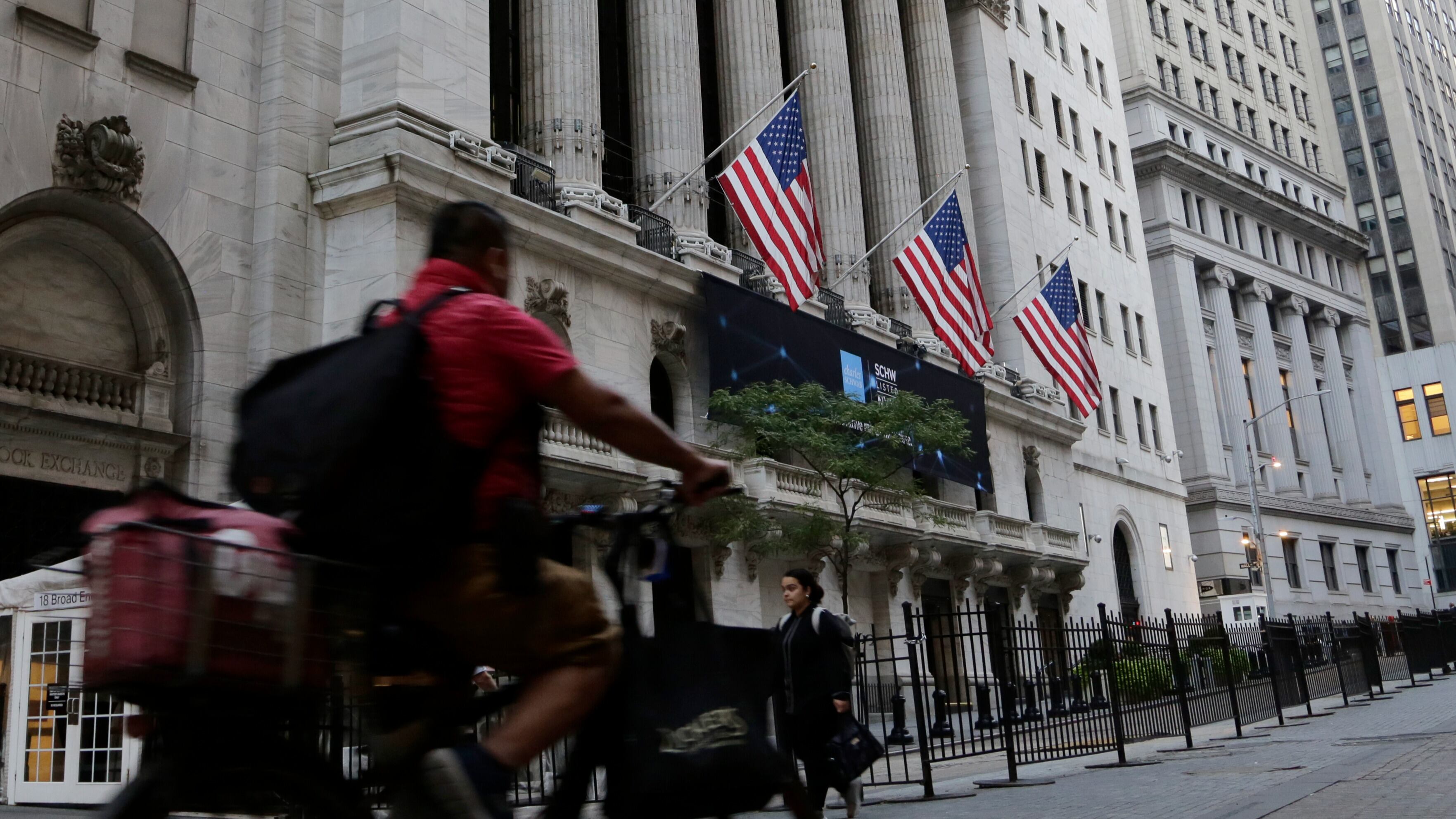
Stocks rose on Wall Street Monday after regulators pushed together two huge banks over the weekend and made other moves to build confidence in the struggling industry.
The S&P 500 climbed 34.93 points, or 0.9%, to 3,951.57. The Dow Jones Industrial Average gained 382.60, or 1.2%, to 32,244.58, and the Nasdaq composite added 45.02, or 0.4%, to 11,675.54.
Much attention has been on banks because they may be cracking under the pressure of much higher interest rates. Swiss banking giant UBS said Sunday it would buy its troubled rival Credit Suisse for almost $3.25 billion in a deal quickly put together by regulators. Credit Suisse has been battling a unique set of problems for years, but they came to a head last week as its stock price tumbled to a record low.
A group of central banks stretching from the United States to Japan also announced coordinated moves on Sunday meant to ease strains in the financial system. They should allow banks more access to U.S. dollars if needed, in an echo to a practice widely used in prior crises.
The moves don't mean the banking industry's crisis is over, but “it’s taken one of the troublesome aspects off the table,” said Ryan Detrick, chief market strategist at Carson Group.
The late Sunday announcements by regulators may be reminiscent of the 2007-08 financial crisis that wrecked the global economy, but many investors see big differences between then and now.
“The market is trying to digest: Is this just a few bad financial companies that have really made some bad decisions, or is the whole thing a house of cards?" Detrick said. "We’re optimistic that it’s multiple banks in a bad situation but not the entire system.”
In the U.S., most of the attention has been on smaller and mid-sized banks on fears that falling trust could push their depositors to pull their money all at once. That’s what’s called a bank run, and such a move could topple them.
First Republic Bank has been at the center of investors’ crosshairs in the hunt for the industry’s next victim following the second- and third-largest U.S. bank failures in history. Its shares fell 47.1% after S&P Global Ratings cut its credit rating for a second time since Wednesday.
S&P said it could lower the rating even further despite a group of the biggest U.S. banks announcing last week they would deposit $30 billion in a sign of faith in First Republic and the larger banking industry.
While that money certainly helps, “it may not solve the substantial business, liquidity, funding, and profitability challenges that we believe the bank is now likely facing,” the credit-ratings agency said.
Stocks of other smaller- and mid-sized banks, meanwhile, were much stronger.
New York Community Bancorp jumped 31.7% after it agreed to buy much of Signature Bank in a $2.7 billion deal, the Federal Deposit Insurance Corp. said late Sunday. Signature Bank became the industry’s third-largest failure earlier this month after regulators seized it.
Much of the rest of the U.S. stock market also pushed higher, but how long that lasts is a question mark. A huge decision is looming on the calendar by the Federal Reserve.
The U.S. central bank will announce its latest move on interest rates Wednesday. For a while, Wall Street was betting it would reaccelerate its hikes because of how stubborn high inflation has remained.
Higher rates can undercut inflation by slowing the economy, but they raise the risk of a recession later on. They also hurt prices for stocks and other investments. That was one of the factors hurting Silicon Valley Bank, which earlier this month became the second-biggest U.S. bank failure in history. Bonds owned by it and other banks have seen their prices fall as interest rates rose sharply.
The Fed has already pulled its key overnight rate to a range of 4.50% to 4.75%, up from virtually zero at the start of last year.
But all the recent stress in the banking system has pushed Wall Street to believe the Fed likely won’t pick up the pace again on its rate hikes.
Many economists and investors were already expecting at least a mild recession to hit the U.S. economy given all the recent rate increases. The worry is that strains for regional banks could raise the risk higher. That's because of how important such banks are in giving loans to smaller- and mid-sized companies to grow.
Drastic recalibrations by investors for what the Fed will do with interest rates have caused historic swings in the bond market. Yields there have plunged since earlier this month.
Consider the two-year Treasury, which tends to move closely with expectations for the Fed. Its yield was above 5% earlier this month, at its highest level since 2007, after data on inflation and other measures of the economy kept coming in higher than expected.
Last week it plunged well below 4%, which is a massive move for the bond market. It rose to 3.97% from 3.84% late Friday.
In markets abroad, stocks rose in Europe after falling across much of Asia.
___
AP Business Writer Joe McDonald contributed.