By Stan Choe

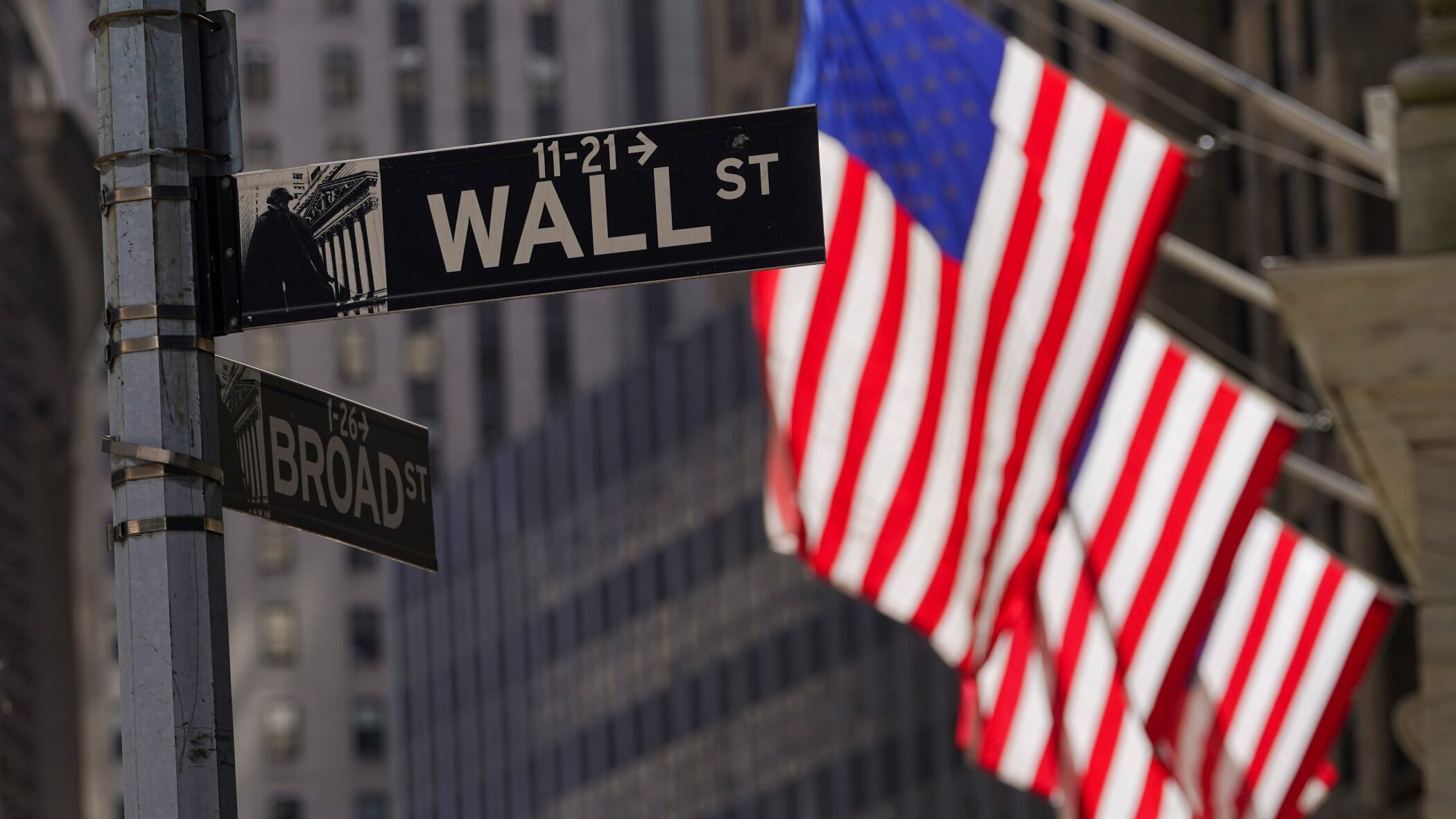
A frigid February for Wall Street closed out with more losses on Tuesday.

The S&P 500 fell 0.3% to lock in a loss of 2.6% for the month. The Dow Jones Industrial Average fell 232 points, or 0.7%, while the Nasdaq composite slipped 0.1%. Both also sank over the month.

After a strong start to the year bolstered by hopes that inflation was on the way down, Wall Street shifted into reverse in February. A stream of data showed inflation and the overall economy are remaining more resilient than expected. That’s forced investors to raise their forecasts for how high the Federal Reserve will take interest rates and how long it will keep them there.

High rates can drive down inflation, but they also raise the risk of a recession down the line because they hurt the economy. They also drag on prices for stocks and other investments.

After earlier this year hoping that the Fed could soon pause its aggressive hikes to interest rates, and maybe even begin cutting them late this year, traders have come around to believe the Fed’s long insistence that it plans to take rates higher for longer to ensure the job is done on inflation.

The Fed has said it wants rates to climb to a “sufficiently restrictive” level where the economy slows enough to get inflation down to its 2% goal.

“Everything is sort of churning,” said Thomas Martin, senior portfolio manager at Globalt Investments. “Right now, the economy is doing fairly well, but earnings estimates for 2023 for the S&P 500 are continuing to drift lower. So you’re still moving in a softening direction. It’s just: How close do you get to the ground?”

He has raised his forecast for how high the Fed will ultimately raise rates, but he also said it’s difficult to feel a great amount of certainty given all the push and pull.

“What everyone’s hoping for is that they are restrictive but not destructive,” Martin said of the Fed and rate hikes. “Where we end up, there’s just a wide range of outcomes.”

Many investors now see the Fed hiking its key overnight interest rate up to at least 5.25%, if not higher, and keeping it there through the end of the year. The Fed’s rate is currently set in a range of 4.50% to 4.75% after starting last year at virtually zero.

The heightened expectations for rates sent yields jumping in the bond market. The yield on the 10-year Treasury held steady at 3.92% Tuesday. It helps set rates for mortgages and other loans that shape the economy’s health, and still near its highest level since November.

The two-year yield, which moves more on expectations for Fed action, ticked up to 4.81% from 4.78%. It’s near its highest level since 2007.

Worries about rates have caused the S&P 500’s gain for the year to more than halve. It was up as much as 8.9% in early February, the day before a report showed U.S. employers hired nearly a third of a million more people in January than expected.

Such strength is good news for the economy and calms fears about a recession hitting imminently. But the Fed worries it could also feed into upward pressure on inflation. Not only are jobs still plentiful, U.S. households also increased their spending at stores and elsewhere in January.

Now the S&P 500 is hanging onto a gain of 3.4% for the year.

Reports on the economy released Tuesday showed some slight cracks. One said that confidence among U.S. consumers unexpectedly fell in February. Another said that manufacturing in the Chicago region weakened by more than expected.

All the worries have come across a backdrop of falling earnings for big corporations. S&P 500 companies are in the midst of reporting their first decline in profits from year-earlier levels since 2020, when the pandemic was choking the economy, according to FactSet.

Most companies have already reported their results for the last three months of 2022, but several big-name retailers are still on the schedule for this week.

Among them was Target, which on Tuesday reported better profit and revenue than expected for the latest quarter. But it also echoed some other retailers in giving a cautious forecast for upcoming results as U.S. households contend with still-high inflation. Its stock rose 1%.

On the losing end was Norwegian Cruise Line. It tumbled 10.2% after reporting a bigger loss for the latest quarter than expected. It also gave profit forecasts for the upcoming quarter and year that fell short of Wall Street's.

All told, the S&P 500 fell 12.09 points to 3,970.15. The Dow fell 232.39 to 32,656.70, and the Nasdaq dropped 11.44 to 11,455.54.

——

AP Business Writers Elaine Kurtenbach and Matt Ott contributed.
Share:
More In Business
Samsung, Micron Warn of Delayed Chip Production Due to Xi'an Lockdown
Daniel Newman, Founding Partner and Principal Analyst at Futurum Research, joins Cheddar News' Closing Bell, where he says the markets are going to feel very uncomfortable receiving news of more potential setbacks for chip manufacturers after already enduring a lengthy chip shortage.
Electric Vehicles Face Pricing, Charging Infrastructure Roadblocks to Mass Adoption
The federal government and numerous industries have been preparing for a greener future, setting goals to reduce greenhouse emissions by switching to electric vehicles. But the next hurdle to clear is convincing the wider public to get on board. Arun Kumar, managing director in automotive practice at AlixPartners, spoke to Cheddar's Ken Buffa about consumer trends related to EV transition and said he believes a widespread switch is imminent in 2022. Despite this, he acknowledged there are still significant obstacles to overcome, including high prices and more charging stations. "Without charging infrastructure, people are going to struggle with increasing adoption of electric vehicles in the future," Kumar told Cheddar. "I think by 2030 our estimate is that about a million chargers need to be put in place nationally in the U.S."
Creator Economy Booms as Platforms Launch Monetization Tools and Perks
The pandemic has supercharged the creator economy, and there are no signs of it slowing down no matter when the pandemic officially ends. Creators prove to be a key factor in driving purchasing decisions and retail sales, and an increasing amount of platforms are taking advantage of the social influence. Karissa Bell, senior editor at Engadget, joins cheddar news to discuss the creator economy boom.
Behind the National Women's Soccer League and Voyager Digital Multi-Year Crypto Deal
The National Women's Soccer League is partnering with Voyager Digital as its first-ever cryptocurrency brokerage in a multi-year deal. Marla Messing, interim CEO of the NWSL, and Steve Ehrlich, CEO of Voyager Digital, joined Cheddar to discuss benefitting the league and educating players and fans as a way of democratizing cryptocurrency. Messing explained that the players themselves will own half the assets as part of how the deal is structured. "My hope is, just in terms of the expectations of crypto over the long term, that I hope a lot of them are able to just let it sit there," she said. "And that one day this will be a nice retirement account for them."
Douglas Elliman Goes Public After Spinoff of Tobacco Biz Vector Group
Howard Lorber, chairman, president, and CEO of Douglas Elliman Inc., and Scott Durkin, CEO of Douglas Elliman Realty, joined Cheddar's "Opening Bell" to talk about the real estate brokerage company's recent IPO launch on the New York Stock Exchange following the spinoff of its tobacco subsidiary Vector Group. "There are many investors that cannot buy tobacco because of their mandates," said Lorber. "And therefore splitting off Douglas Elliman the real estate, and there's a lot of people looking for real estate investments, so they'll be able to buy Douglas Elliman, and those that want tobacco can buy Vector alone." The pair also discuss the future of New York real estate and the auxiliary business the property broker sees as growth prospects.
Tequila Demand to Heat Up as Drizly Reports Alcohol Retailers See a Bright 2022
Despite a champagne shortage ahead of New Year's Eve, adult beverage retailers are staying optimistic about 2022. Cathy Lewenberg, COO at online alcoholic beverages platform Drizly, joined Cheddar to talk about the sunny outlook for next year and the current state of the industry. She noted a 20 percent higher demand for champagne year-over-year has led to the holiday's shortfall and that the spirit category is continuing to thrive with tequila on pace to outsell vodka for the first time. "Tequila has just been on fire on our platform. It's grown 13 percent in share on our platform over the last couple of years where vodka obviously had been the leader," she said. "Tequila is the top thing in addition to bourbon that retailers are looking to give more shelf space to in 2022."
Cruise Ships Remain Hotspots of COVID Infections Amid Latest Surge
Travel expert Francesca Page joined Cheddar's Baker Machado to break down how the omicron-fueled COVID-19 surge of cases on cruise ships is impacting the industry, as the CDC is actively monitoring at least 92 ships for outbreaks. Page also talked about the upcoming expiration of the CDC's conditional sailing order mandating mask-wearing and addressed passenger concerns. "Everyone is asking, financially, should I cancel my cruise should COVID surges keep going, which it looks they are, and to a large degree I think that decision is very personal and is based on one's own risk tolerance," she said.
Load More