By Stan Choe
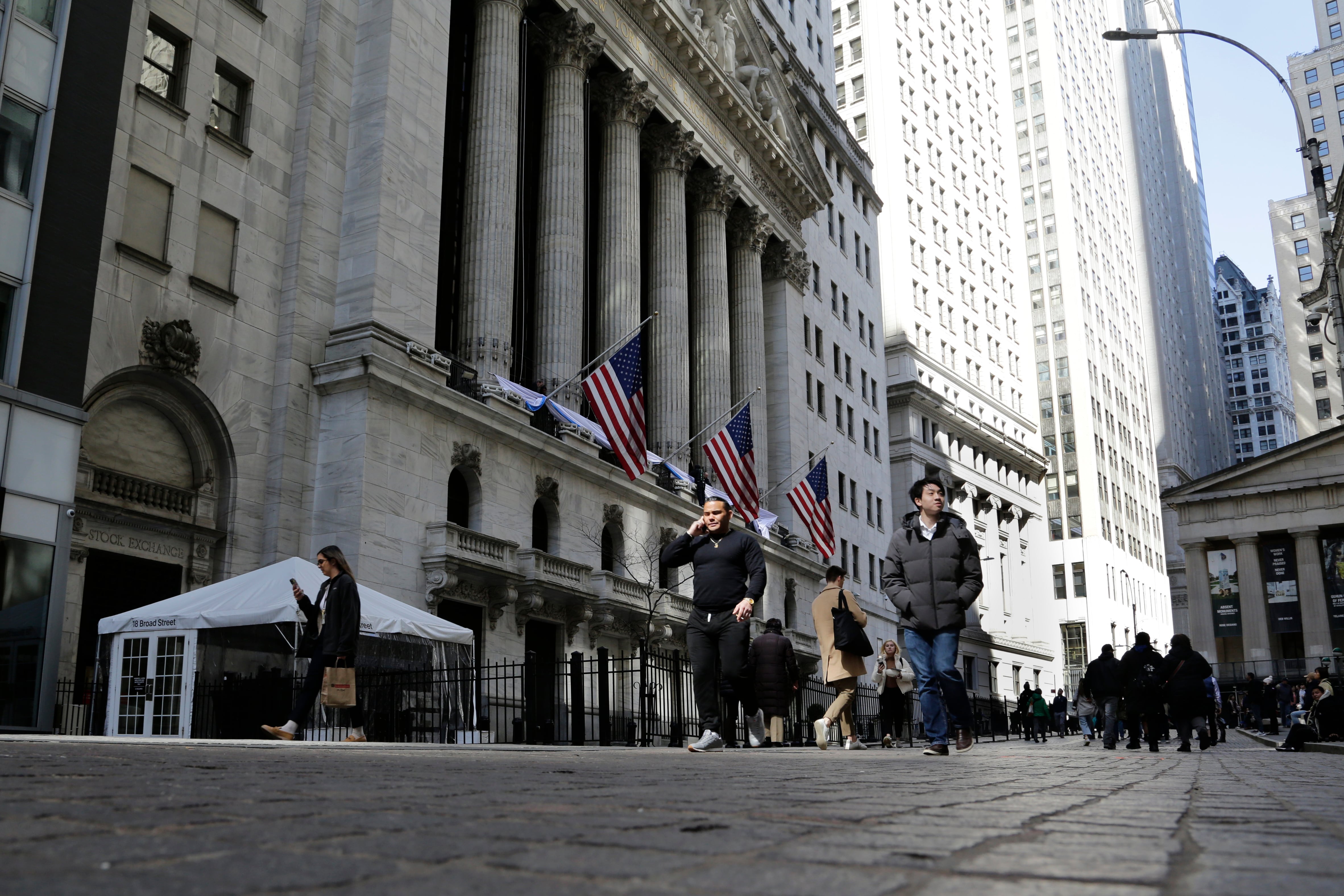
Wall Street closed another bumpy week with a mixed performance on Friday amid worries that inflation is not cooling as quickly or as smoothly as hoped.
The S&P fell 0.3% after paring a bigger loss from the morning. The Dow Jones Industrial Average rose 129 points, or 0.4%, after coming back from an early loss of 179 points, while the Nasdaq composite fell 0.6%.
Stocks have hit turbulence in February after shooting higher in January with hopes that cooling inflation could get the Federal Reserve to take it easier on interest rates and that the economy could avoid a severe recession. Reports recently have shown more strength than expected in everything from the job market to retail sales to inflation itself, raising worries that the Federal Reserve will have to get tougher on interest rates.
That’s forced a sharp recalibration on Wall Street as investors move their forecasts for rates closer to the “higher for longer” stance that the Federal Reserve has long been espousing. The hope is that high rates can drive down inflation, but they also hurt investment prices and risk causing a severe recession.
Economists at Goldman Sachs added one more hike by the Fed in June to their forecast, meaning they see its key short-term rate ultimately rising to a range of 5.25% to 5.50%. That rate was at virtually zero a year ago, and it hasn’t topped 5.25% since the dot-com bubble was deflating in 2001. It's currently at a range of 4.50% to 4.75%.
The fear is that if inflation proves stickier than expected, it could push the Fed to get even more aggressive than it’s prepared the market for. Such movements have been most clear in the bond market, where yields have soared this month on expectations for a firmer Fed.
The two-year Treasury yield topped 4.70% in the morning, up from 4.62% late Thursday and from less than 4.10% earlier this month. It later pulled back to 4.61%. It has recently approached its heights from November, when it reached its highest point since 2007.
Still offering some support to the stock market are remaining hopes among investors that the economy can avoid a worst-case recession. Jobs are still plentiful, and shoppers are still spending to prop up the most important part of the economy, consumer spending. That's helped the S&P 500 index hold onto a gain of 6.2% since the start of the year.
But critics say many of those areas also tend to be among the last to feel the effects of higher interest rates and may still crack. And the Fed has already raised rates by the most aggressive pace in decades.
“Fed tightening always ‘breaks’ something,” investment strategist Michael Hartnett wrote in a BofA Global Research report.
Complicating things are all the revisions and changes in methodology embedded in recent data reports on the economy, which may be clouding the signal they give, said Michael Green, chief strategist at Simplify Asset Management.
He's also worried about how much of the high inflation sweeping the economy is the result of reduced competition as companies across industries consolidated, something that rate hikes by themselves can't solve.
“We’ve created a feedback loop where the Fed will hike interest rates until they break something,” Green said. “Then the question is: How do they respond?”
Big technology and other high-growth companies have been taking the brunt of worries about the Fed because they're seen as some of the most vulnerable to higher rates. Their stocks soared in earlier years in part because of record-low rates.
Microsoft fell 1.6% and Nvidia lost 2.8% for some of the heaviest weights on the S&P 500.
Energy stocks also tumbled as the price of oil weakened. Exxon Mobil fell 3.8%.
On the winning side was Deere, which gained 7.5% after reporting stronger profit for its latest quarter than analysts expected.
Altogether, the S&P 500 fell 11.32 points to 4,079.09. The Dow rose 129.84 to 33,826.69, and the Nasdaq fell 68.56 to 11,787.27.
In stock markets abroad, Hong Kong's Hang Seng lost 1.3%. Losses were amplified by news that a major tech industry dealmaker, Bao Fan, apparently has gone missing.
Shares in one of China’s top investment banks, China Renaissance, plunged Friday after the company said in a filing to Hong Kong's stock exchange that it had lost touch with Bao, its founder. Bao’s disappearance follows a crackdown on technology companies in the past two years that officials in China said had been wrapped up.
Stocks also mostly fell across Asian and European markets.
___
AP Business Writers Elaine Kurtenbach and Matt Ott contributed.