By Damian J. Troise and Alex Veiga
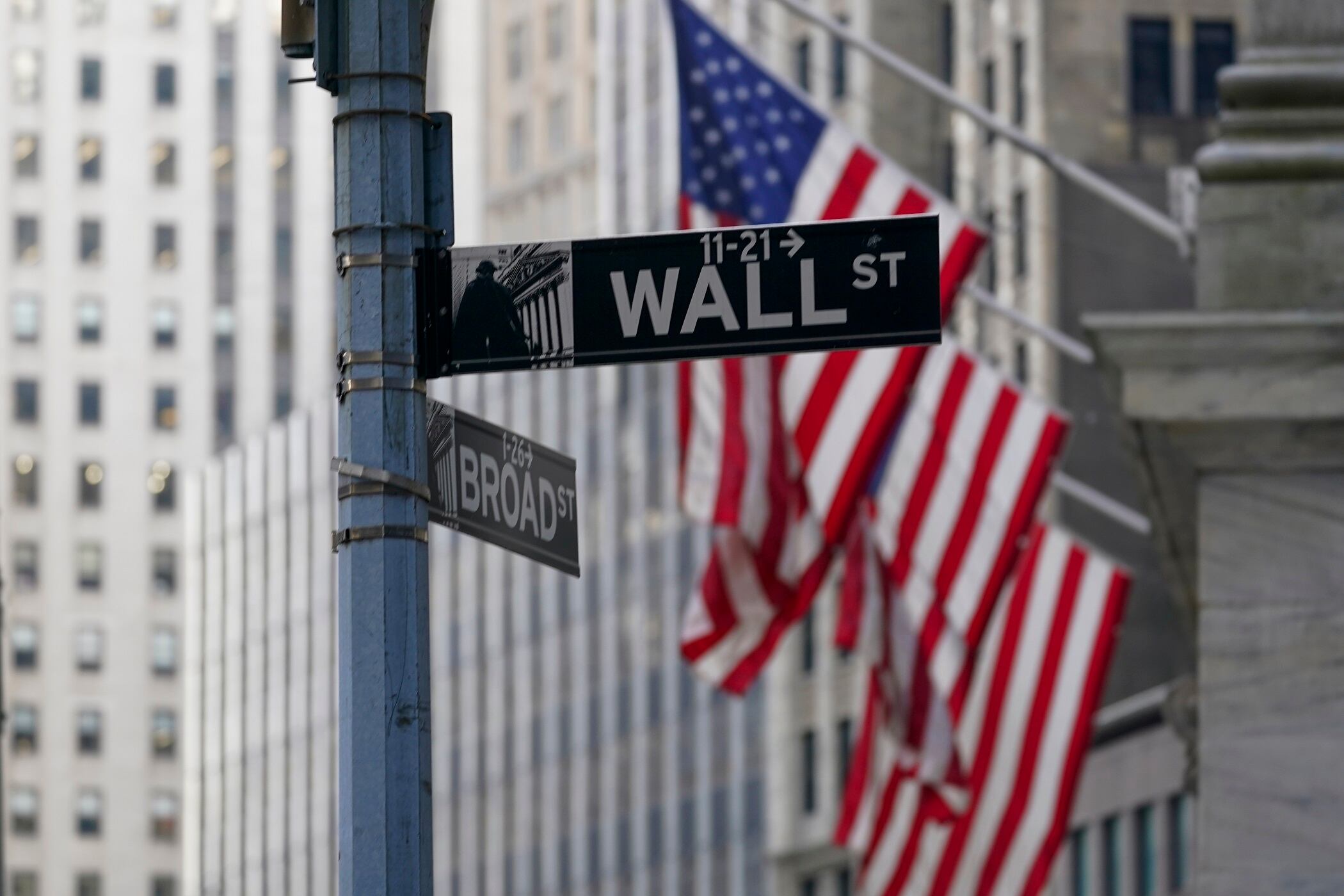
Wall Street's losses mounted Wednesday as world leaders waited to see if Russian President Vladimir Putin orders troops deeper into Ukraine.
The S&P 500 fell 1.8% to an 8-month low, deepening the benchmark index's “correction," or a loss of 10% from its recent peak. More than 85% of stocks in the S&P 500 fell, with technology companies weighing down the index most.
The technology-heavy Nasdaq lost 2.6% led by steep losses in Apple and Microsoft. The Dow Jones Industrial Average fell 1.4%.
U.S. Treasury yields inched higher, as did gold prices.
Wall Street has been closely watching developments in Ukraine, where Russia has amassed troops for a new potential invasion. Russia has started evacuating its embassy in Kyiv. It has already sent soldiers into eastern regions of Ukraine after recognizing the independence of some rebel-held areas.
The U.S. and western nations have responded with sanctions and Germany withdrew a document needed for certification of the Nord Stream 2 gas pipeline from Russia. The tensions have made energy prices volatile as any conflict between Russia and Ukraine disrupt supplies.
The latest losses added to Tuesday’s slump and the S&P 500′s slide into a correction. The index had its last correction in the spring of 2020, as the pandemic upended the global economy. That correction worsened into a bear market — a decline of 20% or more — as the S&P 500 sank nearly 34% in about a month.
“We are clearly, solidly in correction territory at this point," said Randy Frederick, vice president of trading & derivatives at Charles Schwab. “We need some kind of positive news, and there really isn’t a whole lot right now."
The S&P 500 fell 79.26 points to 4,225.50. It's now 11.9% below the record high it set Jan. 3.
The Dow dropped 464.85 points to 33,131.76, while the Nasdaq slid 344.03 points to 13,037.49. The index is now 18.8% below its November 2021 high.
Small company stocks also lost ground. The Russell 2000 index fell 36.08 points, or 1.8%, to 1,944.09.
Technology stocks led the broad losses. Microsoft and Apple fell 2.6%. The sector has an outsized influence on the S&P 500 because of Big Tech companies' high valuations.
Retailers and other companies that rely on direct consumer spending also weighed on the market. Amazon fell 3.6% and Starbucks shed 3.7%.
U.S. crude oil prices remained volatile, though energy stocks gained ground. Chevron rose 2.4%.
Bond yields edged higher. The yield on the 10-year Treasury rose to 1.98% from 1.95% late Tuesday.
The potential for a war in eastern Europe has only added to the concerns investors had about the global economy. Stocks have been slipping in 2022 as investors gauge how rising inflation will impact economic growth and whether the Federal Reserve’s plan to raise interest rates this year will cool inflation.
Wall Street is also still reviewing how companies are dealing with supply chain problems and higher costs in their latest round of corporate report cards.
Lowe's rose 0.2% after raising its profit forecast for the year following a strong fourth-quarter financial report. Security software maker Palo Alto Networks rose 0.4% after raising its profit forecast on strong demand for cybersecurity.
TJX, the parent of T.J. Maxx and Marshalls, fell 4.2% after reporting disappointing fourth-quarter financial results.
___
Veiga reported from Los Angeles.
Updated on February 23, 2022, at 4:48 p.m. ET.