By Damian J. Troise and Alex Veiga
Stocks shook off an early slump and ended mixed on Wall Street Wednesday after minutes from the Federal Reserve's latest policy meeting showed policymakers still leaning toward moving decisively to fight inflation.
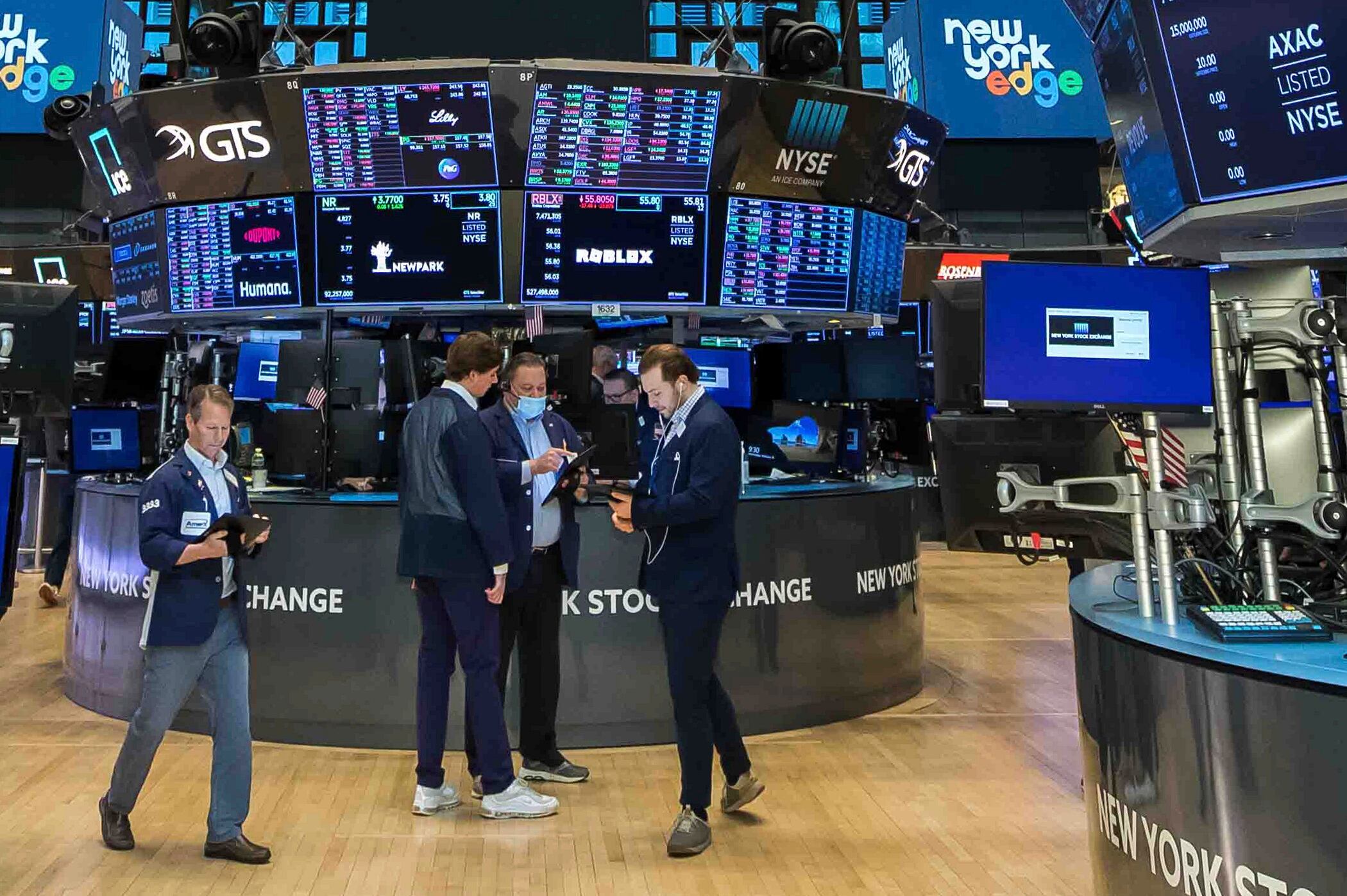
Trading was choppy following the midafternoon release of the Fed minutes. The S&P 500 wound up 0.1% higher after having been down 0.9% in the early going. The Dow Jones Industrial Average slipped 0.2% and the Nasdaq composite fell 0.1%.
Treasury yields bounced around a bit as traders tried to parse the latest update from the Fed. The 10-year Treasury yield ended up at 2.03%, just below where it was late Tuesday.
Wall Street has been looking for clues about how much and how quickly the central bank will begin raising interest rates. Traders see a 44% chance for a first hike in March of half a percentage point, double the traditional move.
In their discussion of the outlook for monetary policy, most Fed policymakers suggested that a faster pace of increases in the central bank's benchmark short-term interest rate than what the Fed followed after its last rate hikes in 2015 “would likely be warranted, should the economy evolve generally in line with the Committee’s expectation.”
Policymakers also noted during the meeting that it would be appropriate for the Fed to make “a significant reduction” in the size of its balance sheet.
“In markets, timing is everything, and the delayed reaction from the Fed has investors convinced that aggressive policy tightening is on the horizon,” said Charlie Ripley, senior investment strategist for Allianz Investment Management.
The S&P 500 rose 3.94 points to 4,475.01. The benchmark index was coming off a broad rally on Tuesday that snapped a three-day losing streak. The Dow fell 54.57 points to 34,934.27, while the Nasdaq lost 15.66 points to 14,124.09.
Small-company stocks rose. The Russell 2000 gained 2.85 points, or 0.1%, to 2,079.31.
Gains in energy stocks, retailers and other companies that rely on consumer spending accounted for much of the S&P 500's modest rise, keeping losses in the technology and communications sectors in check.
Most Fed officials agreed during their meeting last month that faster interest rate hikes would be needed “if inflation does not move down” as the central bank's policymaking committee expects. As recently as December, Fed officials forecast that inflation, based on their preferred measure, would fall to an annual rate of 2.6%. It is currently 5.8%.
But Fed policymakers differ on how quickly to raise rates. On Monday, James Bullard, president of the Federal Reserve Bank of St. Louis, repeated his call for the Fed to take the aggressive step of raising its benchmark short-term rate by a full percentage point by July 1. Esther George, president of the Kansas City Fed, expressed support for a more “gradual” approach. And Mary Daly of the San Francisco Fed declined to commit herself to more than a modest rate hike next month.
Most analysts expect Fed officials to raise that forecast at their next meeting, in mid-March, to reflect the acceleration of consumer prices. Inflation has reached its highest pace in four decades, hammering household budgets and wiping out the benefit of rising wages.
Rising inflation has been crimping profits and revenue for businesses in a wide range of industries. Many companies have been raising prices to offset the costs, including cereal maker Kellogg. That has raised concerns that consumers could eventually pull back spending, though the latest report from the Commerce Department shows that retail sales remained strong in January as the threat of the omicron variant of COVID-19 faded.
The government reported Wednesday that retail sales surged 3.8% last month, whizzing past the projections of most economists. That compared to the prior month when sales slid 2.5%.
Investors brushed off the encouraging retail sales data, but the results and other solid economic updates remain reassuring for the bigger economic picture as the Fed starts tightening its interest rate policy,” said Liz Ann Sonders, chief investment strategist at Charles Schwab.
“The Fed is moving, period,” she said. “That’s happening no matter what, so it’s better if along the way you have economic data that remains resilient.”
The potential for an escalating conflict between Russia and Ukraine has also been a key concern for investors this week. Broader markets rallied on Tuesday after Russia claimed to remove some of its troops amassed on the Ukraine border. Tensions still remain high as officials from NATO and the West cast doubt on those claims.
Energy prices have been particularly volatile so far this week. Russia is a major energy producer and a military conflict could disrupt supplies and jolt markets. U.S. benchmark crude oil prices rose 1.7%, reversing course from a 3.6% slump on Tuesday. Energy stocks gained ground on the reversal. ConocoPhillips rose 0.6%.
Wall Street is also monitoring the latest corporate earnings reports to gauge how companies are handling supply chain problems and pressure from rising inflation.
Airbnb rose 3.6% after reporting strong financial results and giving investors an encouraging revenue forecast. Walmart will report its results on Thursday.
Updated on February 16, 2022, at 5:03 p.m. ET.