By Stan Choe
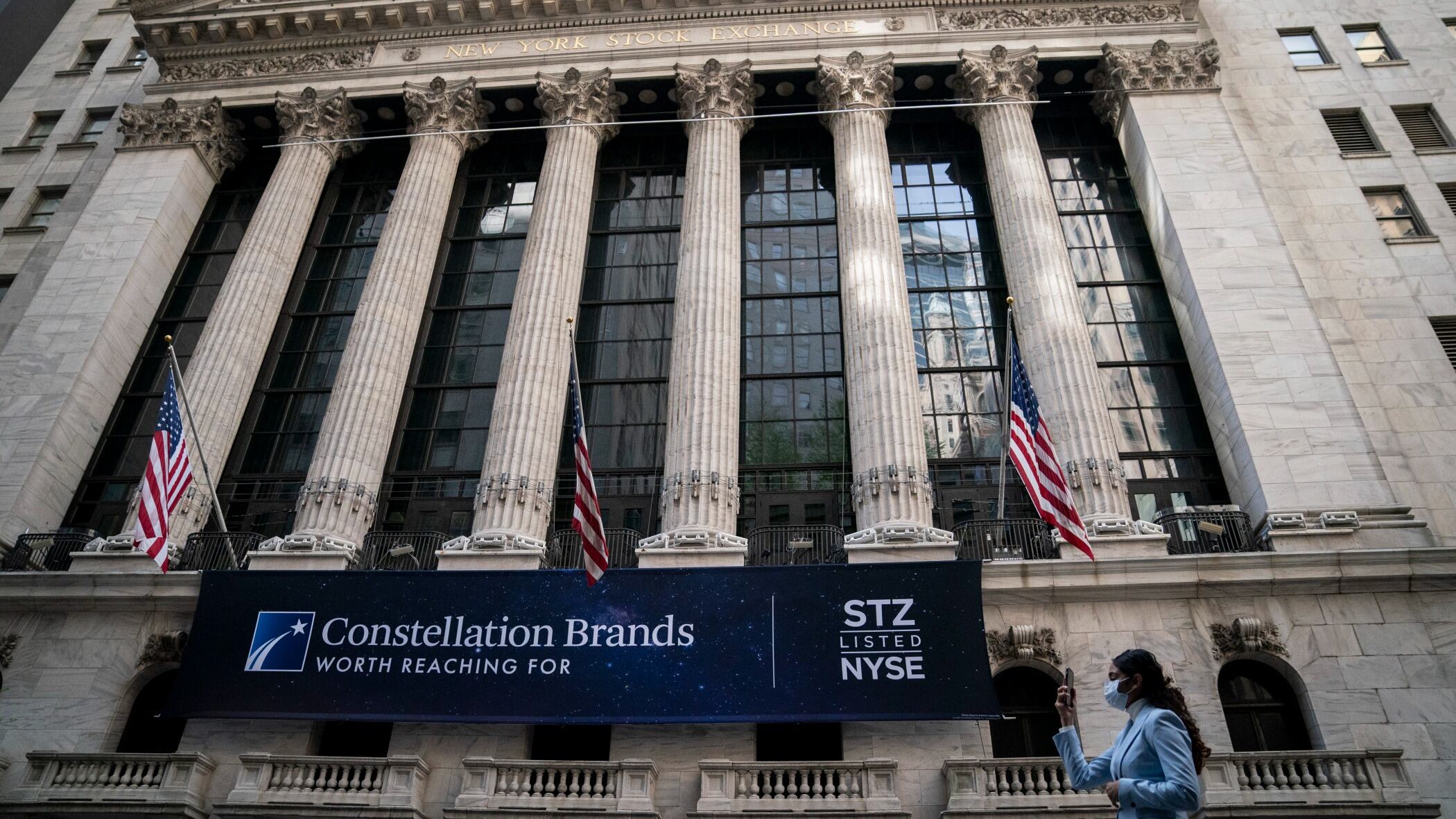
Stocks sank Monday as Wall Street prepped for a week full of potentially market-moving events, from decisions on interest rates around the world to earnings reports from the biggest U.S. companies.
The S&P 500 dropped 1.3%, giving back some of the gains that had carried it last week to its highest level since early December. The Dow Jones Industrial Average fell 260 points, or 0.8%, while the Nasdaq composite sank 2%.
Markets have been veering recently on worries that the economy and corporate profits may be set for a steep drop-off, along with competing hopes that cooling inflation will get the Federal Reserve to take it easier on interest rates.
The central bank’s next decision on rates is coming Wednesday, and most investors expect it to announce an increase of just 0.25 percentage points. That would be the smallest increase since March, following a spate of hikes of 0.75 points and then a 0.50-point increase, and it would mean less added pressure on the economy.
Higher rates combat inflation by intentionally slowing the economy, while also dragging down on prices for investments. Inflation has been cooling since the summer amid last year's blizzard of rate hikes, but the economy has also been showing signs of concern.
The big question is whether Fed Chair Jerome Powell on Wednesday afternoon will give markets what they want to hear — hints that rate hikes will end soon and rate cuts may even be possible late this year — or stick to the Fed’s mantra that it plans to keep rates higher for longer, even if a modest recession hits.
“I think that they have no intention of cutting rates this year,” said Sam Stovall, chief investment strategist at CFRA Research, adding that the Fed waits an average of roughly nine months after its last rate hike before cutting.
“They’ll reiterate that they don’t want to make the mistakes of the 1970s," he said, "but I think in the back of their minds, they’re going to say no matter which inflationary indicator you look at, they’re all heading in a stairstep downward pattern.”
Central banks for Europe and for the United Kingdom are also set to announce their latest increases for rates this week.
Beyond interest rates, more than 100 companies in the S&P 500 are scheduled this week to report how much profit they made in the last three months of 2022. Among them are tech heavyweights Apple, Amazon, and Google’s parent company. Because these companies are three of the four biggest on Wall Street by market value, their stock movements carry much more sway on the S&P 500 than others.
Apple's 2% drop Monday, for example, was the heaviest weight on the S&P 500.
The only other stock that rivals them in size, Microsoft, shook Wall Street last week when it gave forecasts for upcoming results that raised worries about a slowdown in corporate spending on tech. Its stock fell 2.2% Monday.
All told the S&P 500 fell 52.79 points to 4,017.77. The Dow lost 260.99 to 33,717.09, and the Nasdaq fell 227.90 to 11,393.81.
Strategists at Morgan Stanley led by Michael Wilson warn tougher times may be ahead.
“The reality is that earnings are proving to be even worse than feared based on the data, especially as it relates to margins,” they wrote in a report. “Secondly, investors seem to have forgotten the cardinal rule of ‘Don’t Fight the Fed’. Perhaps this week will serve as a reminder.”
Later this week, the U.S. government will also give its latest monthly update on the job market. Hiring has remained resilient across the broad economy, even as housing and other corners weaken sharply under the weight of all the Fed’s rate hikes from last year.
Some big tech companies have announced high-profile layoffs after acknowledging they misread their boom coming out of the pandemic. But job cuts may be starting to spread to other areas of the economy. Hasbro and 3M last week announced layoffs.
All told, economists expect Friday’s report to show that U.S. employers added 187,500 more jobs than they cut during January. That would be a slowdown from December’s hiring of 223,000.
The yield on the 10-year Treasury rose to 3.53% from 3.51% late Friday. The two-year yield, which tends to move more on expectations of Fed actions, rose to 4.25% from 4.20%.
___
AP Business Writers Damian J. Troise, Elaine Kurtenbach and Matt Ott contributed.