By Damian J. Troise and Alex Veiga
Technology companies led a broad sell-off on Wall Street Tuesday as bond yields surged amid renewed jitters that the Federal Reserve will act more aggressively than expected to tackle rising inflation.
The S&P 500 fell 1.8%, with about 90% of the stocks in the benchmark index closing in the red. The Nasdaq, which is heavily weighted with technology stocks, slid 2.6%. The Dow Jones Industrial Average fell 1.5%.
The major indexes' losses have mounted this month as rising inflation and the virus pandemic’s latest surge cause investors to take caution.
Heightened expectations of a rate hike from the Fed have kept Treasury yields rising. The 10-year Treasury hit 1.87% Tuesday, the highest since January 2020. It was at 1.77% late Friday.
Investors are now pricing in a better than 86% probability that the Fed will raise short-term rates at its meeting of policymakers in March. A month ago, they saw less than a 47% chance of that, according to CME Group.
The 10-year yield “just continues to trudge higher, pricing in a more and more aggressive Federal Reserve,” said Ross Mayfield, investment strategy analyst at Baird. “Until over the weekend, I hadn’t seen any speculation about two rate hikes at the March meeting, and now you’re starting to hear that chatter."
The S&P 500 fell 85.74 points to 4,577.11, the Dow fell 543.34 points to 35,368.47, and the Nasdaq fell 386.86 points to 14,506.90. The indexes all hit a new low for the year. The Nasdaq has borne the brunt of the losses, shedding 7.3% this month. That puts the index within 2.7% of a correction, Wall Street-speak for when a stock or index falls 10% or more from its last peak. The S&P 500 is down almost 4% for the month after setting an all-time high on the first trading day of the year.
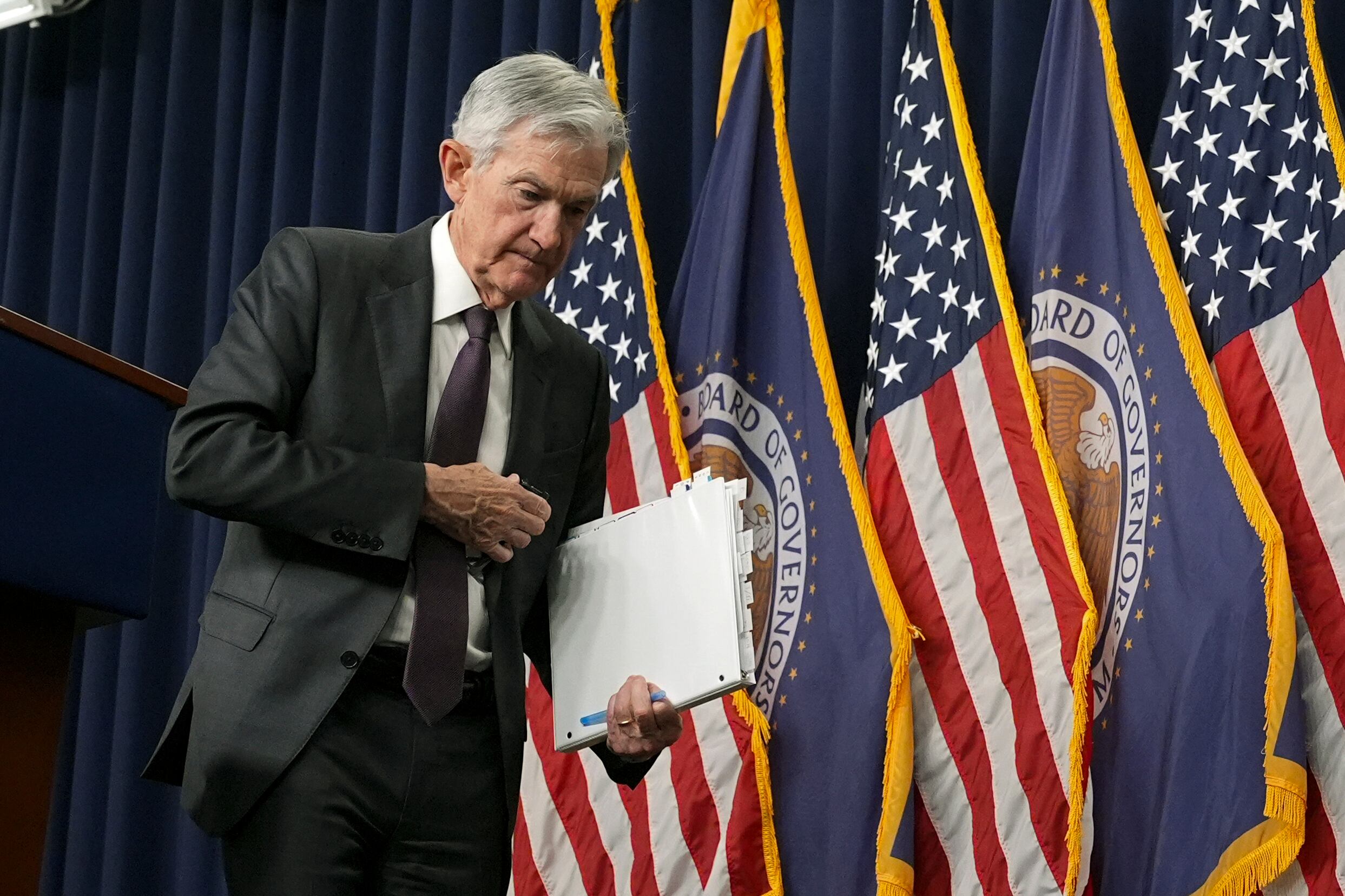
The latest wave of selling comes as Wall Street tries to predict how much the Fed will raise interest rates, and how fast. The central bank has hastened its plan to trim bond purchases and is considering raising interest rates earlier and more often than Wall Street had expected.
The Fed is under pressure to curtail inflation, which jumped last month at its fastest pace in nearly 40 years. At the same time, the job market has bounced back from last year’s brief but intense coronavirus recession, leaving the unemployment rate last month at a pandemic low 3.9%, giving the central bank more leeway to rein in the unprecedented support it's been providing the economy since the pandemic struck.
While higher rates could help stem the high inflation sweeping the world, they would also mark an end to the conditions that have put financial markets in “easy mode” for many investors since early 2020.
Higher rates also make shares in high-flying tech companies and other expensive growth stocks less attractive. Big technology stocks, which have an outsized influence on the S&P 500 because of their high valuations, have weighed heavily on the market this year as investors shift money in anticipation of the higher rates.
The sector was the biggest drag on the S&P Tuesday. Apple fell 1.9% and chipmaker Nvidia slid 3.9%.
Banks also weighed heavily on the market after Goldman Sachs said its fourth-quarter profit fell by 13% from a year earlier, largely due to the hefty pay packages Goldman is paying staff. Goldman's results echoed those of JPMorgan and Wells Fargo last week, which also flagged lower profits and higher expenses due to increased employee compensation costs.
Goldman shares slumped 7%, while JPMorgan slid 4.2%. Wells Fargo was down 2.4%.
Small company stocks, a gauge of confidence in economic growth, also lost ground. The Russell 2000 index fell 66.23 points, or 3.1%, to 2,096.23.
Energy futures rose broadly amid supply fears following an attack on an oil facility in the capital of the United Arab Emirates. The price of U.S. crude oil rose 1.9% to $85.43 a barrel, a 7-year high. The rally in oil prices gave some energy stocks a boost. Exxon Mobil rose 1.7%.
Investors returning after U.S. markets were closed Monday for the Martin Luther King Jr. Day holiday also reviewed the latest batch of corporate earnings and deal news Tuesday.
Activision Blizzard surged 25.9% on news of a blockbuster deal. Microsoft, which fell 2.4%, is buying the maker of games like “Call of Duty” and ”Candy Crush” for $68.7 billion.
Investors have a busy week of earnings reports ahead. A key focus will be on how companies in different industries are handling persistent supply chain issues. Many companies have already warned about the impact on their finances and operations, despite raising prices on consumer goods to offset the impact.
Bank of America, UnitedHealth and United Airlines report results on Wednesday. American Airlines, Union Pacific and Netflix report their results on Thursday.
Updated on January 18, 2022, at 5:01 p.m. ET.