By Damian J. Troise and Alex Veiga
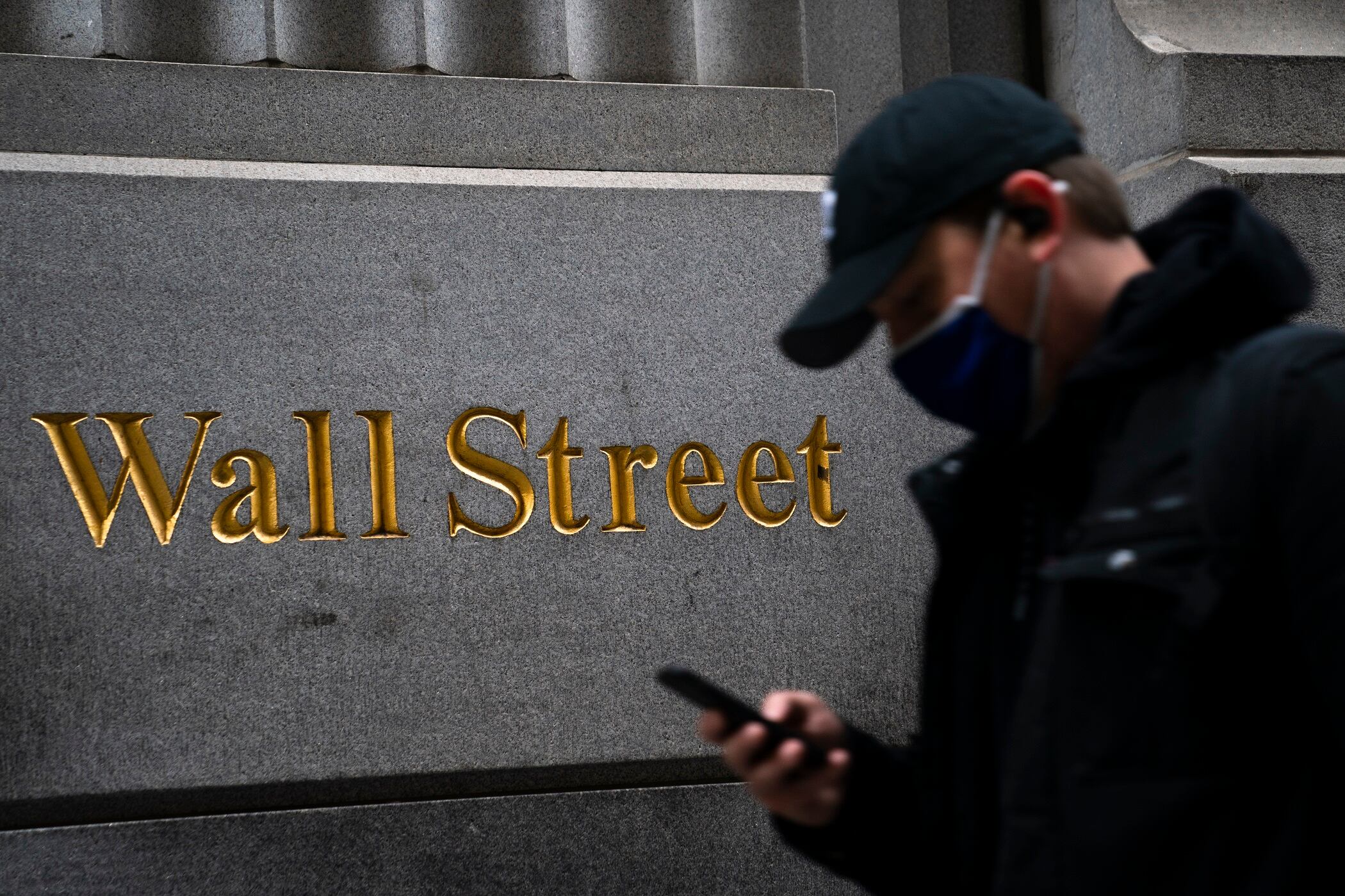
Technology companies led a sell-off on Wall Street Thursday that pulled the major indexes into the red for the week.
The S&P 500 fell 1.4% after shedding an early gain of 0.4%. The benchmark index was coming off two days of gains following daily losses since the first day of trading in 2022. The tech-heavy Nasdaq slumped 2.5%. The Dow Jones Industrial Average fell 0.5%.
The selling came as investors gauged company earnings reports and new data pointing to rising prices at the wholesale level. Inflation has been a key focus for investors as they try to gauge how rising prices will impact businesses, consumers and the Federal Reserve's policy on interest rates in 2022.
“Investors are continuing to be concerned that the worst is yet to be seen in terms of inflation,” said Sam Stovall, chief investment strategist at CFRA.
The S&P 500 fell 67.32 points to 4,659.03, while the Dow slid 176.70 points to 36,113.62. The Nasdaq lost 381.58 points to 14,806.81. The three indexes are each on pace for another weekly loss.
Smaller company stocks also fell. The Russell 2000 slid 16.62 points, or 0.8%, to 2,159.44.
Bond yields mostly edged lower. The yield on the 10-year Treasury slipped to 1.70% from 1.73% from late Wednesday.
The Labor Department on Thursday reported that its producer price index, which measures prices at the wholesale level, surged by a record 9.7% for all of 2021. The increase set an annual record and provides further evidence that inflation is still present at all levels of the U.S. economy. The report follows Wednesday's release of consumer price data for December, which showed that inflation jumped at its fastest pace in nearly 40 years last month.
“The producer price index figures came in a little bit better than expected, but still very high, and as a result they were disconcerting to investors,” Stovall said.
Wall Street has been closely watching rising inflation to gauge the impact on businesses and consumers, as well as on the Fed’s plan to trim its support for the economy and markets. The central bank is reducing bond purchases that helped keep interest rates low throughout the virus pandemic. Earlier this week, Fed Chair Jerome Powell told Congress that the central bank stands ready to raise rates to fight inflation.
Big technology stocks, which have an outsized influence on the S&P 500 because of their high valuations, accounted for a big share of the decline Thursday. The sector has been slipping in January as investors shift money in anticipation of rising interest rates, which tend to make pricey tech stocks less attractive.
Chipmaker Nvidia fell 5.1% and software maker Adobe fell 2.9%.
“It is a little bit of a confusing narrative for the first two weeks of this year,” said Scott Ladner, chief investment officer at Horizon Investments. “The market is really coming to grips with selling really highly valued, profitless tech names and finding other places to put money.”
Many of the big tech companies with solid revenue and profits, such as Apple and Microsoft, will suffer less than their counterparts that have little revenue, but rosy projections, he said.
Even so, those big tech names also lost ground Thursday. Apple fell 1.9% and Microsoft fell 4.2%.
Health care stocks, communication services firms and a mix of companies that rely on direct consumer spending were among the decliners. Pfizer fell 2%, Facebook parent Meta Platforms dropped 2% and Amazon slid 2.4%.
Industrial companies were among the few gainers. Delta Air Lines rose 2.1% after reporting surprisingly good fourth-quarter financial results. Other airlines also got a boost. American Airlines rose 4.5% and United Airlines rose 3.5%.
Financial stocks were mixed ahead of quarterly report cards Friday from several major banks, including JPMorgan Chase and Citigroup.
Investors are also monitoring how the latest wave of COVID-19 cases affects the global economy. In Asia, the omicron variant has swept across Australia and is gaining ground in other countries despite high vaccination rates, mask requirements and strict border policies.
Japan reported more than 13,000 new infections on Wednesday, the highest level in four months. China, whose zero-COVID policies are being challenged by outbreaks just weeks ahead of the Beijing Winter Games, is testing and in some cases locking down entire cities.
Markets in Asia and Europe ended mixed.
Updated on January 13, 2022, at 5:16 p.m. ET.