By DAMIAN J. TROISE and ALEX VEIGA AP Business Writers
Stocks are closing lower on Wall Street Wednesday following a Federal Reserve report that shows U.S. economic activity slowed this summer amid rising worries over resurgent coronavirus cases and mounting supply chain problems and labor shortages. The S&P 500 index fell 0.1%, the Dow Jones Industrial Average lost 0.2% and the Nasdaq composite gave back 0.6%. Technology stocks had some of the biggest losses. Chipmaker Advanced Micro Devices lost 2.%. Less risky investments, including consumer staples and utilities, made broad gains. The yield on the 10-year Treasury note fell to 1.34%. Oil prices rose 1.4%.
THIS IS A BREAKING NEWS UPDATE. AP’s earlier story follows below.
Stocks are down on Wall Street in afternoon trading Wednesday following a Federal Reserve report that shows U.S. economic activity slowed this summer amid rising worries over resurgent coronavirus cases and mounting supply chain problems and labor shortages.
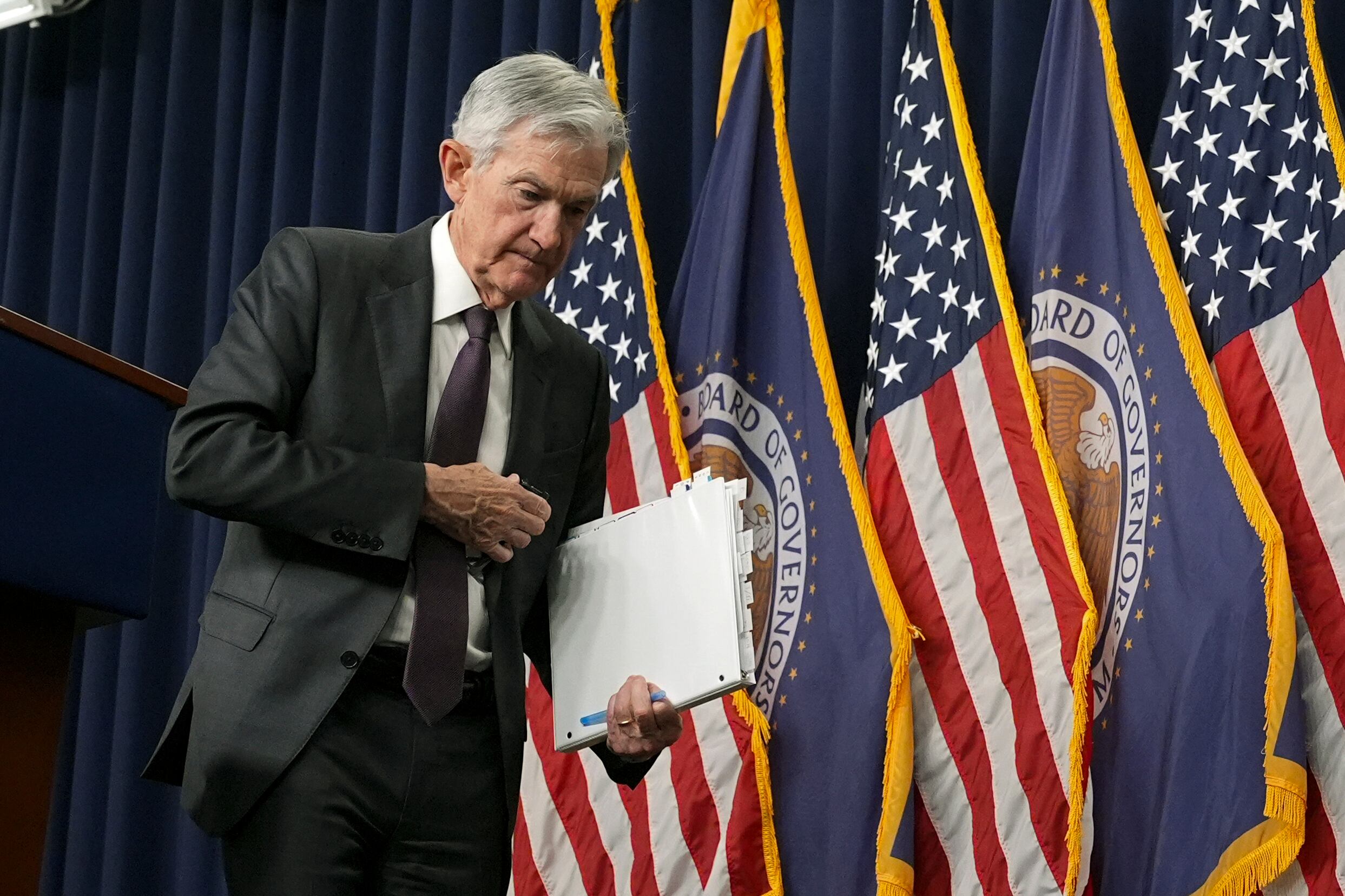
The Fed’s latest survey of the nation’s business conditions, dubbed the “Beige Book,” found that U.S. economic activity “downshifted” in July and August. In its report, released at 2 p.m. Eastern, the Fed said the slowdown was largely attributable to a pullback in dining out, travel and tourism in most parts of the country, reflecting concerns about the spread of the highly contagious delta variant.
The S&P 500 index was down 0.1% as of 3:05 p.m. Eastern. The Dow Jones Industrial Average fell 65 points, or 0.2%, to 35,035, and the Nasdaq composite was down 0.6%.
The benchmark S&P 500 was roughly split between gainers and losers, but weakness in technology and communication stocks weighed down the market. Apple fell 1.3% and chipmaker Nvidia fell 1.5%. Less risky investments, including consumer staples and utilities, were making broad gains.
Shares of cryptocurrency trading platform Coinbase fell 2.2% after the company disclosed it was being investigated by the Securities and Exchange Commission over its plans to offer its cryptocurrency holders a chance to earn interest on their assets if they lent them out. The company said the regulator has threatened to take civil enforcement action, and the launch of the lending program has been delayed until at least October.
The market has been trading within a narrow range of gains and losses for the past couple of weeks, as investors look for any sort of understanding of where the U.S. economy is headed with the widespread delta variant of the coronavirus. Investors could be in for a choppy market through September as they monitor the Federal Reserve and Washington, which has to deal with budget reconciliation, infrastructure spending and the debt ceiling.
“If you look at the calendar, it's aggressive,” said Katie Nixon, chief investment officer at Northern Trust Wealth Management.
Investors received another conflicting report from the government on Wednesday. U.S. employers posted record job openings for the second consecutive month in July, according to the Labor Department. The disconnect between the growing number of job openings and the weak recovery for employment levels is another signal that the overall jobs recovery could be crimping the broader economic recovery.
“People have remained reluctant to engage in the labor market,” Nixon said. “This is not a demand problem, it's a supply issue."
If that's the case, she said, there's not much the Federal Reserve can do about it and tapering its bond-buying program makes sense. Still, there's probably a long way to go before the central bank focuses on raising interest rates.
The latest Beige Book will be used by Fed policymakers at their next meeting on Sept. 21-22 to help them decide how to move interest rates and whether to end the central bank’s $120 billion monthly bond purchases, which it has been making since the pandemic started to help lower long-term interest rates.
The yield on the 10-year Treasury note fell to 1.34% after rising sharply on Tuesday to 1.37%.
Energy prices moved broadly higher. Oil prices rose 1.4% and natural gas prices jumped 7.6%.