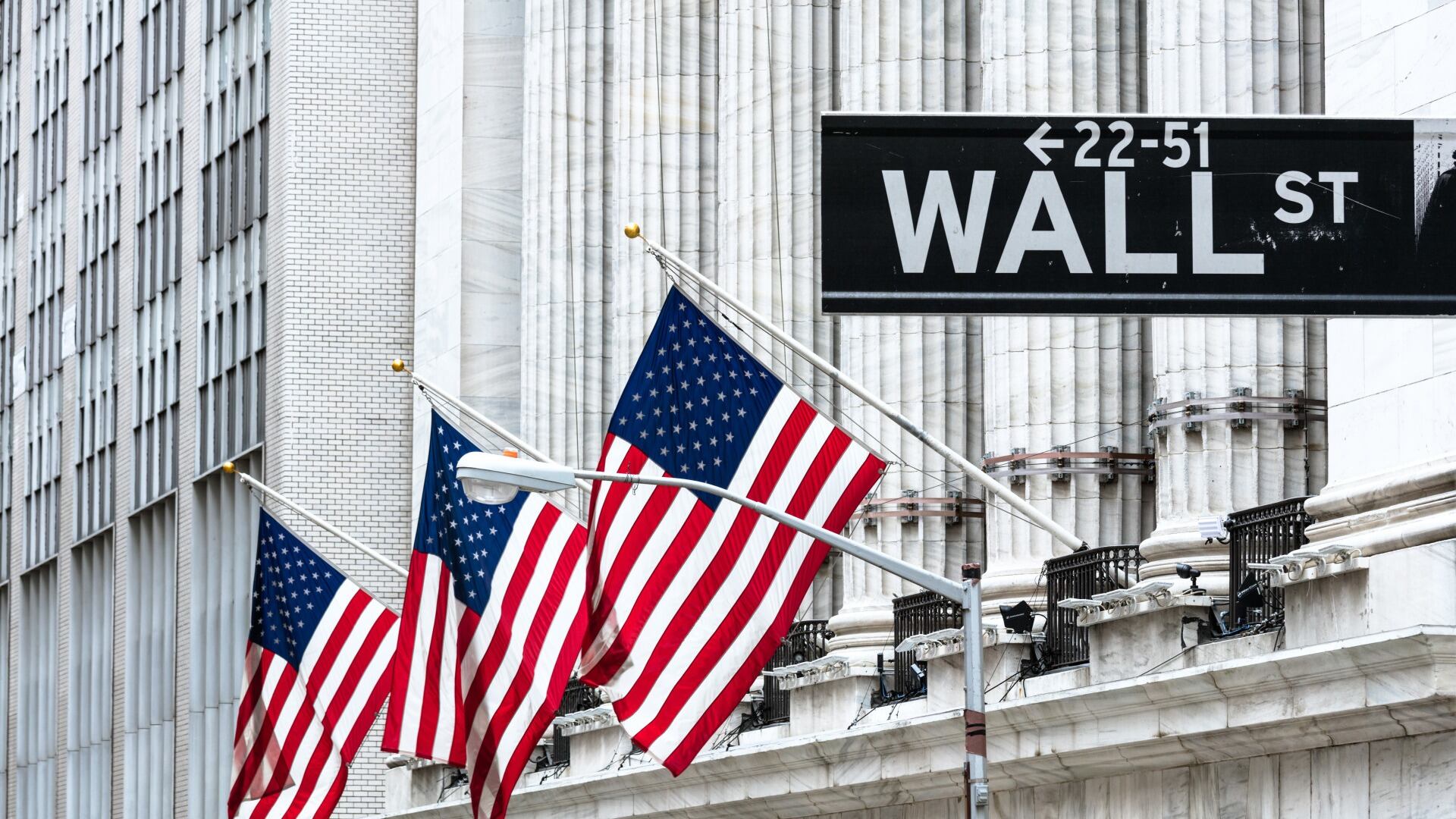
New York Stock Exchange, Wall street, Manhattan, New York, USA (Getty Images)
Wall Street's major stock indexes closed mixed Tuesday, as more big companies delivered their financial results for the last three months of 2022 amid lingering concerns about a potential recession.
The S&P 500 slipped less than 0.1%, its second loss in three trading days. The Dow Jones Industrial Average rose 0.3% and the Nasdaq composite fell 0.3%. Small company stocks also lost ground, with the Russell 2000 shedding 0.3%
The decline for major indexes marked a reversal from Monday, when a tech company-driven rally more than made up for the S&P 500's losses last week.
Stocks have been volatile as investors try to get a better sense of how inflation is affecting the economy, the potential for a recession and whether the Federal Reserve can ease up on its aggressive interest rate increases.
The latest batch of earnings show that companies continue to struggle with the effects of inflation on consumers and supply chains.
Post-it notes and industrial coatings maker 3M fell 6.2% for the biggest drop among S&P 500 stocks after reporting weak fourth-quarter earnings and announcing job cuts. It is the latest company to announce layoffs as consumers get squeezed by inflation and worries grow about a bigger pullback in spending and a possible recession.
Union Pacific fell 3.3% after reporting disappointing earnings and revenue.
Microsoft rose 4% in afterhours trading after the software and technology giant reported earnings that topped Wall Street's forecasts. It closed down 0.2% in regular trading.
All told, the S&P 500 slipped 2.86 points to 4,016.95. The Nasdaq gave up 30.14 points to close at 11,334.27, while the Dow added 104.40 points to 33,733.96.
The Russell 2000 index of small companies slid 5.16 points, or 0.3%, to finish at 1,885.61.
U.S. crude oil prices settled 1.8% lower.
Trading in more than a dozen companies was temporarily halted on the New York Stock Exchange after an apparent technical issue caused wide swings in their stock prices right as the market opened. Shares in Morgan Stanley, Wells Fargo, AT&T and other companies moved sharply at the open, triggering a halt in trading. The prices corrected after trading resumed. The NYSE says it is investigating the “reported issues” and all systems are now operational.
Markets have been swinging between hope and caution as investors watch to see if the Fed will adjust its inflation-fighting strategy. The central bank has already pulled its key overnight rate up to a range of 4.25% to 4.5% from virtually zero early last year.
The Fed will announce its next rate increase on Feb. 1 and traders expect a quarter-point raise, which would mark a softening of the central bank's pace.
“Where the market and the Fed are having a fairly violent disagreement right now is how long are they going to leave rates at around 5%?” said Scott Ladner, chief investment officer at Horizon Investments.
Long-term bond yields fell. The yield on the 10-year Treasury, which influences mortgage rates, fell to 3.46% from 3.52% late Monday.
Wall Street will get a few economic updates this week that could provide more insight into inflation's impact.
The government will release gross domestic product data for the fourth-quarter on Thursday. Economists expect less than 1% of growth, following 1.9% growth in the third quarter and a contraction during the first half of 2022. Investors will get more updates on personal spending and income on Friday.
——
Elaine Kurtenbach and Matt Ott contributed to this report.
Things are expensive: both the important and the not-so-important stuff. October saw the largest year-to-year increase in the consumer price index in over 30 years. Inflation remains a top concern for the average American consumer as some stress over the price of everyday essentials like milk, beef, and gasoline.
But that doesn't seem to be affecting overall retail shopping.
U.S. retail sales rose by 1.7% in October, a sign that consumers are willing to spend more heading into the holidays despite rising inflation. The elevated spending levels suggest solid holiday sales this month and next. On top of that, major retailers like Target and Walmart have come out this week and said they're set to be fully stocked for the holiday season, easing any concerns customers might have about supply chain issues leaving empty shelves before the holidays.
Brittain Ladd, retail strategist and consultant, joins None of the Above to discuss.
Tanya Snyder, transportation reporter at Politico, joins None of the Above with J.D. Durkin to discuss the bipartisan infrastructure law, what it means for the electric vehicle industry and whether Democrats will be able to capitalize on the legislative victory ahead of the 2022 midterms.
Twitter announced a partnership with S&P Dow Jones Indices on Thursday to build the S&P 500 Sentiment Index for monitoring the performance of 200 S&P members based on tweets with company $cashtags. Jared Podnos, strategic market development lead at Twitter, and Peter Roffman, global head of innovation and strategy at S&P Dow Jones Indices, joined Cheddar to provide some background on the partnership and to explain exactly how monitoring companies through public opinion will work. "[The S&P] taps into this conversation. They understand the real-time conversation as well as the historical trends, and then we can analyze that and understand the consumer sentiment and really build these innovative products around that conversation," Podnos added.
Cognitive healthcare platform BrainCheck recently raised $10 million in a Series B round. The platform offers neurologists a new way to detect and care for brain disorders like Alzeheimer's, and brain injuries like concussions. BrainCheck CEO Yael Katz joined Cheddar News' Closing Bell to discuss.
Stocks closed mixed today, with the S&P 500 and the Nasdaq both notching record closing highs. Veronica Willis, investment strategy analyst at the Wells Fargo Investment Institute, joins Cheddar News' Closing Bell to discuss today's close, recent inflation data, rising oil prices, and more.
Jean-Denis Mariani, the chief digital officer at COTY, the parent company for major brands like Bottega Veneta, Burberry, and Kylie Skin, joined Cheddar to talk about the impact of the pandemic on the beauty industry and the rapid shift to e-commerce sales. "There is no digital strategy anymore, only strategy in a digital world," he said. Mariani also talked about personalized makeup selection for consumers as the beauty sector begins to incorporate technology like artificial intelligence.
Amid an ongoing global semiconductor chip shortage, American automaker Ford has decided to open up supply chains of its own. Karl Brauer, an executive analyst at iSeeCars.com, joined Cheddar to discuss Ford's new partnership with multinational semiconductor maker GlobalFoundries to build those chips domestically. Brauer praised Ford for the move both for ongoing supply woes and the future of automobile manufacturing. "It's not just the supply chain," he said. "It's not just about getting chips, but maybe getting chips that are more customized and specific to your needs."
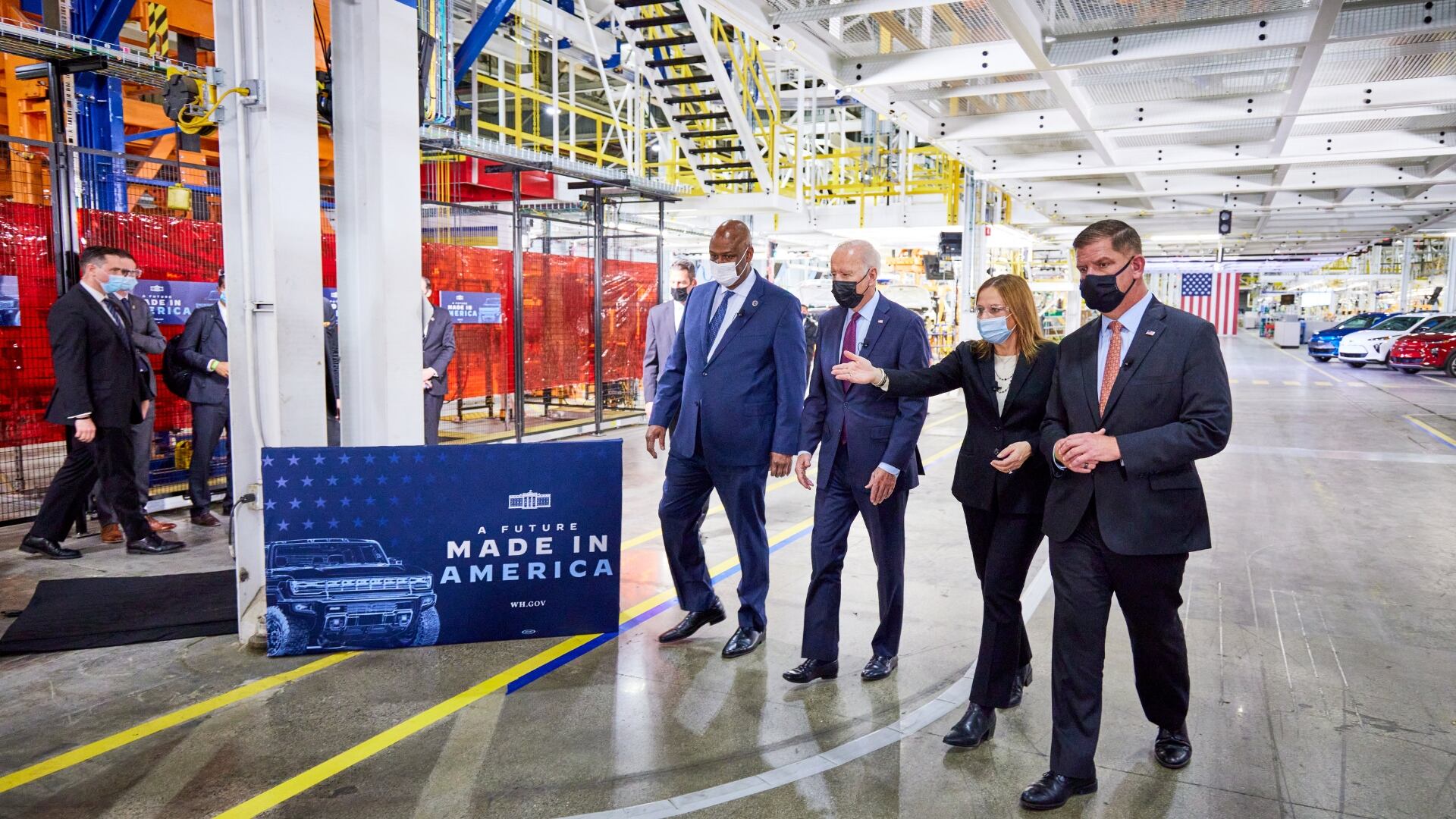
Gerald Johnson, Executive VP, Global Manufacturing and Sustainability at General Motors, joins Cheddar News to break down what Factory ZERO signifies for GM's all-electric future and why the auto manufacturer will be a leader in the growing EV industry.
According to the U.S. Labor Department, a record 4.4-million people quit their job in September, with data showing there are seven unemployed workers for every ten job openings.
However, Americans aren't just quitting their jobs for more suitable ones, many are embracing their entrepreneurial side, leaving to start their own business. Dick Schulze, founder of Best Buy joined Cheddar's Opening Bell to discuss.