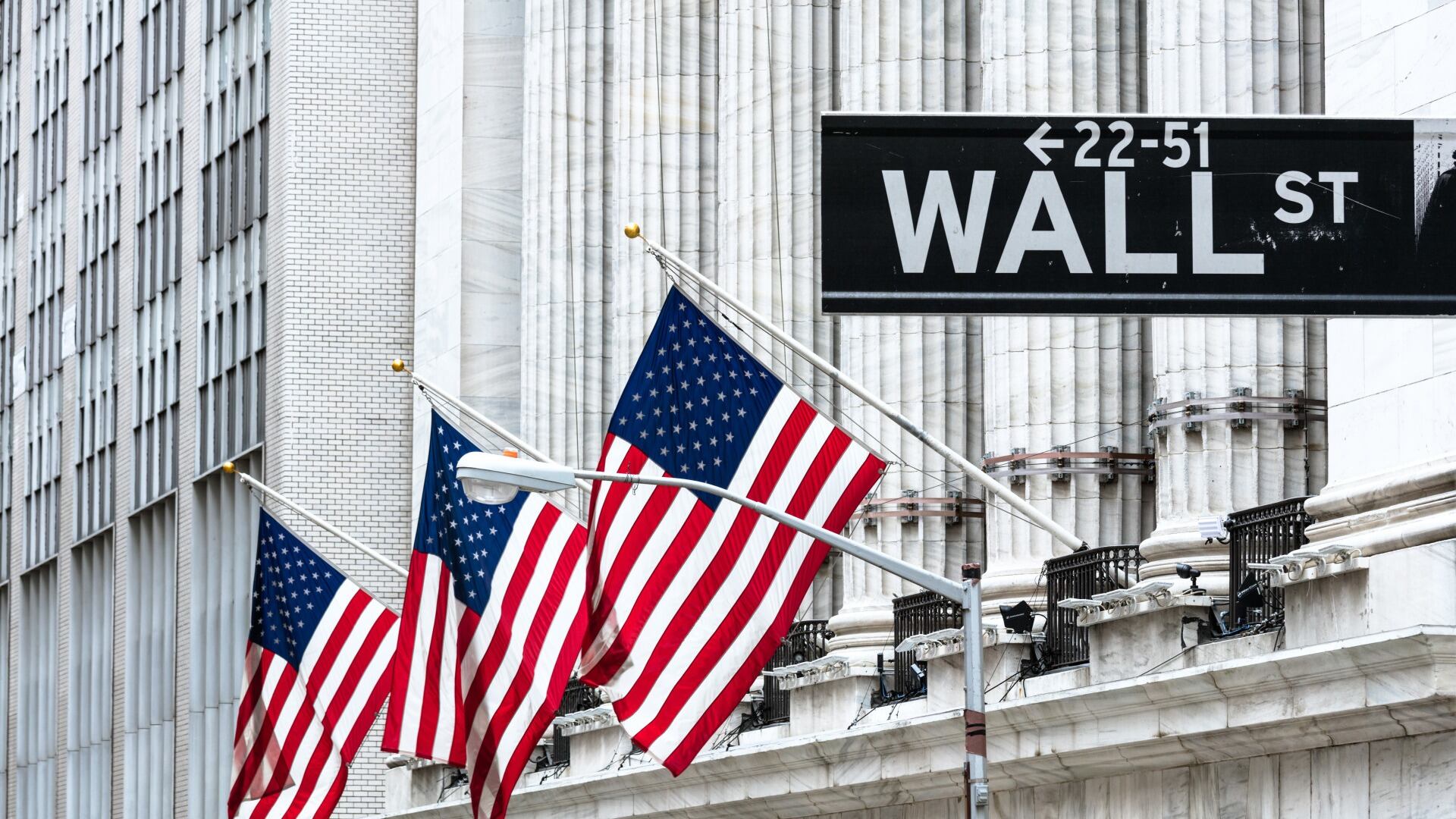
Wall Street's major stock indexes closed mixed Tuesday, as more big companies delivered their financial results for the last three months of 2022 amid lingering concerns about a potential recession.

The S&P 500 slipped less than 0.1%, its second loss in three trading days. The Dow Jones Industrial Average rose 0.3% and the Nasdaq composite fell 0.3%. Small company stocks also lost ground, with the Russell 2000 shedding 0.3%

The decline for major indexes marked a reversal from Monday, when a tech company-driven rally more than made up for the S&P 500's losses last week.

Stocks have been volatile as investors try to get a better sense of how inflation is affecting the economy, the potential for a recession and whether the Federal Reserve can ease up on its aggressive interest rate increases.

The latest batch of earnings show that companies continue to struggle with the effects of inflation on consumers and supply chains.

Post-it notes and industrial coatings maker 3M fell 6.2% for the biggest drop among S&P 500 stocks after reporting weak fourth-quarter earnings and announcing job cuts. It is the latest company to announce layoffs as consumers get squeezed by inflation and worries grow about a bigger pullback in spending and a possible recession.

Union Pacific fell 3.3% after reporting disappointing earnings and revenue.

Microsoft rose 4% in afterhours trading after the software and technology giant reported earnings that topped Wall Street's forecasts. It closed down 0.2% in regular trading.

All told, the S&P 500 slipped 2.86 points to 4,016.95. The Nasdaq gave up 30.14 points to close at 11,334.27, while the Dow added 104.40 points to 33,733.96.

The Russell 2000 index of small companies slid 5.16 points, or 0.3%, to finish at 1,885.61.

U.S. crude oil prices settled 1.8% lower.

Trading in more than a dozen companies was temporarily halted on the New York Stock Exchange after an apparent technical issue caused wide swings in their stock prices right as the market opened. Shares in Morgan Stanley, Wells Fargo, AT&T and other companies moved sharply at the open, triggering a halt in trading. The prices corrected after trading resumed. The NYSE says it is investigating the “reported issues” and all systems are now operational.

Markets have been swinging between hope and caution as investors watch to see if the Fed will adjust its inflation-fighting strategy. The central bank has already pulled its key overnight rate up to a range of 4.25% to 4.5% from virtually zero early last year.

The Fed will announce its next rate increase on Feb. 1 and traders expect a quarter-point raise, which would mark a softening of the central bank's pace.

“Where the market and the Fed are having a fairly violent disagreement right now is how long are they going to leave rates at around 5%?” said Scott Ladner, chief investment officer at Horizon Investments.

Long-term bond yields fell. The yield on the 10-year Treasury, which influences mortgage rates, fell to 3.46% from 3.52% late Monday.

Wall Street will get a few economic updates this week that could provide more insight into inflation's impact.

The government will release gross domestic product data for the fourth-quarter on Thursday. Economists expect less than 1% of growth, following 1.9% growth in the third quarter and a contraction during the first half of 2022. Investors will get more updates on personal spending and income on Friday.

——

Elaine Kurtenbach and Matt Ott contributed to this report.

Share:
More In Business
Stocks Close Monday at Session Lows
Stocks began the week closing at session lows on a day when bond yields rose and President Biden decided to stick with Jerome Powell as Fed Chair. Bryan Lee, Chief Investment Officer at Blue Zone Wealth Advisors, joins Cheddar News' Closing Bell, where he breaks down the day's activity and discusses what the Fed now needs to do going forward.
Crypto Group's Bid to Win Copy of U.S. Constitution Falls Short
A group of crypto enthusiasts pooled over $40 million dollars in an attempt to win a copy of the U.S. Constitution last week. However, their efforts came up short, as hedge fund billionaire Ken Griffin emerged as the victor in a $43.2 million Sotheby's auction. Matt Cutler, CEO & Co-Founder of Blocknative, joins Cheddar News' Closing Bell, where he explains why ConstitutionDAO ultimately came up short.
Gparency Raises $15 Million to Revolutionize Commercial Real Estate Industry
Gparency, a company that says its mission is to revolutionize the commercial mortgage industry, raised $15 million in its first funding round - representing the largest ever seed round in the commercial real estate space. Gparency's service will allow landlords and real estate developers to receive funding directly from banks, without the need for a mortgage broker. The company says its new approach will give power back to the consumer. Gparency founder and CEO Ira Zlotowitz joins Cheddar News' Closing Bell to discuss.
Markets, Treasuries Tick Up Amid Jerome Powell's Re-Nomination to Fed Chair Position
President Joe Biden announced Monday he is re-nominating Federal Reserve Chairman Jerome Powell after weeks of speculation that he would choose Democrat and Fed Governor Lael Brainard to fill the role. Biden could be looking for continuity as the U.S. continues to grapple with COVID-19 and high inflation, and investors could be on the same page: markets and treasuries ticked up after the White House made the announcement. MarketWatch Senior Reporter Greg Robb joins Cheddar News' Closing Bell to discuss Powell's re-nomination, what we can expect from the Fed's December meeting, whether it will speed up its taper timeline, and more.
Biden Choice to Keep Jerome Powell at Fed Was 'Path of Least Resistance'
President Joe Biden named Jerome Powell, initially appointed by President Trump, to keep his seat as the chair of the Federal Reserve on Monday amid the ongoing challenges of the pandemic, inflation, and unemployment. David Beckworth, a former international economist for the Treasury Department and a senior fellow with the Mercatus Center, joined Cheddar to discuss what he sees as the practicality of Biden's decision. "What Powell brings to the table is he's built up political capital with Republicans and Democrats," he said. "It's easy for him to get the job done. I think in one way he was the path of least resistance for the president."
Supply Chain Issues and Regulatory Cost Blamed for Surging Housing Costs
As housing prices continues to rise, Tim Rood, managing director at the real estate finance solutions company SitusAMC, joined Cheddar's "Closing Bell" to talk about what is driving up the costs, attributing it to supply chain constraints and regulatory expenses. Rood stated that the federal government's response to the 2008 financial crisis has added to the growing price tags. "The government came down super hard on banks and independent mortgage companies because of the defaults," he said.
Load More