Stocks climbed in early trading on Wall Street Thursday as reports suggested that even though the economy is still suffering severely, the pace of pain may be decelerating. The S&P 500 rose 1.3%, following similar gains in Europe. The day’s headliner economic report showed another 3.2 million U.S. workers applied for jobless benefits last week, bringing the total over the last seven weeks to 33.5 million. It’s a shocking number, but it’s also the fifth straight week of decline since hitting a peak in late March. Several companies including Lyft and PayPal said they were seeing some encouraging trends in their businesses.

THIS IS A BREAKING NEWS UPDATE. AP’s earlier story is below:

Stock markets and the price of oil pushed higher on Thursday ahead of the latest weekly jobless claims figures in the U.S. and after China reported a rise in exports as its pandemic lockdown eased.

As more countries start to remove the draconian limits on business and public life, investors are trying to gauge how quickly the global economy might bounce back.

The labor market in the United States has been a focal point. On Thursday, government data will likely show that about 3.5 million people sought jobless aid last week, bringing the total to nearly 34 million since the shutdowns began seven weeks ago. On Friday, a monthly report is expected to show that the unemployment rate jumped to at least 16% in April — from just 4.4% in March.

Wall Street futures were up ahead of the start to trading, with Dow futures up 1.3% and those for the S&P 500 up 1.4%.

In Europe, France’s CAC 40 gained 0.8% to 4,470. Germany’s DAX also added 0.8%, to 10,692, while Britain’s FTSE 100 rose 0.7% to 5,895.

The Chinese trade data showed an encouraging 3.5% rise in exports in April, driven by electronics shipments and textiles, which included a surge in mask exports.

The data show China’s exports to the United States rose 2.2% in April, while imports of American goods fell 11% in a reflection of weak Chinese industrial and consumer demand despite the lifting of most anti-virus controls.

Imports fell 13.7% from a year earlier to $179.6 billion, worse than the first quarter’s 2.9% decline. But total exports rose to $200.3 billion, a turnaround from the 13.3% contraction in the three months ending in March.

Forecasters warned that strength is unlikely to last as the coronavirus pandemic depresses global consumer demand.

Comments by President Donald Trump raising the possibility of further trade friction with Beijing have worried investors hoping for better times as other economies begin to reopen from pandemic shutdowns.

Trump said he would soon assess progress in a preliminary trade agreement with China that took effect in January, extending a truce in a painful tariffs war between the world’s two biggest economies.

The possibility of revived friction over trade at a time when economies have been slammed by the pandemic and resulting travel restrictions has rattled investors in Asia, where China is the main driver for regional growth.

“President Trump’s latest threat to impose additional tariffs on China could also bring some front-loading exports in the near term," Wang said.

Most Asian markets slipped Thursday, but Japan's benchmark Nikkei 225, reopening after Golden Week holidays, gained 0.3% to finish at 19,674.77.

South Korea's Kospi was little changed, inching down less than 0.1% to 1,928.61. Australia's S&P/ASX 200 lost 0.4% to 5,364.20. Hong Kong's Hang Seng fell 0.7% to 23,980.63, while the Shanghai Composite fell 0.2% to 2,871.52.

Benchmark U.S. crude surged $2.51 to $26.50a barrel in electronic trading on the New York Mercantile Exchange. It fell 57 cents, or 2.3%, to $23.99 a barrel Wednesday.

Brent crude oil, the international standard, gained $1.98 to $31.70 a barrel.

The dollar inched up to 106.60 Japanese yen from 106.13 yen Wednesday. The euro weakened to $1.0790 from $1.0795.

___

AP Business Writer Joe McDonald contributed.

Share:
More In Business
Stocks Close the Week Lower on Mixed Jobs Report, COVID-19 Omicron Variant Volatility
Stocks closed lower Friday after a volatile week that saw investor skittishness over the COVID-19 omicron variant. Investors were also eyeing the mixed November jobs report, which showed a lower than expected number of 210,000 jobs added, but unemployment falling to 4.2%. Aadil Zaman, Partner at Wall Street Alliance Group, joins Cheddar News' Closing Bell to discuss today's close, the mixed jobs report, what impact the omicron variant could have on markets, and more.
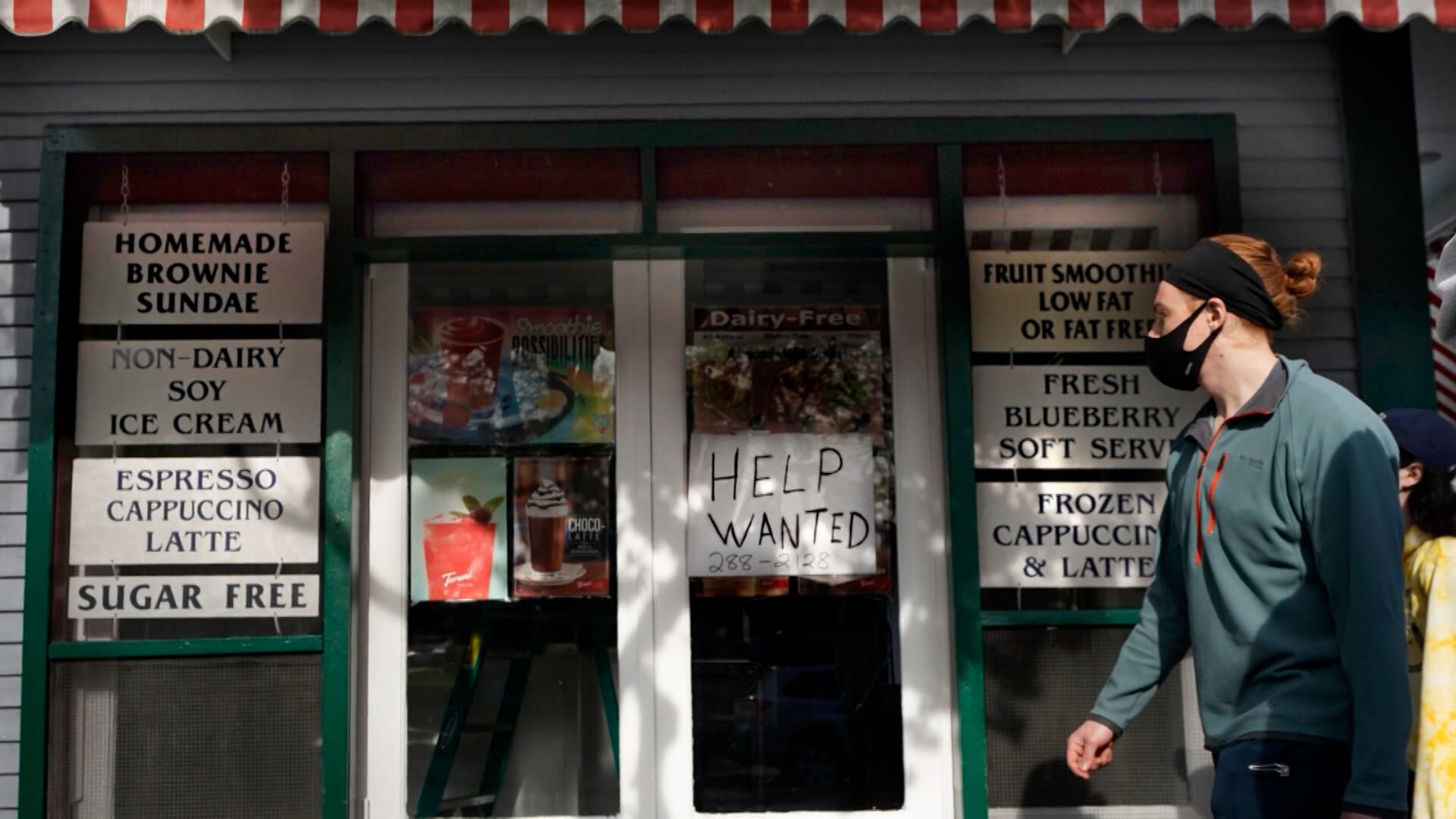
Some U.S. Restaurants Are Pausing Online Delivery Orders During Peak Hours
Many restaurants across the country have lately turned off delivery and online orders during peak hours, as eateries are still struggling with labor shortages and as many are also seeing more customers return for in-person dining. Wall Street Journal reporter Heather Haddon joins Cheddar News' Closing Bell to discuss.
Mixed November Jobs Report Shows Hiring Slump, But Lower Unemployment Rate
November's jobs report is tricky: nonfarm payrolls only increased by 210,000, following an October gain of 546,000. At the same time, the unemployment rate fell to 4.2% - and the labor force participation rate rose 61.8% to its highest level since March 2020. Also of note: the retail sector saw a decline of 20,000 jobs despite what was once a traditional late fall push to hire before the holiday sales rush. What's going on in the labor market, and can we expect more volatile numbers as the omicron variant spreads during the winter months? Adam Ozimek, Chief economist at Upwork, joins Cheddar News' Closing Bell to discuss the mixed jobs report, sector winners and losers, retail's flip-flop, and more.
DiDi Delisting Could Signal Forced Decoupling of China-U.S. in Financial Markets
Chinese regulators are reportedly behind China-based ride-hailing company DiDi exiting from the New York Stock Exchange, just days after listing earlier this year. The regulators stated prior that DiDi had not received the necessary clearances to list in the states. Gordon Chang, Asian affairs expert, joined Cheddar to break down what the delisting says about the relationship between nations. "This really strikes me as an attempt to really to force a decoupling of China and the U.S. in the financial markets," Chang said.
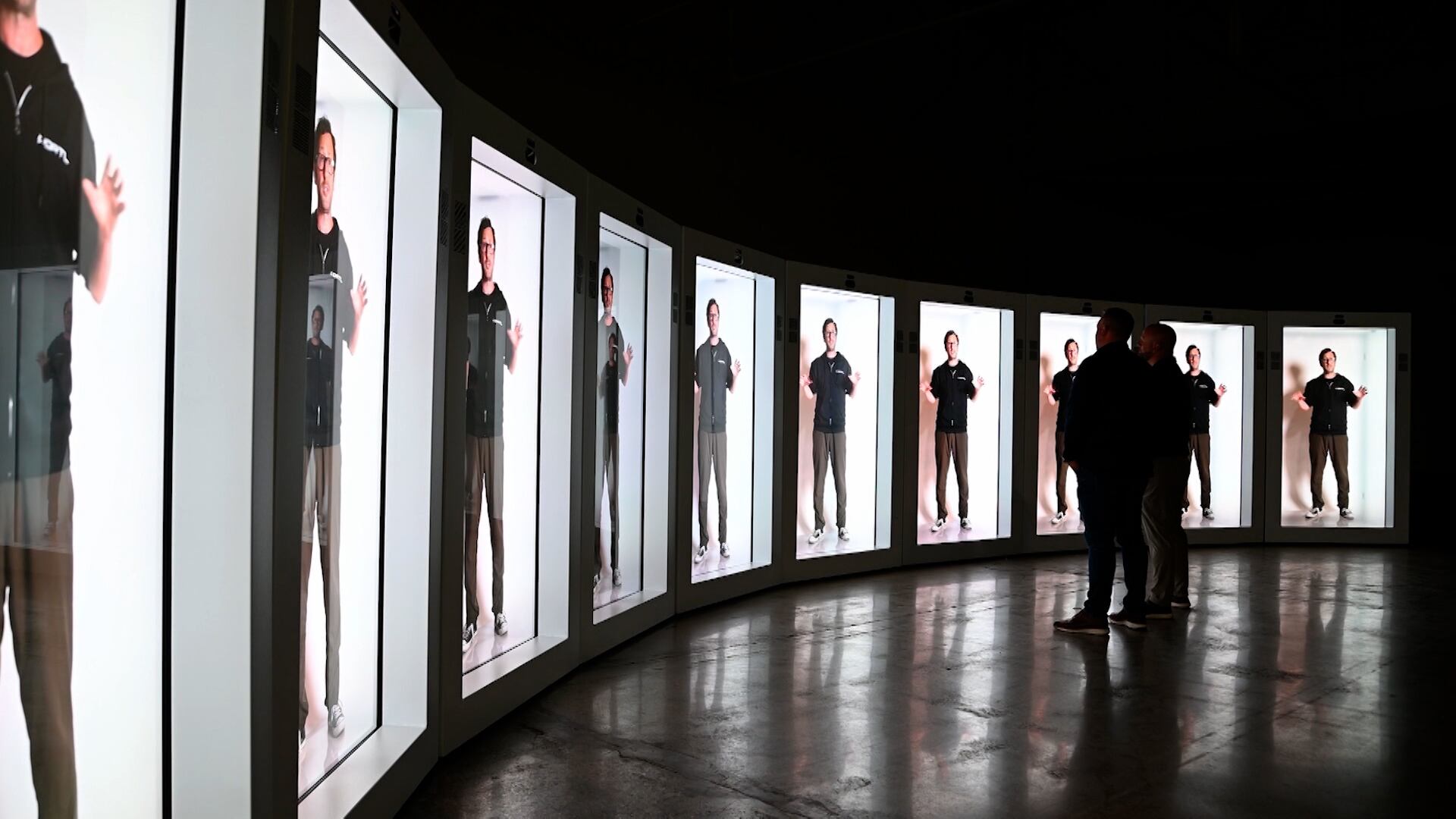
PORTL CEO on 'Real' Experience of Hologram Platform vs. AR, Metaverse
Hologram communication platform maker PORTL is looking to take communication to the next level. Founder and CEO David Nussbaum joined Cheddar to talk about the company's recent $12 million Series A funding round that will be used to bring the concept of holoportation to market. Nussbaum noted his hologram technology is just not comparable to augmented reality or virtual metaverses because the image projection is happening in real-time and in actual reality. "Well, unlike VR or AR, we're 'R.' We're real. You don't need a headset. You don't need wearables. You don't need to download anything. It's incredible," he said.
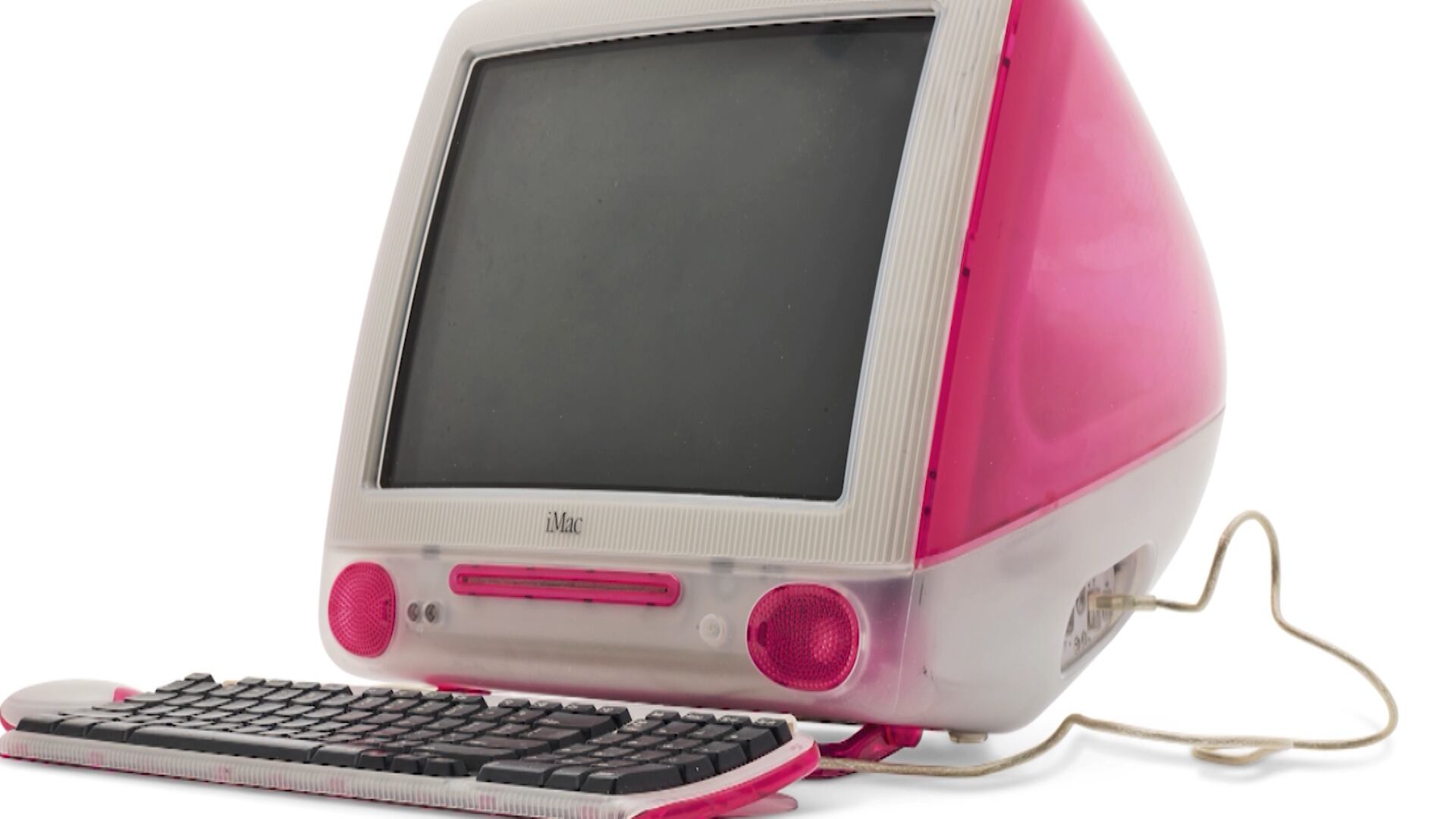
Wikipedia Founder Jimmy Wales Auctioning His Strawberry iMac and Interactive NFT
Wikipedia founder Jimmy Wales stopped by Cheddar's "Between Bells" to talk about his Birth of Wikipedia auction at Christie's putting two items linked to the origins of Wikipedia up for sale. On the auction block are his original strawberry iMac that was used to create the long-running online encyclopedia and what Wales described as an interactive NFT of his first Wikipedia edit rather than a static image. "Once it's been sold, the owner can turn it on, and anyone can edit the page and it will be reflected in the NFT," he said.
The Rise of Smart Tech and Voice Games; Warming Your Home Through Interior Design
On this episode of Your Future Home, Carmine Satabella, Interior Designer & Television Host, joins to break down how to get the most out of your winter decor this year and basic kitchen fundamentals that go a long way; Max Child, CEO and co-founder of Volley, discusses the rise of voice games and how tech is continuing to change smart homes; Cheddar breaks down everything you need to know about how to start flipping homes.
Load More