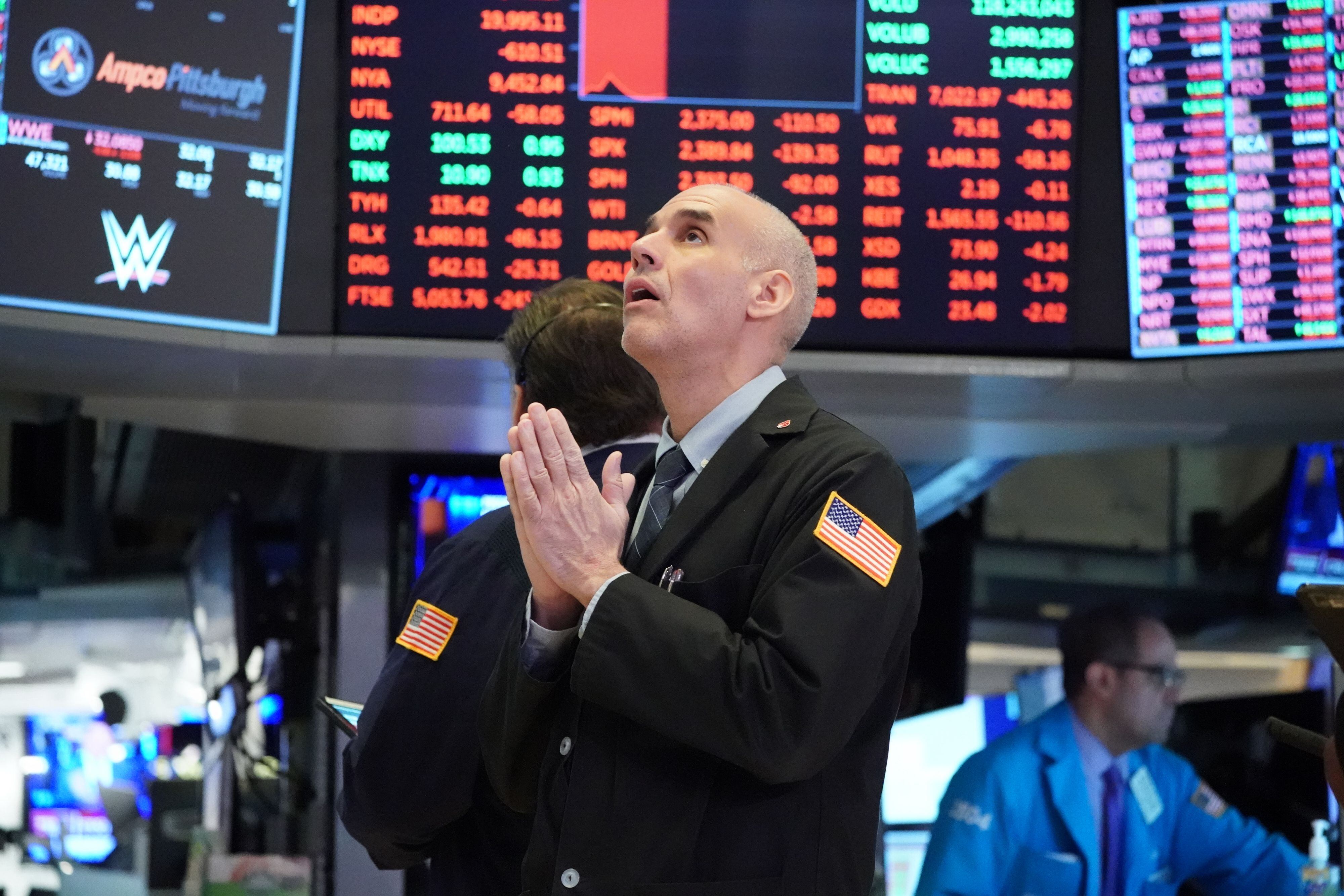
Traders work on the floor at the opening bell of the Dow Industrial Average at the New York Stock Exchange on March 18, 2020 in New York. (Photo by BRYAN R. SMITH/AFP via Getty Images)
By Stan Choe
The vicious swings keep coming for the stock market, and the S&P 500 sank more than 3 percent in early trading Wednesday to erase much of the prior day's big gain.
Markets have been incredibly volatile for weeks as Wall Street and the White House acknowledge an increasing risk of a recession due to the coronavirus outbreak. The typical day this month has seen the stock market swing up or down by 4.9 percent. Over the last decade, the typical move was just 0.4 percent.
The selling pressure swept markets around the world. Benchmark U.S. oil fell 10 percent and dropped below $25 per barrel for the first time since 2002. European stock indexes lost 4 percent following broad losses in Asia. Even prices for longer-term U.S. Treasurys, which are seen as some of the safest possible investments, fell as investors flocked to the very shortest-term Treasury debt.
It was just a day ago that the S&P 500 surged 6 percent after President Donald Trump said he's "going big" in plans to aid an economy that's increasingly shutting down by the day. The program could approach $1 trillion, and it would follow a spate of emergency actions by the Federal Reserve and other central banks to get financial markets running more smoothly.
Despite all that, investors are struggling with how much to pay for anything — stocks, bonds, oil — when it's so uncertain how badly the economy is getting hit, how much profit companies will make and how many companies may go into bankruptcy due to a cash crunch.
"These are truly unprecedented events with no adequate historical example with which to precisely anchor our forecast," Deutsche Bank economists wrote in a report Wednesday.
With all the uncertainty and early evidence that China's economy was hit much harder by the virus than earlier thought, they now see "a severe global recession occurring in the first half of 2020."
But they also are still forecasting a relatively quick rebound, with activity beginning to bounce back in the second half of this year in part because of all the aid promised from central banks and governments.
Investors say they need to see the number of infections slow before markets can find a bottom. The number of new cases reported in China, where the virus emerged in December, is declining but infections in the United States, Europe and elsewhere are increasing.
The number of infections has topped 200,000 worldwide, and the virus has killed more than 8,000.
For most people, the coronavirus causes only mild or moderate symptoms, such as fever and cough, and those with mild illness recover in about two weeks. Severe illness including pneumonia can occur, especially in the elderly and people with existing health problems, and recovery could take six weeks in such cases.
The Dow Jones Industrial Average was down 828 points, or 3.9 percent, shortly after 10 a.m. Eastern time. after being down as many as 1,365 shortly after trading began. If it crosses back over the 1,000 threshold — which is not a big if given how steep swings have been within the same day — it would be the eighth straight day the Dow has moved by that much.
The S&P 500, which dictates how 401(k) accounts perform much more than the Dow, is down nearly 29 percent from its record set last month.
All the uncertainty has pushed many people toward safety. Last month, investors pulled $17.5 billion out of stock mutual funds and exchange-traded funds, even though stocks set all-time highs in the middle of the month. Money-market funds, meanwhile, drew $25.5 billion, according to Morningstar.
That was all before the market's sell-off accelerated this month, as broad swaths of the economy shut down in hopes of better containing the outbreak. Restaurants have closed to dine-in customers, planes are parked and sports arenas have been dimmed. Goldman Sachs strategists describe this month as "March Sadness."
Home essentials maker Outlines announced its launch at the beginning of 2022, along with $1 million in pre-seed funding led by Social Impact Capital. Outlines says it is re-imagining how we keep our homes clean while also reducing plastic waste. The company's debut product, the Shower Liner System, is made of long-lasting materials, including easy-to-recycle plastic. Outlines co-founder and CEO Luke Young and co-founder and COO Megan Ceryanec joined Cheddar News' Closing Bell to discuss.
Despite Netflix's successful fourth-quarter earnings report, investors are hitting the 'pause' button after the company admitted that competition from other streaming platforms could eat into growth. Netflix is also lowering expectations for expected subscriber growth for the first quarter of this year, anticipating it will add just 2.5 million, far below the 3.98 million subscribers it added during the same quarter one year ago. What could happen to the streaming giant as the streaming wars keep heating up? Greg Martin, Co-Founder of Rainmaker Securities, joins Cheddar News' Closing Bell to discuss whether Netflix could lose its top spot, how it's trying to compete with other platforms, the streaming industry landscape, and more.
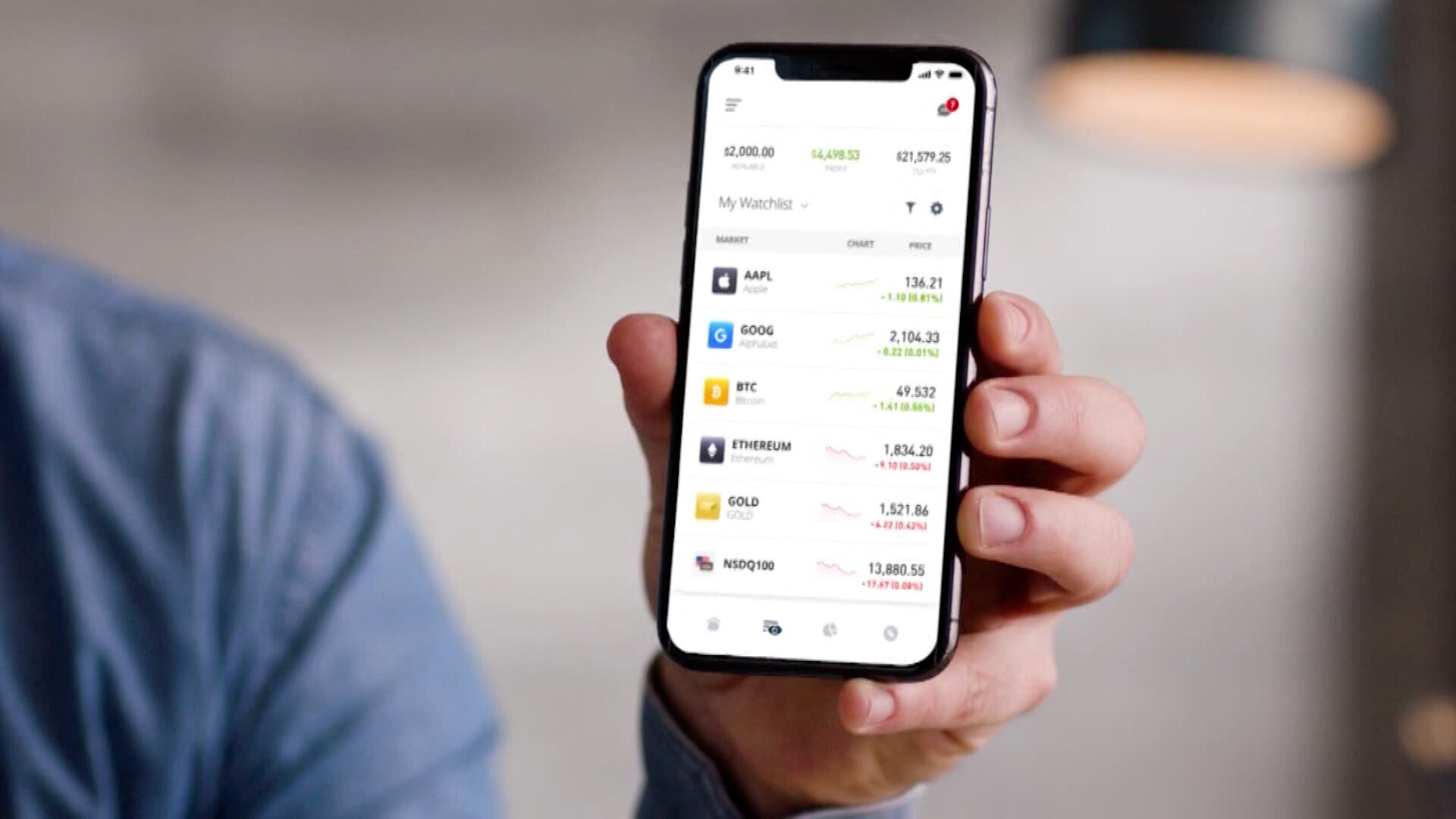
eToro, the social trading platform that offers crypto, forex, and equities, recently announced that it's giving U.S. users the option to include stocks and ETFs as part of their investment portfolios. Lule Demmissie, CEO of eToro U.S., joined Cheddar to talk about the company’s expanded offerings. "We felt, although crypto is a fantastic asset class, that individuals benefit from having a broader access to different kinds of investments, and equities is definitely one of them," Demmissie noted.
Coming off of CES, Blink Charging announced a partnership with legacy automaker General Motors to provide charging stations for its newest electric cars. The company specializes in stations they own and operate that also accommodate residential and commercial locations. Michael D. Farkas, founder and CEO, noted that they "don’t discriminate” when it comes to locating their chargers while also taking the philosophy of seeing their hardware more like hot water heaters rather than smartphones constantly in need of upgrading. "We believe it's one of the reasons why we were selected by GM," Farkas said. "These dealerships have to invest in these locations and make sure that this hardware is workable for a very, very long period of time."
Simeon Siegel, managing director and senior analyst at BMO Capital Markets joins Cheddar News to discuss CNBC's report that Peloton plans to halt production, despite the company's CEO denying those claims.
Mona Zhang, states cannabis policy reporter at POLITICO Pro joins Cheddar News to discuss major factors that caused Canada's retail marijuana sales to drop last year.
Jackie Rotman, founder and CEO of the Center for Intimacy Justice joins Cheddar News to talk about why Facebook is banning ads by companies targeting women's sexual health but not ads catered to men.
TikTok recently announced that it is testing a paid subscription model. The news comes days after Instagram publicized a similar service. TikTok has made $2.3 billion from in-app purchases, but mostly through tips, in 2021, showing that its users may be open to spending money on the platform.
The NCAA voted to streamline their constitution at their annual convention on Thursday. Each of the three college divisions can decide how student-athletes can make money from outside sources but still restricts schools from directly paying its players.
Netflix beat its earnings projections for Q4 — but the stock still plummeted as the streaming pioneer cut back on its forecast for future subscribers. Michael Robinson, the chief technology strategist at Money Map Press, joined Cheddar to discuss the report and what's driving the downward pressure on its shares. "It's the growth is really what's worrying people," he said. "'A' we have slowing economic growth, and 'B' we've got slowing growth for this company, as 'C' we have an increase in competition."