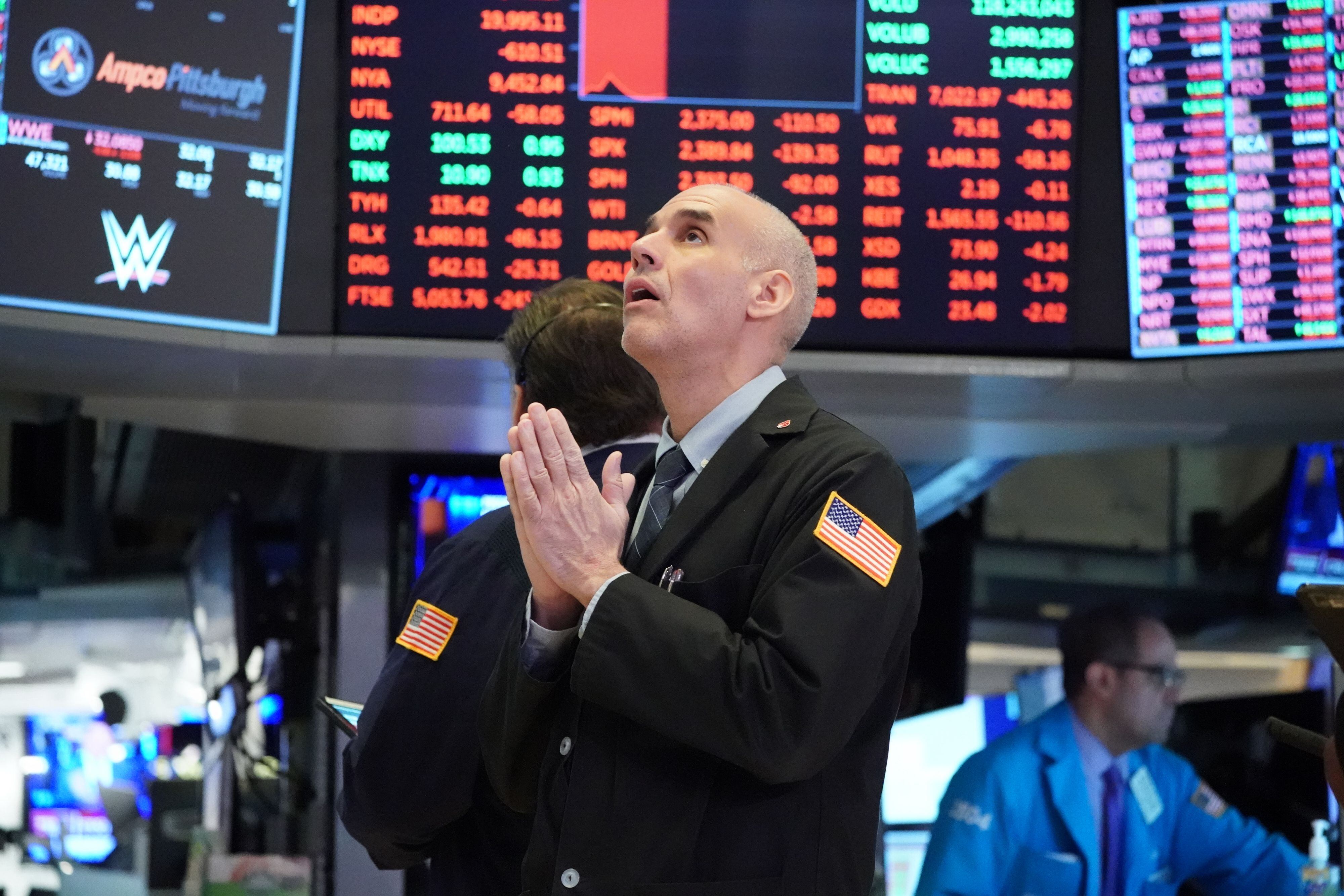
Traders work on the floor at the opening bell of the Dow Industrial Average at the New York Stock Exchange on March 18, 2020 in New York. (Photo by BRYAN R. SMITH/AFP via Getty Images)
By Stan Choe
The vicious swings keep coming for the stock market, and the S&P 500 sank more than 3 percent in early trading Wednesday to erase much of the prior day's big gain.
Markets have been incredibly volatile for weeks as Wall Street and the White House acknowledge an increasing risk of a recession due to the coronavirus outbreak. The typical day this month has seen the stock market swing up or down by 4.9 percent. Over the last decade, the typical move was just 0.4 percent.
The selling pressure swept markets around the world. Benchmark U.S. oil fell 10 percent and dropped below $25 per barrel for the first time since 2002. European stock indexes lost 4 percent following broad losses in Asia. Even prices for longer-term U.S. Treasurys, which are seen as some of the safest possible investments, fell as investors flocked to the very shortest-term Treasury debt.
It was just a day ago that the S&P 500 surged 6 percent after President Donald Trump said he's "going big" in plans to aid an economy that's increasingly shutting down by the day. The program could approach $1 trillion, and it would follow a spate of emergency actions by the Federal Reserve and other central banks to get financial markets running more smoothly.
Despite all that, investors are struggling with how much to pay for anything — stocks, bonds, oil — when it's so uncertain how badly the economy is getting hit, how much profit companies will make and how many companies may go into bankruptcy due to a cash crunch.
"These are truly unprecedented events with no adequate historical example with which to precisely anchor our forecast," Deutsche Bank economists wrote in a report Wednesday.
With all the uncertainty and early evidence that China's economy was hit much harder by the virus than earlier thought, they now see "a severe global recession occurring in the first half of 2020."
But they also are still forecasting a relatively quick rebound, with activity beginning to bounce back in the second half of this year in part because of all the aid promised from central banks and governments.
Investors say they need to see the number of infections slow before markets can find a bottom. The number of new cases reported in China, where the virus emerged in December, is declining but infections in the United States, Europe and elsewhere are increasing.
The number of infections has topped 200,000 worldwide, and the virus has killed more than 8,000.
For most people, the coronavirus causes only mild or moderate symptoms, such as fever and cough, and those with mild illness recover in about two weeks. Severe illness including pneumonia can occur, especially in the elderly and people with existing health problems, and recovery could take six weeks in such cases.
The Dow Jones Industrial Average was down 828 points, or 3.9 percent, shortly after 10 a.m. Eastern time. after being down as many as 1,365 shortly after trading began. If it crosses back over the 1,000 threshold — which is not a big if given how steep swings have been within the same day — it would be the eighth straight day the Dow has moved by that much.
The S&P 500, which dictates how 401(k) accounts perform much more than the Dow, is down nearly 29 percent from its record set last month.
All the uncertainty has pushed many people toward safety. Last month, investors pulled $17.5 billion out of stock mutual funds and exchange-traded funds, even though stocks set all-time highs in the middle of the month. Money-market funds, meanwhile, drew $25.5 billion, according to Morningstar.
That was all before the market's sell-off accelerated this month, as broad swaths of the economy shut down in hopes of better containing the outbreak. Restaurants have closed to dine-in customers, planes are parked and sports arenas have been dimmed. Goldman Sachs strategists describe this month as "March Sadness."
While many still remain skeptical about the metaverse, big tech firms and even one big bank are ready to expand their virtual worlds. Facebook parent company has pivoted so hard it will now call its employees 'Metamates,' and even JPMorgan Chase has created its own digital lounge on one virtual platform. While the sector remains young, there seems to be significant investment opportunity, especially with companies like Nvidia. Adam Johnson, a portfolio strategist at Adviser Investments, joins Closing Bell to discuss which companies could win in this space, consumer appetite, and more.
Marc Blinder, Co-Founder and CEO of Aikon, joins Cheddar News' Closing Bell, where he discusses how his company is helping businesses use blockchain applications without needing to learn the intricacies of the new technology.
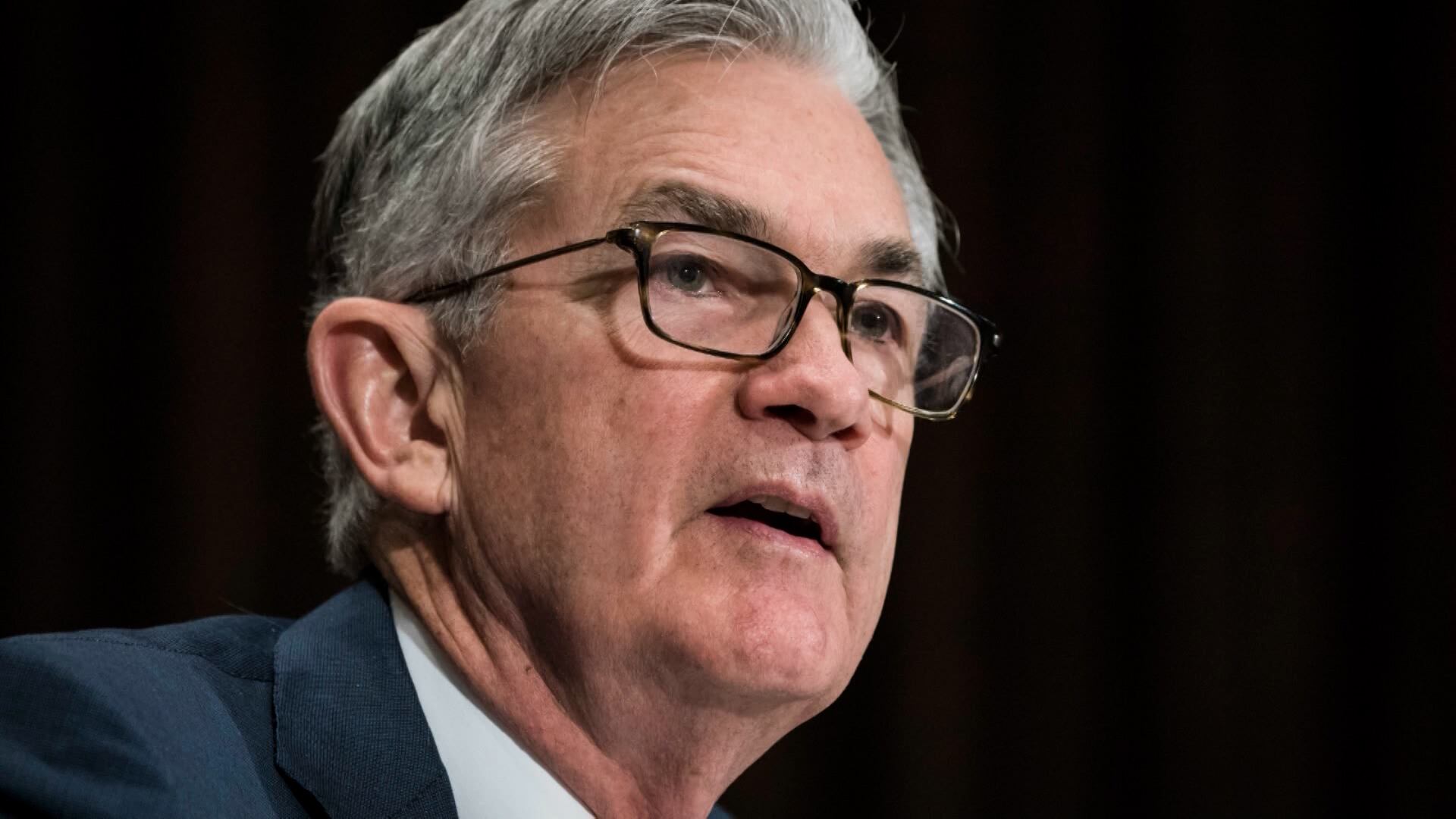
The Federal Reserve minutes from its January meeting are indicating it's sticking to an interest rate hike in March, but what does the report coupled with ongoing inflation mean for investors going forward? Scott Brown, a market strategist at LPL Financial, joined Cheddar News to break down the minutes and talk about how investors might navigate the rest of the year. "it seems like the market is kind of inclined to trade off these headlines, really, through the first half of the year," he said. "And then, oh, don't forget, we've got midterm elections, which always tend to add a little bit of volatility in the second half of the year." Brown noted that the path forward for stock investors in 2022 would be "rockier" than last year.
Season 13 "Shark Tank" contestant Tania Speaks secured a $400,000 deal for her Speaks Organic Skincare brand with "Shark" Mark Cuban while also being named one of the best pitches in the history of the show — all at 19 years old. Now 20, Speaks joined Cheddar News to talk about the skincare line, the clean beauty industry, and the moment that host Cuban was moved by her pitch. "I couldn't believe that he got emotional. I'm surprised I held back my tears that long," the young entrepreneur revealed. "It's just amazing for someone else to be inspired by your story, especially Mark Cuban himself."
The media giant formerly known as ViacomCBS has officially rebranded itself as Paramount Global with a focus on its streaming service, Paramount Plus. Naveen Chopra, chief financial officer at Paramount, joined Cheddar to discuss the company’s name change and streaming wars. "There are components of content licensing that we continue to do, either historical arrangements or opportunities to license content that don't really impinge on what we're trying to do with our owned and operated services and that continues to be an important ingredient in our broader financial model," he said. "But our number one priority is putting our best assets on Paramount Plus." Chopra also discussed theatrical release windows before feature films hit its service and the platform's subscription goals.
The recent 7.5% year-over-year increase in consumer prices is the highest since 1982, and drew some strong reactions from investors, with speculations that the Federal Reserve will hike interest rates by 50 points instead of 25. But other analysts believe that the Fed will stick with its original plan of 25 points next month. Chris Vecchio, Senior Analyst, at DailyFX broke down how the Fed could potentially react to the historically high inflation data.
Ride share competitors Uber and Lyft both posted their fourth quarter earnings days apart from each other. Both companies have been trying to get back on their feet after taking some pandemic-related hits, but the Omicron variant had other ideas as the year came to a close, with each company taking a hit in ridership in December. Lance Ippolito, head trader at The Future of Wealth explains how Uber and Lyft measured up this earnings period and why Uber may still have an edge over the competition.