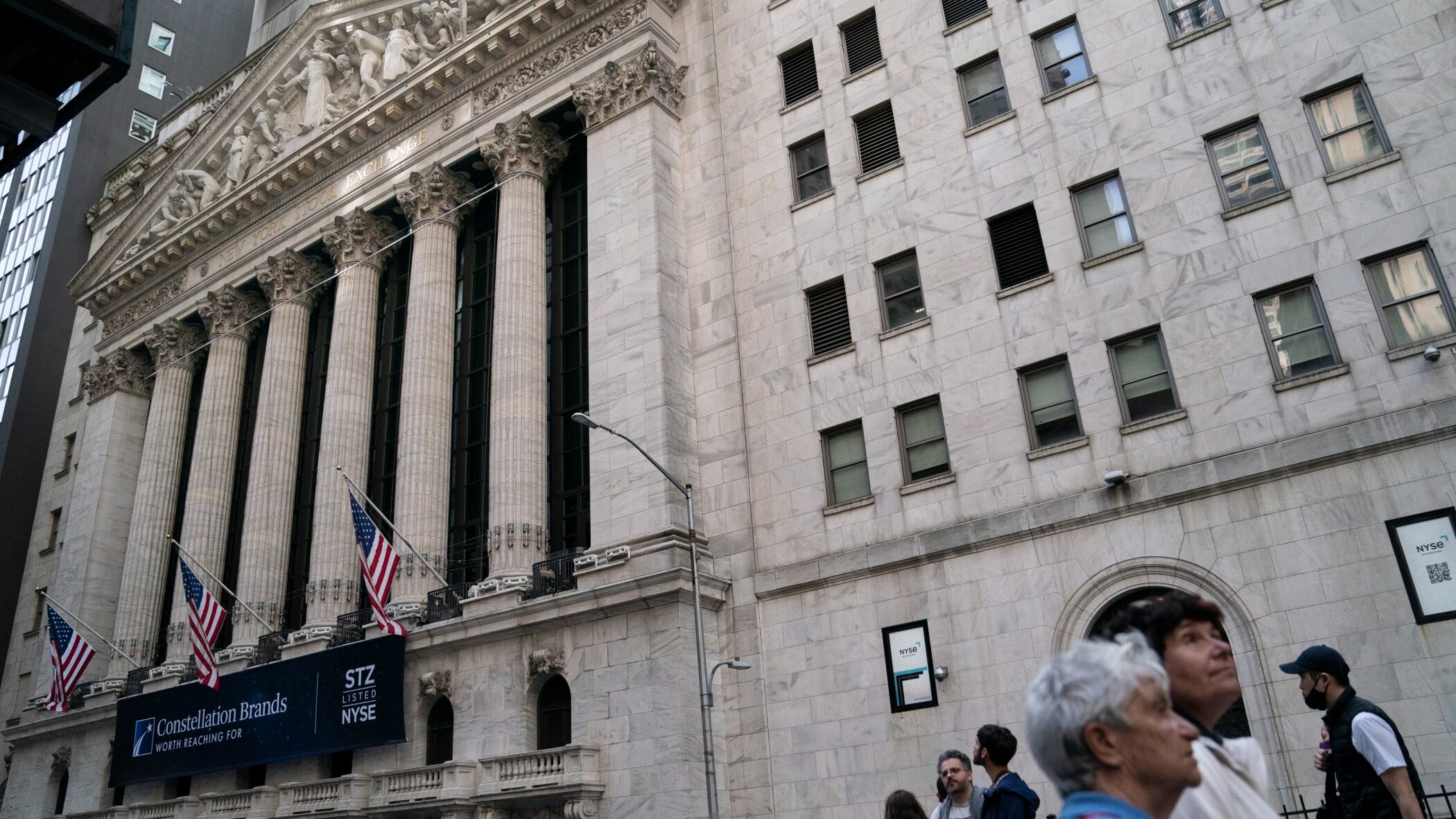
Pedestrians pass the New York Stock Exchange, May 5, 2022, in the Manhattan borough of New York. (AP Photo/John Minchillo)
By Stan Choe
Stocks ended mixed a day after falling to their worst loss since December, as Wall Street prepares for interest rates to stay higher for longer. The S&P 500 dipped 0.2% Wednesday after drifting between small gains and losses. The Dow fell and the Nasdaq rose. Treasury yields pulled back a bit after their surge the prior day. Yields have shot higher this month on expectations the Federal Reserve will be more aggressive on interest rates than markets had expected to drive down inflation. Minutes from the Fed’s last meeting showed policy makers still think inflation is too high despite a recent cooldown.
THIS IS A BREAKING NEWS UPDATE. AP’s earlier story follows below.
Stocks wavered between small gains and losses on Wall Street Wednesday, a day after falling to their worst loss since December on worries about higher interest rates.
The S&P 500 fell 0.2% after drifting between small gains and losses throughout the day. The Dow Jones Industrial Average fell 91 points, or 0.3%, at 33,037, as of 2:44 p.m. Eastern time, while the Nasdaq composite was up 0.1%.
After leaping at the start of the year, stocks hit a wall in February on worries that inflation may not be cooling as quickly or as smoothly as hoped. That has Wall Street upping its forecasts for how high the Federal Reserve will take interest rates, as well as for how long it will keep them at that level.
High rates can help drive down inflation, but they raise the risk of a recession because they slow the economy. They also hurt investment prices.
Yields in the Treasury market have shot higher this month after several stronger-than-expected reports on the economy forced the recalibration by Wall Street, which had earlier built bets that easing inflation would get the Fed to take it easier on interest rates soon.
The yield on the 10-year Treasury is near its highest level since November. It pulled back a bit from its surge on Tuesday, dipping to 3.91% from 3.95%. That helped take some pressure off stocks on Wednesday.
The two-year yield, which moves more on expectations for the Fed, fell to 4.68% from 4.73%. It’s also been near its highest level since November. If it tops that level, it would be at its highest since 2007.
Traders have in recent weeks reduced bets that the Fed could cut rates later this year. Now they’re in closer alignment with what Fed officials have been telling the market for months, if not preparing for even more.
Investors are penciling in at least two more rate hikes of 0.25 percentage points. They’re even talking about the possibility that the Fed may consider going back to increases of 0.50 points.
The Fed has brought its main overnight rate up to a range of 4.50% to 4.75%, up from virtually zero at the start of last year, in its drive to stamp out high inflation. It’s also said it envisions no cuts to rates this year.
Minutes from the central bank's last policy meeting showed that nearly all of its policymakers agreed earlier this month to slow the pace of their rate increases to a quarter-point. Its next move on rates will be next month.
Traders see a nearly three-in-four chance that the Fed will raise rates by 0.25 points, according to CME Group. They see a 24% chance of a hike of 0.50 points. A month ago, traders were seeing a roughly 21% chance that the Fed wouldn't raise rates at all in March.
A relatively lackluster earnings reporting season for big U.S. companies is winding down, and some of Wednesday's biggest losers dropped despite reporting better results for the latest quarter than expected. That's because investors have been putting more emphasis on what companies say about their upcoming results, with worries high about rising costs and high inflation eating into profits.
Charles River Laboratories dropped 11.9% despite topping forecasts for the latest quarter. It said it received a U.S. Justice Department subpoena related to shipments of non-human primates that the company received from its supplier in Cambodia. The company said it voluntarily suspended such shipments, which pushed it to cut its forecast for revenue this upcoming year.
Keysight Technologies tumbled 13.5% for the largest loss in the S&P 500 despite also reporting stronger profit and revenue for the latest quarter than expected. Analysts pointed to its reporting of softer orders than forecast.
On the winning side was Diamondback Energy, which rose 2.1% after it reported a stronger profit for its latest quarter than analysts expected.
___
AP Business Writers Damian J. Troise, Yuri Kageyama and Matt Ott contributed.
This year's worldwide semiconductor shortage limited the supply of everything from new cars to smartphones; and now, many in the chip industry expect the shortage to continue deep into 2022, and maybe even 2023. Semiconductor senior research analyst for Robert W. Baird & Co., Tristan Gerra, joins Cheddar News' Closing Bell to discuss.
Direct health care company Nomi Health recently raised $110 million in a Series A round. Nomi Health lets public and private organizations directly purchase healthcare at reduced costs, and pay providers in real-time. It also delivers healthcare directly to under-served communities via its fleet of mobile care units, which the company says is the largest in the country. Nomi Health says its mission is to improve the health care experience for all Americans. Nomi Health CEO Mark Newman joined Cheddar News' Closing Bell to discuss.
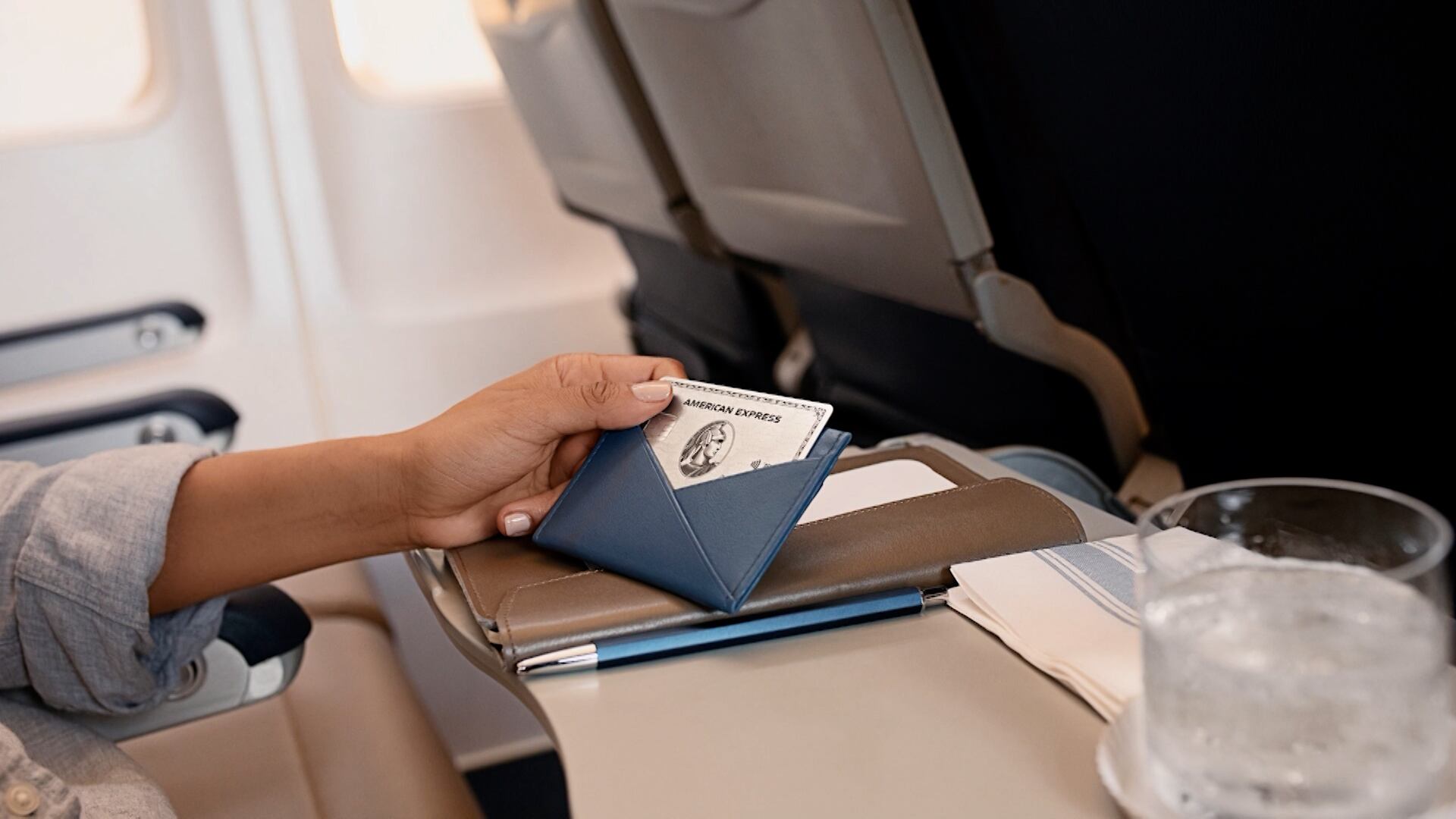
American Express and Nova Credit have partnered the credit passport program aimed at expanding access to credit for immigrants from the Dominican Republic, Nigeria, Kenya, and Brazil. Misha Esipov, co-founder and CEO of Nova Credit, joined Cheddar's Ken Buffa to talk about the program's benefits for immigrants who have to start over in the U.S. and are looking to establish a credit history. "If you were a good borrower in your home country — and you can prove you were a borrower in your home country — when you first arrive here, you can use that information to continue to be a good borrower," he said of the service.
Despite the rising cost of a home in the U.S., sales rose 1.9 percent in November, and according to Zillow, prices are expected to climb even higher in 2022. M. Ryan Gorman, president and CEO of Coldwell Banker Real Estate, told Cheddar's "Closing Bell" that while median prices are high, demand for a new home is just as high, particularly in "tax and weather favorable" destinations like Florida, Tennessee, and Texas. Gorman also said he sees buyer demand remaining high next year even if interest rates rise somewhat, noting that the already tight housing inventory is expected to slim down even more and foreign purchasers return to the market. "As we get past the holidays and those foreign buyers are able to come back and actually acquire homes and go shopping, I think that may be a bigger driver of some of that increase in buyer demand," he said.
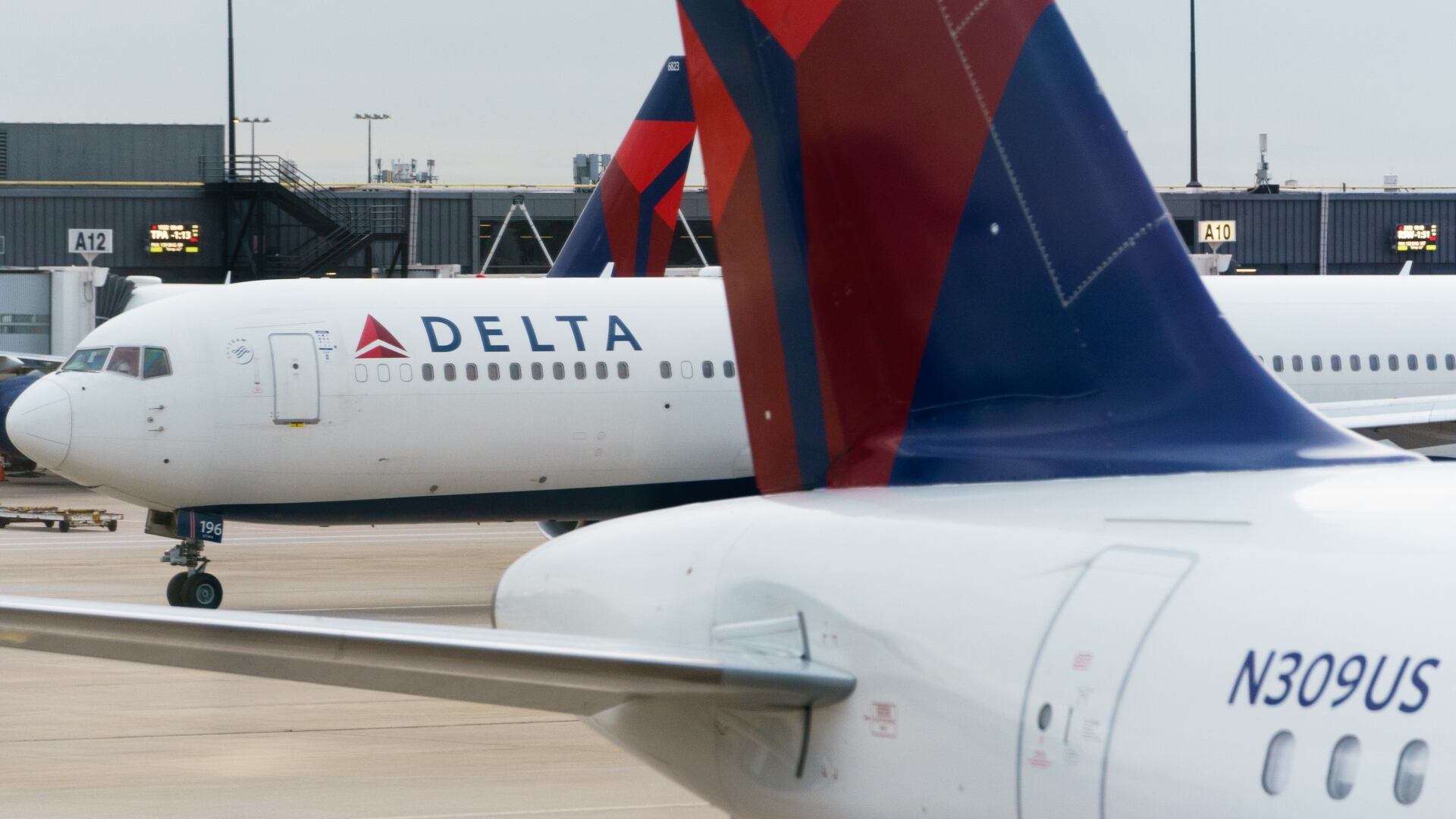
The airline industry says it is contending with staff shortages that threaten to hamper operations amid the COVID resurgence, andDelta Airlines CEO Ed Bastian called on the CDC to revise its guidance for vaccinated workers who test positive from a 10-day quarantine to just five. Chuck Liberman, chief investment officer and managing partner at Advisors Capital Management LLC, joined Cheddar to talk about the current guidance on isolation and why he believes the omicron variant calls for more relaxed guidance given its reportedly mild symptoms.
A new series is looking to advance Black founders who have disruptive ideas and companies. 'Bet on Black' is a new series that allows black entrepreneurs to pitch their businesses in the hopes of securing $200,000 in funding. Revolt TV and Target teamed up to create the show. Detavio Samuels, CEO of Revolt, joins Cheddar News to discuss.
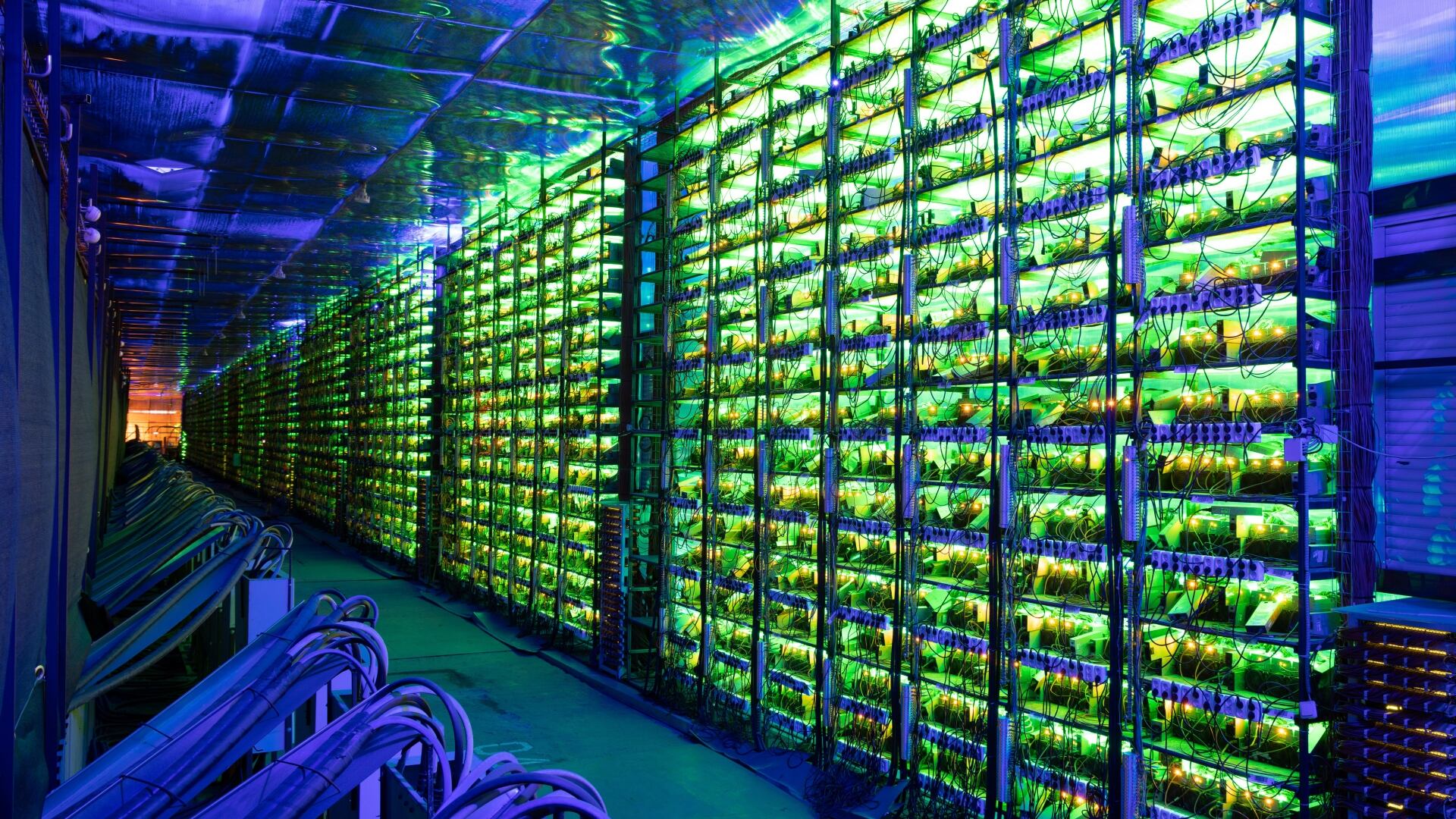
Bitcoin's rise to the mainstream has been a wild ride this year. The cryptocurrency is trading a little under $49,000 Wednesday morning and is set to finish the year sharply higher than where it began earlier this year. Ether prices also soared this year, rising from $730 per coin to nearly $4,000. Ben Armstrong, founder of Bitboy Crypto, joins us to discuss what's in store for crypto in 2022.
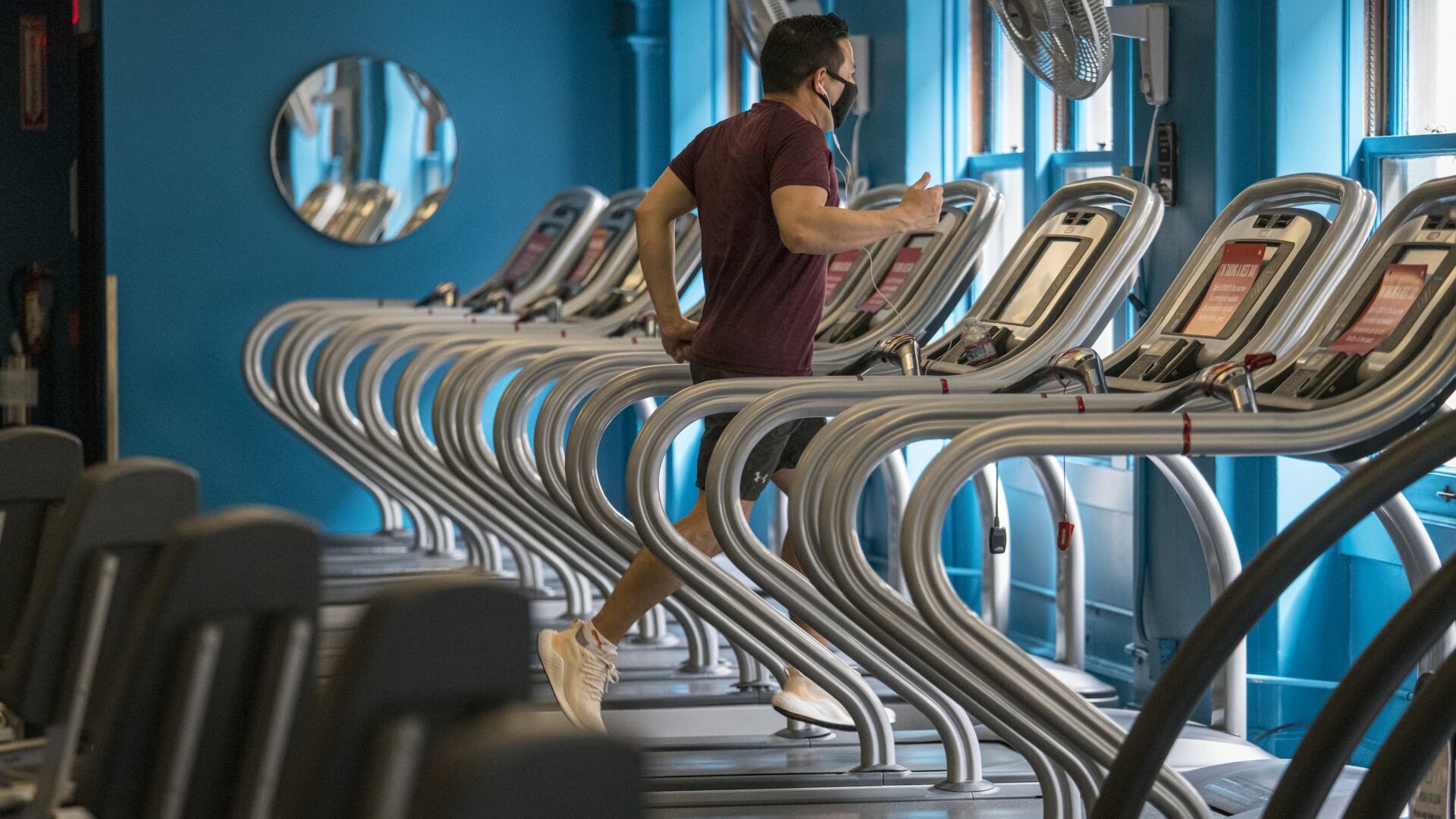
The fitness industry was one of the most severely impacted at the start of the pandemic. As the omicron variant of COVID-19 threatens fitness centers and gyms, the Global Health and Fitness Association, along with the Community Gyms Coalition, are calling on the federal government to provide pandemic relief before the close of 2021. Crunch Fitness Franchise CEO Ben Midgely joined Cheddar to talk about proactive steps gyms are taking to maximize business as COVID resurges. "It should be a little bit easier," he said. "We hate to have to deal with it again, but it's what businesses in this country have to work with."
According to the FAA, airlines have reported over 5,000 incidents involving unruly passengers this year, with more than 3,600 of those involving people who refused to wear face masks. As a result of all this, airline crews are calling on the federal government to step in to implement protocols to help ensure safety on the ground and while in flight. President of the Association of Flight Attendants- CWA Sara Nelson, joined Cheddar to discuss more.