By Stan Choe

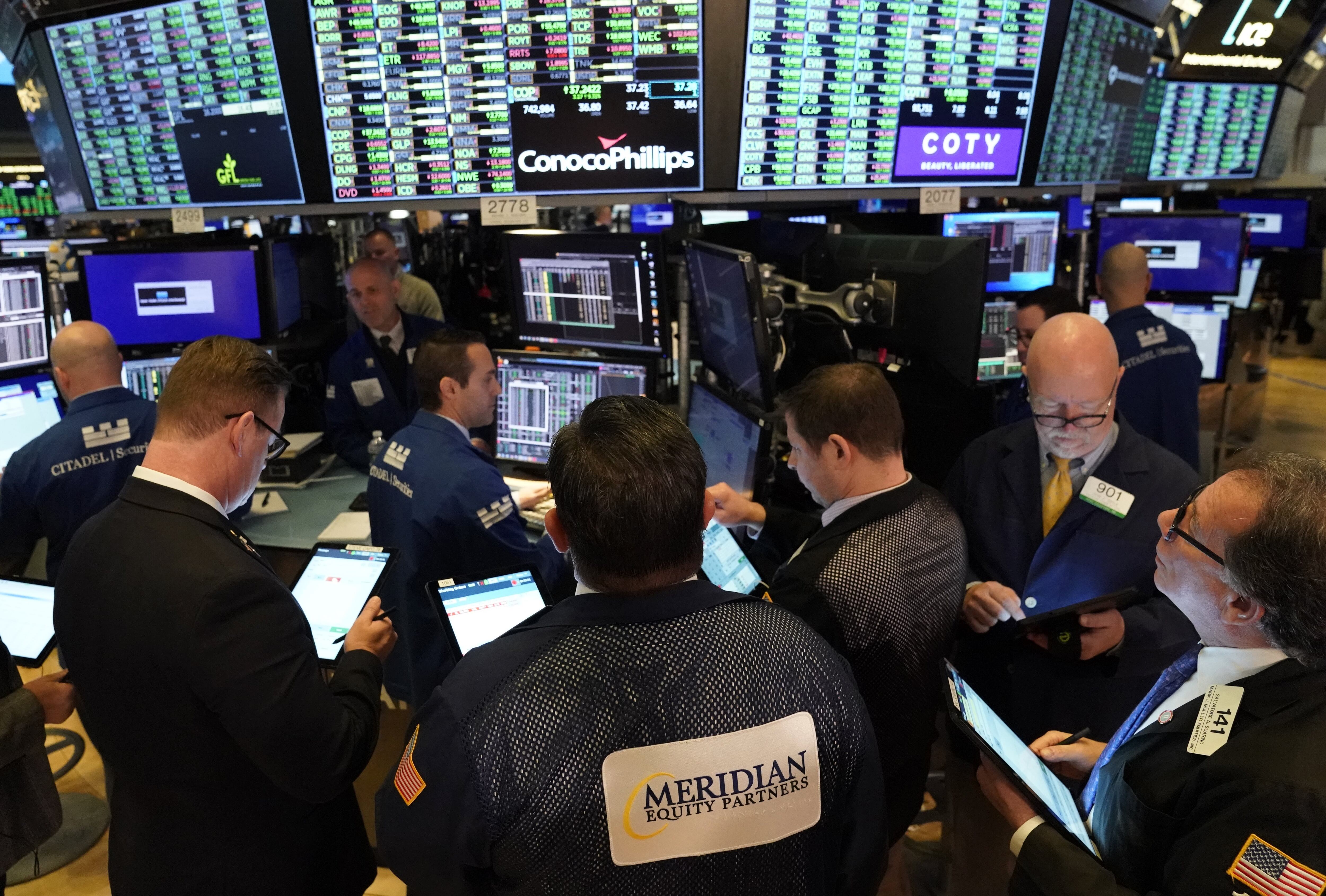
U.S. stocks, oil and other financial markets around the world clawed back some of their historic plunge from a day before amid hopes that the U.S. and other governments around the world will pump in more aid for a virus-weakened global economy.

Investors welcomed Tuesday's reprieve but weren't pretending that this is the end to the market's huge swings, which took the S&P 500 on Monday to its worst day since the 2008 financial crisis. Stocks have had jumps even bigger than this in the past couple weeks, only for the bottom to give out again.

Nonetheless, hope was rising that the big support efforts from global authorities that markets have been waiting for may be on the way, at least in a piecemeal way. President Donald Trump says his administration will ask Congress for payroll tax relief and other quick measures to help protect from the spread of COVID-19, which has pushed airlines to cancel flights and prodded Italy to lock down the entire country.

In Japan, a task force set up by the prime minister approved a 430 billion yen ($4.1 billion) package with support for small to medium-sized businesses.

Perhaps the most notable market move Tuesday was that Treasury yields also pushed higher in a sign that fear has receded a bit, though they remain far below where they were even a week ago.

The 10-year Treasury yield rose to 0.65 percent from 0.49 percent late Monday. A week ago, it had never been below 1 percent.

The S&P 500 was up 3.3 percent, as of 10:10 a.m. Eastern time. It recovered about two-fifths of its loss from the day before.

The Dow Jones Industrial Average rose 794 points, or 3.3 percent, to 24,645, and the Nasdaq composite was up 3.5 percent.

Brent crude, the international standard, rose $2.77, or 8.1 percent, to $37.13, while benchmark U.S. crude rose $2.450 to $33.63. Oil prices plunged 25 percent on Monday amid a price war between producers, who are pulling more oil out of the ground even though demand is falling due to the virus.

For most people, the new coronavirus causes only mild or moderate symptoms, such as fever and cough. For some, especially older adults and people with existing health problems, it can cause more severe illness, including pneumonia.

The vast majority of people recover from the new virus. According to the World Health Organization, people with mild illness recover in about two weeks, while those with more severe illness may take three to six weeks to recover. In mainland China, where the virus first exploded, more than 80,000 people have been diagnosed and more than 58,000 have so far recovered.

But because the virus is new, experts can't say for sure how far it will ultimately spread. That has investors worried about the worst-case scenario for corporate profits and the economy, where factories and supply chains are shut around the world due to quarantines and people stay huddled at home instead of working or spending.

That's why many say the market will continue to swing sharply at least until the number of new cases decelerates.

Central banks around the world, which have done some of the heaviest lifting to prop up markets and business confidence over the last decade-plus, have already used up most of their ammunition. Several have already cut rates below zero, and the Federal Reserve's benchmark rate is sitting at a range of 1 percent to 1.25 percent.

That adds pressure on governments to do what they can as well. Investors are asking for quick, coordinated aid to provide support to companies and households who are going to be out income because of the virus.

For strategists at BlackRock Investment Institute, that could include generous sick-pay programs or even direct payments to households. For businesses, governments could suspend collecting tax revenue to give them some temporary relief and hold on to cash as the world waits for the outbreak to be contained.

"That would prevent these temporary disruptions from turning into a full-blown global recession," strategists at BlackRock Investment Institute wrote in a report.

___

The Associated Press receives support for health and science coverage from the Howard Hughes Medical Institute's Department of Science Education. The AP is solely responsible for all content.
Share:
More In Business
Behind the Sandy Hook Settlement With Gun Maker Remington
Almost a decade after facing a parent's worst nightmare, the families of the young students killed in the Sandy Hook School shooting reached a settlement with gun manufacturer Remington, makers of the Bushmaster AR-15 used in the crime. David Pucino, deputy chief counsel, Giffords Law Center to Prevent Gun Violence joined Cheddar News to discuss the families' case and how its strategy brought about the legal settlement. "They built a really great case showing the way that Bushmaster developed its advertising to drive sales using those toxic messages.
Investment in NBA Teams Is in High Demand for Private Equity Firms
Private equity firms are taking a big interest in investing in NBA teams, the sports league showing the highest ROI over the last two decades according to Sportico, Forbes, and PitchBook. Wylie Fernyhough, lead analys for private equity at PitchBook joined Cheddar News to discuss the way firms are looking to get a piece of the action on the court. “There’s a certain amount of rarity, with these," Fernyhough said. "They’re not exactly printing new NBA franchises."
ULTA Beauty To Spend $50 Million On Diversity Initatives
In efforts to help support black-owned brands. Ulta Beauty says it will make a commitment to not only give these brand shelf space but also help them navigate the ins and outs of growing a business. Last week, the beauty retailer announced in order to reach those goals, the company will spend $50 million on diversity and inclusion programs, including an accelerated program to mentor entrepreneurs of color. CEO of Ulta Beauty, Dave Kimbell, joined Cheddar to discuss more.
Economist Sees Six Rate Hikes in 2022 After High January PPI Number
Inflation remains hot as the January PPI has increased by 1 percent, twice what analysts had been expecting with a jump of 9.7 over the year. Beth Ann Bovino, the U.S. chief economist, for S&P Global Ratings, joined Cheddar News to discuss the rapid pace of inflation alongside higher wages, predicting the Federal Reserve will act quickly and forcefully this year. "They haven't changed their forecast, yet, that's gonna come out soon. But we expect that a March rate hike is basically pretty much baked in the cake," she said. "We think six rate hikes in total for 2022."
U.S Chamber of Commerce Hosts Virtual Event 'Developing the Black-Owned Business Ecosystem'
For black history month, Cheddar is highlighting black business leaders who are driving the need for representation forward. On February 10, the U.S. Chamber of Commerce hosted an event called 'Developing the Black-Owned Business Ecosystem.' The virtual event was organized under the lobbying group's two initiatives -- the Equality of Opportunity Initiative, and the Coalition to Back Black Businesses. The event highlighted the developments needed to develop more black-owned businesses in the U.S. Dr. Anthony Wilbon, Dean of the School of Business at Howard University, joined Cheddar News' Closing Bell to discuss his experience as a speaker at the event.
Real Estate Key to Closing Wealth Gap Even as Black Spending Power Hit $1.6 Trillion
Black spending power reached a record $1.6 Trillion in a 2021 report from the University of Georgia Selig Center for Economic Growth. Ayesha Selden, certified financial planner, breaks down why real estate is the key to closing the racial wealth gap and how Black Americans are using social media to improve financial literacy. "If we look at home ownership as being a primary driver of wealth, when you look at the equity that Americans have in their homes, that equity can be used to buy additional assets like other rental properties. That equity can be used to educate our children," Selden said, noting that lower rates of home ownership meant Black Americans tend to incur more debt on average for their student loans.
Does Owning Crypto Really Make Daters More Desirable?
A new survey from Etoro suggests that talking crypto might actually help Americans on the dating scene find love...or at least land another date. The survey found that 74% of respondents would be more interested in going on a second date with a person that pays the bill in Bitcoin. Callie Cox, Etoro's U.S. investment analyst, joined Cheddar News to discuss.
Load More