By Stan Choe, Damian J. Troise, and Alex Veiga

Stocks around the world whipped higher Wednesday, riding a wave of optimism on encouraging data about a possible treatment for COVID-19.

The upswell of hope was so strong that investors completely sidestepped a report showing the outbreak drove the U.S. economy to its worst quarterly performance since the Great Recession. The S&P 500 vaulted 2.7% higher and extended a rally that’s brought the U.S. stock market to the brink of its best month in 45 years.

The spark for Wednesday’s rally was a report that an experimental drug proved effective against the new coronavirus in a study run by the National Institutes of Health. The nation’s top infectious diseases expert said the drug reduced the time it takes patients to recover, and it raised hopes that life around the world may eventually tiptoe back toward “normal.”

The S&P 500 rose 76.12 points to 2,939.51. It has surged 13.7% in April, and it’s a day away from closing out its best month since late 1974.

The Dow Jones Industrial Average rose 532.31, or 2.2%, to 24,633.86, and the Nasdaq climbed 306.98, or 3.6%, to 8,914.71.

“What you’re finding now is you have this debate between optimism and realism,” said Adam Taback, chief investment officer for Wells Fargo Private Wealth Management.

The Federal Reserve said Wednesday that it expects the health crisis to weigh on the economy “over the medium term,” as it promised to keep in place massive amounts of aid and interest rates at nearly zero. Oil prices, bonds, and other markets besides stocks have also been dominated in recent weeks by worries about the economic impact of the virus outbreak.

“Everything except equities is telling you things are not great,” Taback said. “This market is overly optimistic.”

Gilead’s release about its remdesivir drug hit markets at the same moment as a government report showing the U.S. economy shrank at a 4.8% annual rate in the first three months of the year.

Job losses have exploded since early April, as layoffs sweep the nation following widespread stay-at-home orders, and economists expect to see even worse numbers for the second quarter of the year.

The first-quarter figure was “merely the tip of the iceberg,” said Michael Reynolds, investment strategy officer at Glenmede.

But stocks have been rallying over the last month as investors look beyond the current economic devastation and focus instead on the prospect of economies gradually reopening. Some U.S. states and nations around the world have laid out plans to relax restrictions keeping people at home and businesses bereft of customers. Any new treatment for COVID-19 could also lower the dread so prevalent among households and businesses around the world.

But what got the 31.4% rally for the S&P 500 started in late March was massive aid from the Federal Reserve and Congress. The Fed on Wednesday said it wouldn’t be pulling back on the aid anytime soon.

The market’s easing pessimism about the economy’s path is perhaps most clear in how the smallest stocks have been performing.

When recession worries were at their height, investors punished small-cap stocks and sent them to sharper declines than the rest of the market, in part on worries about their more limited financial resources. But the Russell 2000 index of small-cap stocks jumped 4.8% Wednesday. It’s up 10.4% this week alone, more than double the gain for indexes of bigger stocks.

The market’s gains were widespread and accelerated throughout the day. Big tech and communications stocks helped lead the way after Google’s parent company said its revenue was stronger in the first three months of the year than Wall Street was expecting.

Alphabet jumped nearly 9%, which helped communications stocks in the S&P 500 rise 5% for one of the biggest gains among the 11 sectors that make up the index.

In Europe, the French CAC 40 rose 2.2% after being down before the Gilead report. The German DAX returned 2.9%, and the FTSE 100 in London added 2.6%. In Asia, Hong Kong’s Hang Seng added 0.3%, and the Kospi in Seoul advanced 0.7%.

Many professional investors are skeptical of the U.S. stock market’s big rally. There’s still a lot of uncertainty about how long the recession will last.

The vigorous rise for stocks over the last month also implies investors see a relatively quick rebound for the economy and profits following the current devastation. But it may take a while for households and businesses to get back to how things used to be.

“My concern is that the market is starting to get a little bit more focused on the rewards and less focused on the risks right now,” said Sal Bruno, chief investment officer at IndexIQ. “Maybe investors are getting a little too enthusiastic.”

“I don’t think you just flip the switch and everybody goes back to work right away,” he said.

The yield on the 10-year U.S. Treasury rose to 0.62% from 0.61% late Tuesday after paring earlier losses. Yields tend to rise when investors are upgrading expectations for the economy and inflation.

Oil prices are continuing their extreme swings after a collapse in demand has sent crude storage tanks close to their limits. Benchmark U.S. crude oil for June delivery rose $2.72, or 22%, to settle at $15.06 a barrel Wednesday. Brent crude oil, the international standard, rose $2.08, or 10.2%, to $22.54 a barrel.

___

AP Business Writer Joe McDonald contributed.
Share:
More In Business
Minimum Wage Hikes To Take Effect in 21 States
Mike Draper, Founder and Owner of Raygun, joins Cheddar News' Closing Bell, where he discusses how increases to the minimum wage in several states next year will help his company and explains why he advocates for it nationally.
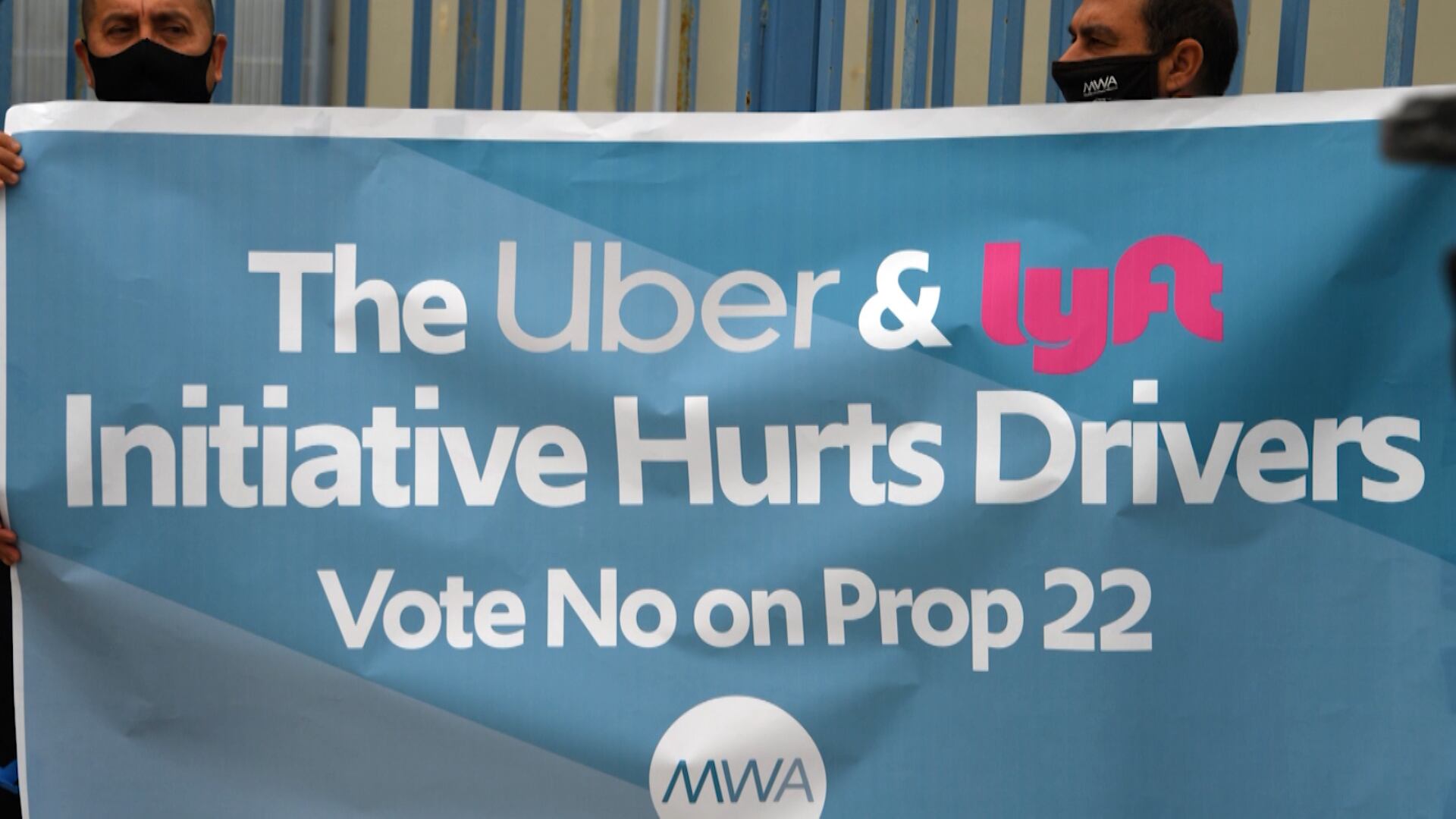
Looking Ahead to Regulating Uber, Lyft, and the Gig Economy in 2022
The push to regulate the gig worker economy is gaining steam as the share of workers who participate in freelancing through businesses like Uber and Lyft have also exponentially grown during the pandemic. Employment attorney Mark Kluger, founding partner at Kluger Healey, LLC, joined Cheddar to break down how the battle to reclassify gig workers will continue in the new year, and why the issue continues to generate conflict. "More and more workers are using gig work as their primary source of income and as a result of that they are not like employees in the sense that they don't have benefits like health insurance," Kluger noted.
Heliogen Goes Public to Scale Up the Renewable Energy Revolution
Renewable energy company Heliogen has gone public via a SPAC merger with blank check company Athena Technology Acquisition Corp. on the NYSE. Joining Cheddar, founder and CEO Bill Gross went into why he felt the end of 2021 was the best time to get into the public markets. "If you think of the Industrial Revolution and the digital revolution, this renewable revolution is probably going to be as big or larger than that," he said. "So we're going to use this capital to scale our business, to meet more customer demand, to do more projects in parallel, and to scale our research and development to continue to drive down the price to be competitive with fossil fuels."
Crypto Investor on Purchasing His $2 Million Bugatti in Dubai With Ether
Carl "The Moon" Runefelt, a Bitcoin investment expert, recently made a hefty purchase of a $2 million Bugatti sports car at a Dubai dealership. The Swedish crypto evangelist joined Cheddar to talk about how he made the big acquisition of a luxury item he had long had his eye on and why he chose the dealership, The Car Vault, to make the unprecedented transaction. "They accepted crypto directly, and that was important to me," he said. "I am not going to go to any car dealership that don't accept crypto, and that's kind of a principle I have today."
Pandemic Leads to Seismic Shift in Labor Market
Marjorie Mesidor, Partner at Phillips & Associates, joined Wake Up With Cheddar to break down the latest trends in the job market, as the demand for labor has recovered, but as the number of people willing to fill positions remains relatively low.
A Year of Highs and Lows for Crypto in 2021
2021 proved that crypto currency is here to stay. This year saw more and more adoptions of crypto, from top athletes looking to be paid in bitcoin, to Elon Musk even experimenting with bitcoin and dogecoin payments for a bit over at Tesla. And it wasn't all bitcoin either - other cryptos like Cardano and Solana saw some action in 2021 as well. Patrick McConlogue, CEO of Overline and former Citadel Investment Group Engineer explains why 2021 was such a good year for crypto, and what to expect in 2022.
2022 Promises a Mixed Bag of Market Predictions
2021 saw markets continue to be impacted by the onslaught of the coronavirus pandemic -most recently in the form of the Omicron variant- in addition to the global supply chain shortage, and increased inflation. But it wasn't all bad news, as crypto soared throughout the year, and meme stocks continued to have a moment. With the year coming to a close, investors are keeping an eye out to see if they should expect more of the same in the new year. Chris Vecchio, Senior Analyst, at DailyFX tells us what market trends to be on the watch for in 2022.
Under Threaten of Competition, Tesla Held Its Own in 2021
2021 proved to be yet another formidable year for Tesla. In a year that saw electric vehicles carve out their own space in the transportation world, the company made further strides, keeping its spot on top even as new companies threatened competition. Tesla was able to hit the trillion dollar valuation mark, increase vehicle deliveries even as the world grappled with supply chain and delivery issues and sign a major deal with Hertz this year. And of course, you can't talk about Tesla without talking about Elon Musk, CEO and founder of the company, richest man in the world and Time Magazine Person of the Year, who saw plenty of successes in 2021 as well. Al Root, Senior Writer at Barron’s, explains just how good a year it was for Tesla.
U.S. Home Prices Climb 18.4% in October Compared to Last Year
The S&P CoreLogic Case-Shiller 20-city home price index showed an 18.4 percent surge in October as the housing market continues to boom. October's levels are a slight downturn from the roughly 19 percent increase the index saw in September, but come roughly in line with economist expectations. Michael J. Romer, Managing Partner, Romer Debbas joined Wake Up with Cheddar to discuss.
Thousands of U.S. Flights Cancelled Due to Omicron Spike, Labor Shortages
U.S. airlines have canceled more than 6,000 flights since Christmas eve, causing headaches for travelers. Airlines cited staffing shortages amid the omicron outbreak as the primary reason for the interruptions to service. The cancellations come at the busiest time of year for air travel. Steve Shur, President, The Travel Technology Association joined Wake Up with Cheddar to discuss.
Load More