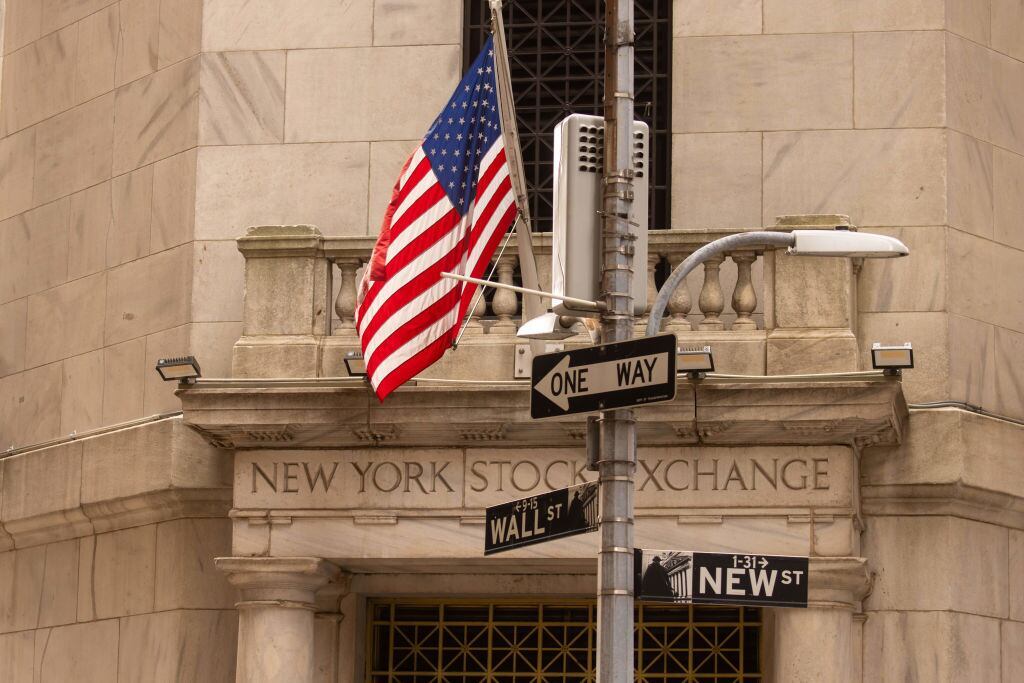
Stocks were mixed on Wall Street Wednesday, as indexes drifted between small gains and losses through a quiet day of trading.
The S&P 500 edged down by 1.55, or less than 0.1%, to 4,376.86. The Dow Jones Industrial Average slipped 74.08 points, or 0.2%, to 33,852.66, while the Nasdaq composite rose 36.08, or 0.3%, to 13,591.75.
General Mills fell to one of the market's larger drops after the maker of Cheerios and Haagen-Dazs reported weaker revenue for the latest quarter than analysts expected. It sank 5.2% despite reporting stronger profit than expected and giving a forecast for upcoming results that was close to Wall Street’s.
Other food companies also fell, including drops of 4% for Hershey, 3.7% for J.M. Smucker and 3.5% for Conagra Brands.
On the winning side of Wall Street was AeroVironment, which rose 4.9%. The maker of unmanned aircraft, tactical missile systems and other equipment used by the U.S. military and in Ukraine reported stronger profit and revenue for the latest quarter than expected. It also gave a stronger forecast for upcoming results than analysts expected amid what it called a record backlog.
Cruise operators also steamed ahead, continuing a strong year built on expectations for healthy demand for vacations. Carnival jumped 8.8% for the biggest gain in the S&P 500 and has more than doubled so far this year. Norwegian Cruise Line Holdings gained 7.6%, and Royal Caribbean Group gained 1.7%.
A day earlier, other travel-related stocks helped lead the market after Delta Air Lines said it's still seeing pent-up demand from fliers looking to make up for lost time during the pandemic.
Elsewhere in markets, trading was relatively quiet. Stock indexes rose in Europe and were mixed in Asia. Treasury yields fell.
The big question for markets worldwide is whether economies will continue to be able to avoid falling into recession despite the weight of much higher interest rates meant to bring down inflation.
Federal Reserve Chair Jerome Powell reiterated Wednesday that stubborn inflation means interest rates will need to stay high. The Fed has said it expects to raise rates one or two more times this year, while the European Central Bank and others have sounded even more aggressive.
But heads of Western central banks speaking at a conference in Portugal also said their economies have been more resilient than expected and they don’t foresee a contraction.
For now, the U.S. economy has been holding up better than expected thanks in large part to a remarkably resilient job market. Strong reports on consumer confidence, sales of new homes and other areas of the economy on Tuesday helped lead to a 1.1% rally for the S&P 500. Earlier this month, the S&P 500 reached its highest level since April 2022.
“Following some early week jitters, we’ve now seen a return to business-as-usual in global equities. Markets are taking some comfort from U.S. economic indicators which are showing no signs of an imminent ‘hard landing’ with regard to growth,” Tim Waterer, chief market analyst at KCM Trade, said in a report.
Economists are increasingly hopeful a recession may be avoidable, delayed, or that contraction may be limited to specific sectors and not the entire economy.
In the bond market, the yield on the 10-year Treasury fell to 3.70% from 3.77% late Tuesday. It helps set rates for mortgages and other important loans.
The two-year yield, which moves more on expectations for the Fed, sank to 4.70% from 4.76%.
In Europe, stock indexes rose with France's CAC 40 leading the way with a 1% gain.
Japan’s Nikkei 225 jumped 2% as the weakening value of the Japanese yen benefits exporters from the country. Stock indexes elsewhere in Asia moved more modestly and were mixed.
AP Business Writers Yuri Kageyama and Matt Ott contributed.
Stocks closed lower Tuesday with investors initiating a broad sell-off, leading the Dow to have its worst day of 2022 so far as it had its biggest decline since November. Investors are eyeing treasury yields, which have surged to pre-pandemic highs, as well as looking ahead to the Federal Reserve's path forward when it comes to raising interest rates. Meanwhile, as earnings season kicks off, Goldman Sachs shares are under pressure after a lackluster earnings report. Goldman is weighing on bank stocks as a whole. Jeff Buchbinder, Equity Strategist for LPL Financial, joins Cheddar News' Closing Bell to discuss today's close, why treasury yields are ticking higher toward pre-pandemic levels, big bank earnings reports, and more.
Mike McGlone, Senior Commodity Strategist at Bloomberg Intelligence, joins Cheddar News' Closing Bell, where he says he believes we'll eventually see Bitcoin reach the $100,000 mark despite its recent struggles, and explains why Bitcoin will be less volatile than the Nasdaq.
Food waste is a major contributor to greenhouse gas emissions in the United States. Strella Biotechnology is trying to solve the problem by introducing new technology to a business that's been around for generations -- farming. The 24-year-old CEO created hi-tech sensors that interpret the shelf life of produce and alert farmers when fruits and vegetables are ready to be sent to supermarkets. The company says the process can help farmers make money, reduce food waste and increase the quality of produce. Strella Biotechnology's co-founder and CEO Katherine Sizov and co-founder and COO Jay Jordan joined Cheddar Climate to discuss.
Adele Shraiman, Campaign Representative for the Sierra Club’s Fossil Free Finance Campaign, joins Cheddar Climate, where she explains how Wall Street and climate change are related. She also elaborates on how decisions made by financial institutions are actually hurting the ability to reduce carbon emissions.
Hugh Odom, founder and president of Vertical Consultants, shared his expertise on telecommunications with Cheddar on the safety issue raised about 5G deployment by airlines. The installation was partially delayed again on Tuesday as the airlines warned of potentially catastrophic delays in a letter to the Biden administration. Later, both Verizon and AT&T relented and put a pause on some of the implementations. "The first thing the Biden administration needs to do is get everybody in the room and say, look, aviation industry, identify the problem — wireless industry, come up with a solution," said Odom.
Microsoft announced on Tuesday it's acquiring video game publisher Activision Blizzard for nearly $70 billion in cash, a company that's is known for big titles like "Call of Duty" and "World of Warcraft." Lyron Bentovim, Glimpse Group president and CEO, and Dan Ives, managing director and senior equity research analyst at Wedbush, sat down to talk about what Ives called "a shot across the bow" towards the competition. "This is pretty exciting for the industry as a whole because another one of the big players is coming to the metaverse," said Bentovim. "Microsoft using metaverse in the quote from their CEO in their press release shows the importance of this deal."
Netflix may not be staying at the top of the streaming wars, according to some wary investors, as competition heats up and it raises prices yet again. Tuna Amobi, director and senior equity analyst at CFRA Research, spoke with Cheddar about what investors should be considering should they stick with the streaming pioneer or drop the investment. "I think it's always mostly about the subscriber growth for the Q4, which is going to be an indicator of how the company has been navigating the speed bumps that we saw early in the year," said Amobi.
L’Oréal is doubling down on its investment in tech. The French beauty giant unveiled two new high-tech products ahead of CES 2022, aimed at simplifying the hair coloring process. Guive Balooch, global vice president of L’Oréal Technology Incubator, joined Cheddar's Opening Bell to discuss the company's innovations for hair coloring, including the Colorsonic application device and the Coloright AI diagnostic tool.