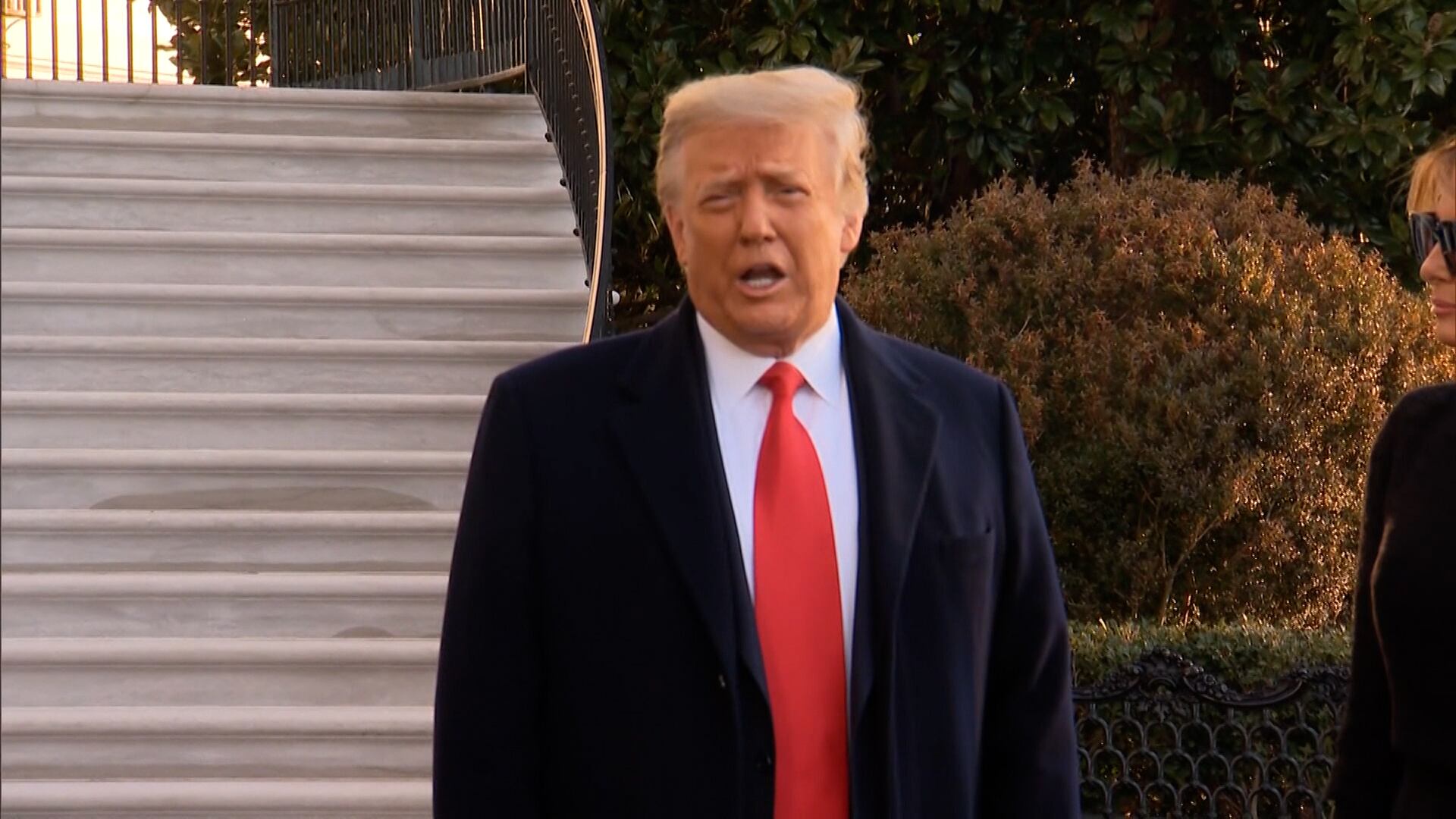
*By Chloe Aiello* The U.S. Treasury on Monday announced sanctions against Venezuela's state-owned oil firm in an effort to undermine incumbent president Nicolás Maduro and reinforce support for interim president Juan Guaidó. "The United States is holding accountable those responsible for Venezuela's tragic decline. We will continue to use all of our diplomatic and economic tools to support interim president Guaido, the National Assembly, and the Venezuelan people's' efforts to restore their democracy," Treasury Secretary Steven Mnuchin said in a White House briefing. The move exerts more pressure on an increasingly volatile situation, as more nations pledge their support for both sides. The Trump administration has not wavered in its support for Guaidó over incumbent Maduro, who has been backed by China, Iran, and Russia, among others. Brett Bruen, a former diplomat and director of global engagement under President Obama, called the administration's decision "one of the bright spots" in Trump's foreign policy. "The Trump administration is holding firm to defend democracy, they are standing up for human rights, they are standing up for the rule of law," Bruen told Cheddar Monday. Amid calls for legitimate elections and anti-government protests that turned deadly, Guaidó, the leader of the country’s opposition-controlled legislative body, declared himself "interim president," on Jan. 23. Just weeks prior, newly re-elected Nicolás Maduro was sworn in for his second term following a controversial and reportedly corrupt election last May in which many opposition candidates were barred from running. President Trump was quick to declare U.S. support for Guaidó as interim leader. On Monday, Mnuchin's announcement deepened that support. He called Venezuela's state-owned oil company Petroleos de Venezuela, better-known as PDVSA, a "vehicle for embezzlement, for corruption for Venezuelan officials and businessmen," and said sanctions were necessary to prevent Maduro from continuing to divert the country's oil wealth for himself. "The path to sanctions relief for PDVSA is through the expeditious transfer of control to the interim president, or a subsequent, democratically elected government," Mnuchin added. It was a moment of decisiveness and clarity from Trump, who has previously been criticized for cozying up to leadership that embraces less-than American principles ー much to the frustration of U.S. intelligence. Trump previously rejected evidence implicating Saudi Arabia's Crown Prince Mohammed bin Salman in the murder of dissident Jamal Khashoggi, and has sided with Russian leader Vladimir Putin on 2016 election meddling. According to Bruen, it's an important moment for the United States and the Trump administration, which has not only demonstrated its support for human rights and democracy, but proven it can continue to set an example for other like-minded nations in the world. "You've got Maduro and there are countries ー Russia, China, Cuba, Iran ー that are siding with him. But these are not necessarily countries that one would consider big fans of democracy," said Bruen. "These aren't generally seen as democratic defenders." The Venezuelan crisis and the growing divide in support over Maduro and Guaido has also invited comparisons to Cold War-era political posturing ー with Russia on one side and the U.S. on the other. President Trump's stance firmly opposing that of Russia is especially relevant, considering the interest and ongoing special counsel investigation into alleged ties between Trump's presidential campaign and the Eastern European state. Venezuela is "an important example and one I hope will lead to other cases where the the Trump administration is ready not only to stand up to Russia but to others who are threatening democracy and human rights around the world," Bruen said. For full interview [click here](https://cheddar.com/videos/venezuela-still-on-the-brink-of-violence-as-contest-for-presidency-continues).