Electric vehicles are easier to build, cheaper to maintain, and can bestow a green-tinted halo on automakers and drivers alike – but they have a significant Achilles heel: their batteries.
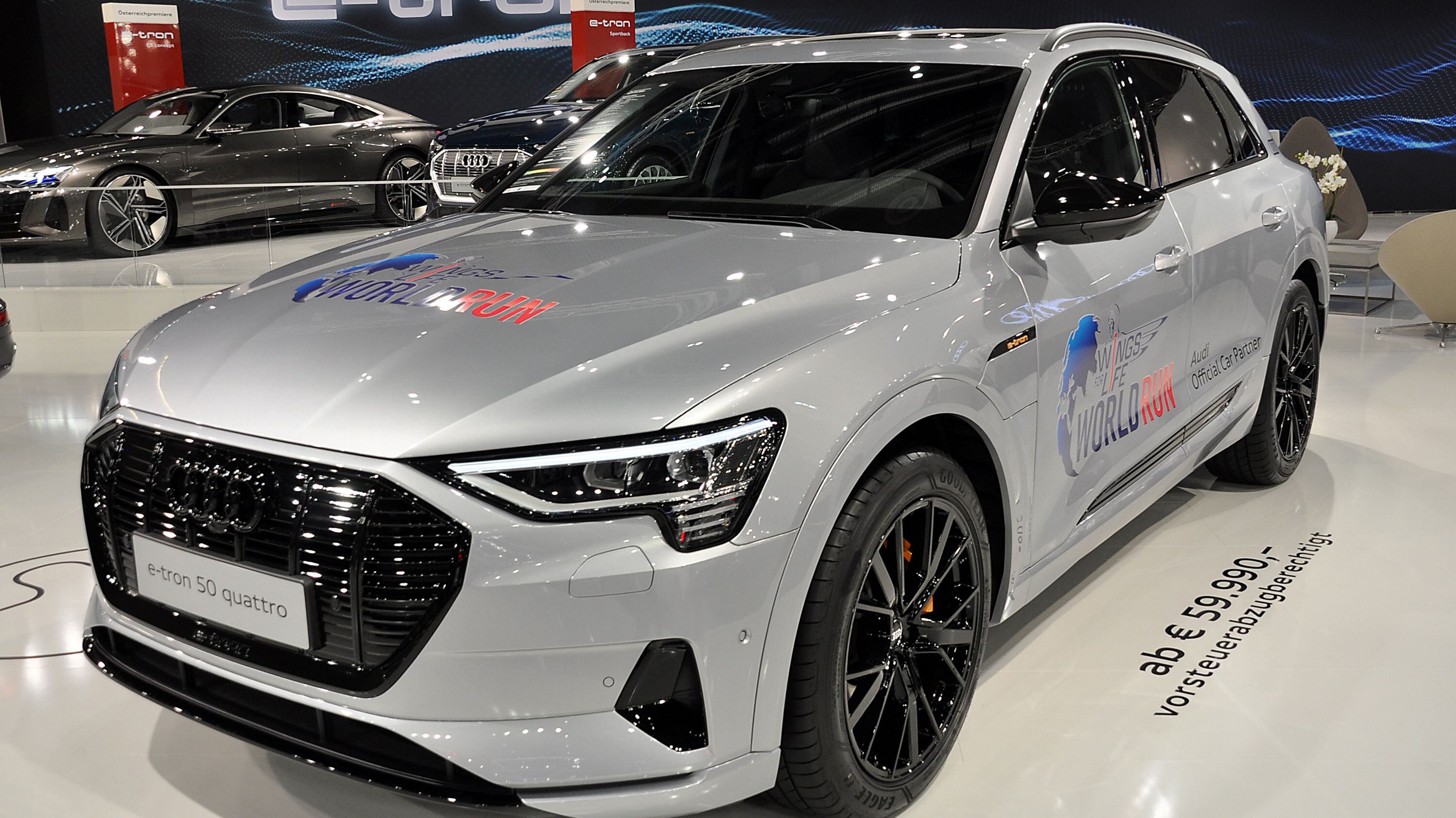
Audi on Thursday restarted production of its luxe E-Tron electric SUV, nearly a week after a reported battery shortage forced the automaker to halt the assembly lines of its marquee EV.
The car company, in acknowledging the pause, became the latest – and, as part of Volkswagen, also the largest – to find itself sputtering amid an apparent battery shortage. Jaguar, Hyundai, and Audi’s VW cousin, Porsche, in recent years have also had to idle assembly of their respective I-Pace, Kona, and Taycan EVs. Even the runaway EV success Tesla has girded its investors for potential supply shortfalls.
Audi, in a statement, attributed the production pause to broader growing pains in assembling the all-electric E-Tron, which only went into production last year.
“We are implementing a completely new technology with the Audi E-Tron series,” the company said. “This naturally involves various challenges, which we are mastering together with our development partners and suppliers.”
The production stalls though have exposed a glaring vulnerability unique to electric vehicles – one that may be the start of a battery-building arms race.
“An electric vehicle is really a battery on wheels: The key component is the battery,” said Sam Jaffe, founder and managing director of Cairn Energy Research Advisors, a battery industry analyst. “For a carmaker to simply turn that part of the car over to an outside supplier eventually is going to be considered the wrong thing to do.”
Automakers for years have looked at the batteries powering their EVs and hybrids in roughly the same way that most shoppers pick batteries from the grocery store: An interchangeable doodad to simply pop into a larger module or battery pack – just connect the positive end with the positive end and the negative end with the negative end. As a result, rather than building the component in-house, the bulk of EV battery cells are built in Asia – mostly in China.
“That was the idea: The battery will be a commodity, and the battery pack around it is where the technology differential will be,” Jaffe said. “But what they’re learning is that, in fact, the battery chemistry is extremely important and can be widely differentiated, the battery manufacturing process can change dramatically, and having a better battery is what makes a better electric vehicle.”
And then there are the supply chain bottlenecks. Automakers have said relatively little about their production freezes, although experts broadly agree that the supposed shortages have, at least to some degree, also offered a convenient excuse to mask any number of issues that might spook investors, from underwhelming sales figures to manufacturing problems.
“It’s always easy to not comment on the details, whether it’s an actual shortage or a shortage as an excuse for other issues,” said Christoph Domke, senior director and mobility lead at FTI Consulting. “That’s a common occurrence that we see from certain players in the market.”
Even if exaggerated, though, the supply constraints are real, despite a dropoff in EV demand last year. As legacy automakers from Ford to GM to startups like Rivian and Lucid Motors – not to mention hundreds of newcomers in China – have launched ambitious EV rollouts, they’ve squeezed the entire supply chain: not only the battery factories themselves, but the mining conglomerates that supply crucial minerals like lithium and cobalt, and even the companies that make the equipment for building more factories.
“Equipment manufacturers are all 100 percent utilized,” said Akshay Sing, principal in industrial and automotive for Strategy&, a consulting firm within PwC. “Because so much capacity is being added, there are shortages in the equipment that’s needed to bring the factories online.”
Tesla is rumored to be taking steps to bring the manufacturing process in-house – which would make it the first major automaker to do so. Though the company hasn’t commented publicly, it is reportedly building a battery factory in California, and CEO Elon Musk previously accused the company’s battery supplier, Panasonic, of not working at full capacity, tempering Tesla’s production figures.
“Vertical integration is a classic response to supply chain uncertainty, going all the way back to Henry Ford,” said Peter Wells, professor of business and sustainability at the Centre for Automotive Industry Research at the Cardiff Business School.
Building batteries, though, can be deceptively difficult: The margins are thin, and major manufacturers like Panasonic, LG Chem, SK Innovation, and Samsung SDI have invested years and even decades into research and development. Hence, other automakers are racing to lock down partnerships with the major battery makers: General Motors and Lucid Motors have announced partnerships with LG Chem, which is opening a plant in Ohio. SK Innovation meanwhile plans to build a battery factory in Georgia.
“For those to make economic sense there’s going to have to be some very close collaboration between carmaker and battery maker,” Jaffe, of Cairn Energy Research Advisors, said. “We’ll have to see manufacturing scale get really big in both Europe and North America. We fully expect that we’ll end up with a battery manufacturing industry on every continent.”
But just as car companies, commonly referred to as original equipment manufacturers, or OEMs, don’t rely on outsiders to build the engines in their internal combustion vehicles, buying batteries from third parties may just be stopgap to fully integrating battery production. Battery cells – the central component of a battery – account for 70% of the value of a battery pack, the part of the vehicle where multiple batteries are installed together.
“It’s not enough to give battery manufacturers the contracts,” FTI’s Domke said. “What needs to happen much more is the OEMs need to be increasingly involved throughout the entire battery cell supply chain.”