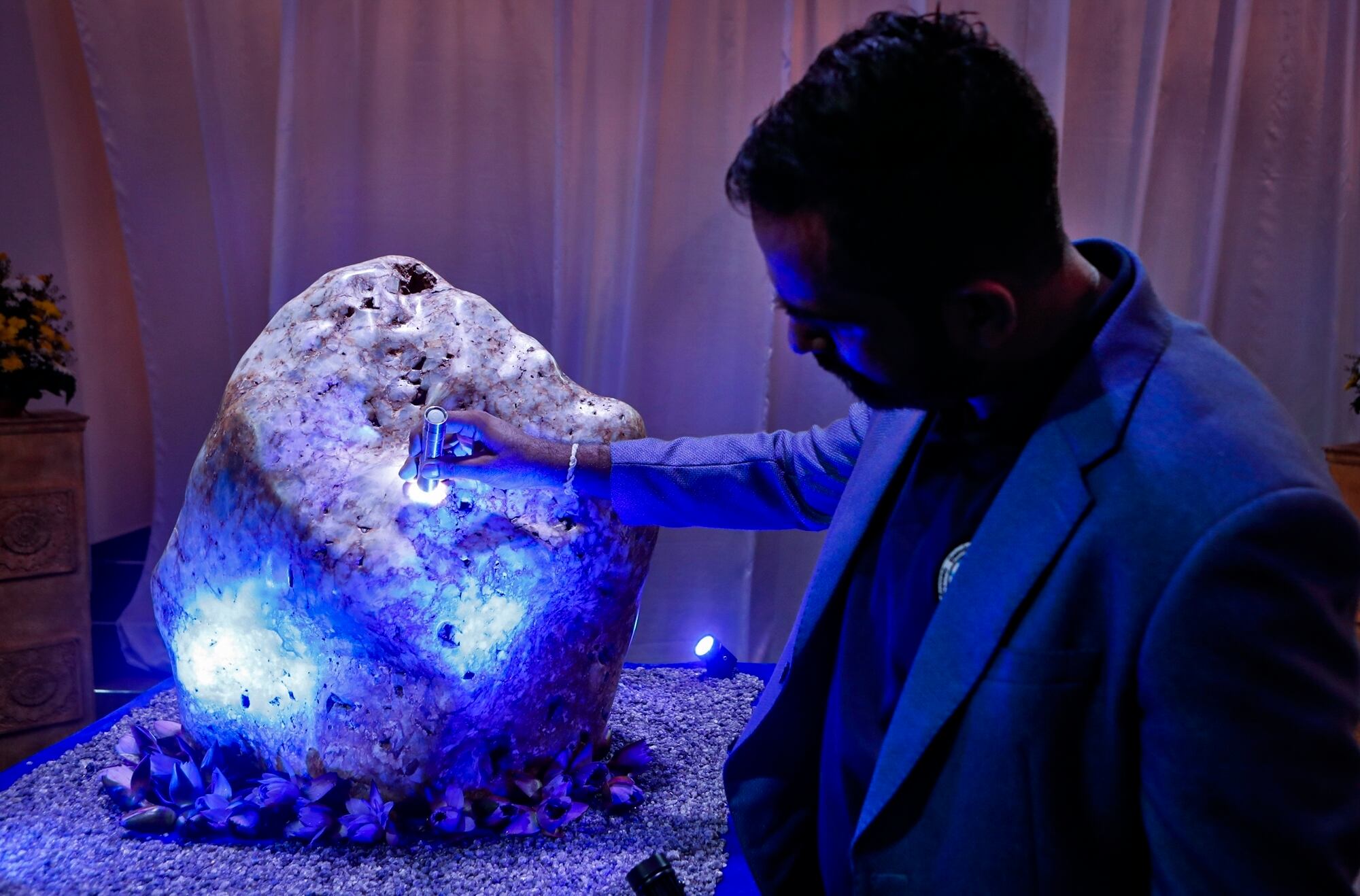
Chamila Suranga, a gemmology researcher attached to Gemological Institute of Ratnapura inspects a 310 kilograms (683 pounds) heavy natural corundum blue sapphire at a residence where it is kept in Horana, about 41 kilometers (25 miles) south of Colombo, Sri Lanka, Sunday, Dec. 12, 2021. A gem company in Sri Lanka has unveiled the massive gemstone that is certified as a rare and one of the biggest corundums found in the country and plans to offer it to museums and gem collectors. (AP Photo/Eranga Jayawardena)
A gem company in Sri Lanka has unveiled a rare and massive gemstone weighing 683 pounds (310 kilograms) that has been certified as one of the biggest corundums ever found in the country.
Sri Lanka's National Gem and Jewelry Authority says it has done a series of gemological tests on five samples taken from the rock.
“To our knowledge this specimen is indeed a rare specimen and not recorded in the geological literature," read an authentication letter given by the authority to the owners who unveiled the stone on Sunday.
When the outer layer was removed for inspection, the interior showed a silky blue patchy appearance, the letter said, suggesting the stone is a blue sapphire.
Shanka Ruwanditha, a director of the company that currently owns the massive stone, the Gemological Institute of Ratnapura, told The Associated Press on Monday that the owners plan to obtain the services of a local or foreign gem valuer soon to determine the price of the rock.
Sri Lanka and especially its southwestern city of Ratnapura, or the Gem City in the local language, has been known for centuries for mining gems and precious stones.
If you're shopping on Amazon and want to save even more money after Prime Day, Cheddar News has got you covered. Senior reporter Michelle Castillo talked to the experts at the company to find out how you can keep an eye on deals and even get cash back on your household purchases.
Did you happen to watch the series The Bear? The show follows a struggling small business owner in Chicago who is trying to save his business. It's a story a lot of small business owners in the U.S. can relate to. To help out these struggling entrepreneurs, Cheddar News brought on an expert here to help take your company from stressful to successful.
The sticker prices for Ford's F-150 Lightning electric pickup trucks are being lowered by thousands of dollars across the board, the company said Monday, due to increased plant capacity, falling costs for battery raw materials and internal efforts to scale production by the Detroit automaker.
United Airlines and the union representing its pilots said Saturday they reached agreement on a contract that will raise pilot pay by up to 40% over four years.
The court’s ruling applies to higher education institutions and other entities that receive federal funding and doesn’t directly change private employer obligations, but business leaders might pull back diversity, equity and inclusion programs to avoid lawsuits.