SpaceX’s Elon Musk said Thursday that the first orbital flight of his towering Starship — the world's most powerful rocket ever built — could come in another month or two.
While he anticipates failures, he’s confident Starship will reach orbit by the end of this year.
Musk provided his first major Starship update in more than two years while standing alongside the 390-foot (119-meter) rocket at SpaceX's Texas spaceport. He urged the nighttime crowd, “Let’s make this real!”
“This is really some wild stuff here,” he said. “In fact, hard to believe it's real.”
NASA plans to use the fully reusable Starship to land astronauts on the moon as early as 2025. Musk, meanwhile, hopes to deploy a fleet of Starships to create a city on Mars, hauling equipment and people there.
For now, the initial flights would carry Musk's internet satellites, called Starlinks, into orbit.
“There will probably be a few bumps in the road, but we want to iron those out with satellite missions and test missions” before putting people on board, he said.
SpaceX's Super Heavy first-stage booster has yet to blast off. But the futuristic, bullet-shaped, steel Starship — perched on top and serving as the upper stage — successfully launched and landed on its own last May, following a series of spectacular explosions. The rocketship soared more than 6 miles (10 kilometers).
SpaceX is awaiting approval from the Federal Aviation Administration before proceeding with Starship's next phase: going into orbit. Musk said he expects the go-ahead in March and that the rocket should be ready to fly by then as well. That would put the launch in the next couple of months, he added.
If the FAA demands more information about potential environmental impacts or lawsuits emerge, Musk said Starship launches could move to NASA's Kennedy Space Center in Florida. But that would delay the first orbital launch by more than half a year, he noted.
The full-size Starships are massive — taller than NASA's past and present moon rockets, with approximately double the liftoff thrust.
Besides Florida's Cape Canaveral and the southern tip of Texas near Boca Chica, Starships could ultimately launch from floating ocean platforms anywhere in the world, Musk said. He envisions Starships launching three times a day — “rapid reusability" — with refilling stations in space for the longer destinations like Mars. The first refilling test could happen by the end of next year, he said.
Musk estimates a Starship launch could wind up costing less than $10 million — maybe even just a few million dollars with a high flight rate, which would bring down prices. He called it “crazy low” and “ridiculously good” by current space standards.
Starship already has one private customer: a Japanese entrepreneur who has bought a flight around the moon and plans to take a dozen artists with him. Musk hinted there are others interested in buying trips, saying future announcements would be forthcoming.
Until now, SpaceX has relied on its much smaller Falcon rockets to launch satellites, as well as astronauts and cargo to the International Space Station for NASA. Its first private flight, purchased by a billionaire, was last September. Another is coming up at the end of March, this one to the space station with three businessmen who are paying $55 million apiece.
___
The Associated Press Health and Science Department receives support from the Howard Hughes Medical Institute’s Department of Science Education. The AP is solely responsible for all content.
ETF and mutual fund manager VanEck has launched its XBTF - the third Bitcoin-linked futures ETF to enter the market. This comes after VanEck's application for a spot product Bitcoin ETF was denied by the SEC, and also as the broader crypto markets slump this week. Kyle DaCruz, Director of Digital Asset Product for VanEck, joins Cheddar News' Closing Bell to discuss the XBTF's debut, investor demand, and more.
Major U.S. retailers, including Walmart, Home Depot, Lowe's, and Target have all reported better than expected earnings heading into the holiday season. This comes as retail sales climbed in October, despite the biggest inflation surge in more than 30 years. David Steinberg, co-founder, chairman and CEO of Zeta Global, explains why inflation doesn't seem to be scaring consumers away.
Bitcoin is getting a makeover. It's the first upgrade in four years for the cryptocurrency. The Taproot update offers greater transaction privacy and efficiency and will unlock the potential for smart contracts. Jeff Roberts, executive editor of Decrypt, joins Cheddar News to breakdown what this upgrade means for investors.
The nation's largest alcohol e-commerce and delivery platform is getting even bigger. Drizly is now collaborating with 7-Eleven to deliver alcohol in under 60 minutes from 7-eleven's 1,200 stores. The companies plan to expand the collaboration in the coming months. Cathy Lewenberg, COO at Drizly, joins Cheddar News to talk about the new collaboration.
Netlify, a platform that builds, deploys and hosts websites and apps, raised $105 million dollars in a Series D round, now valuing the company at $2 billion. Along with the funding, Netlify is also announcing the acquisition of the company OneGraph. Netlify says OneGraph's technology will drive a new wave of innovation on its platform, by making it easier to compose apps with the best developer tools available. Netlify co-founder and CEO Matt Biilmann joined Cheddar News' Closing Bell to discuss.
Chip Paucek, CEO and co-founder of 2U, an educational tech company, joined Cheddar's "Closing Bell" to talk about the company's $800 million acquisition of online course provider edX featuring curriculum from Harvard and MIT. He noted that added services will provide 2U users with high quality, free options. "Us coming together with edX should allow us to really continue to drive affordability for people to unlock their own potential in a variety of different kinds of programs," he said.
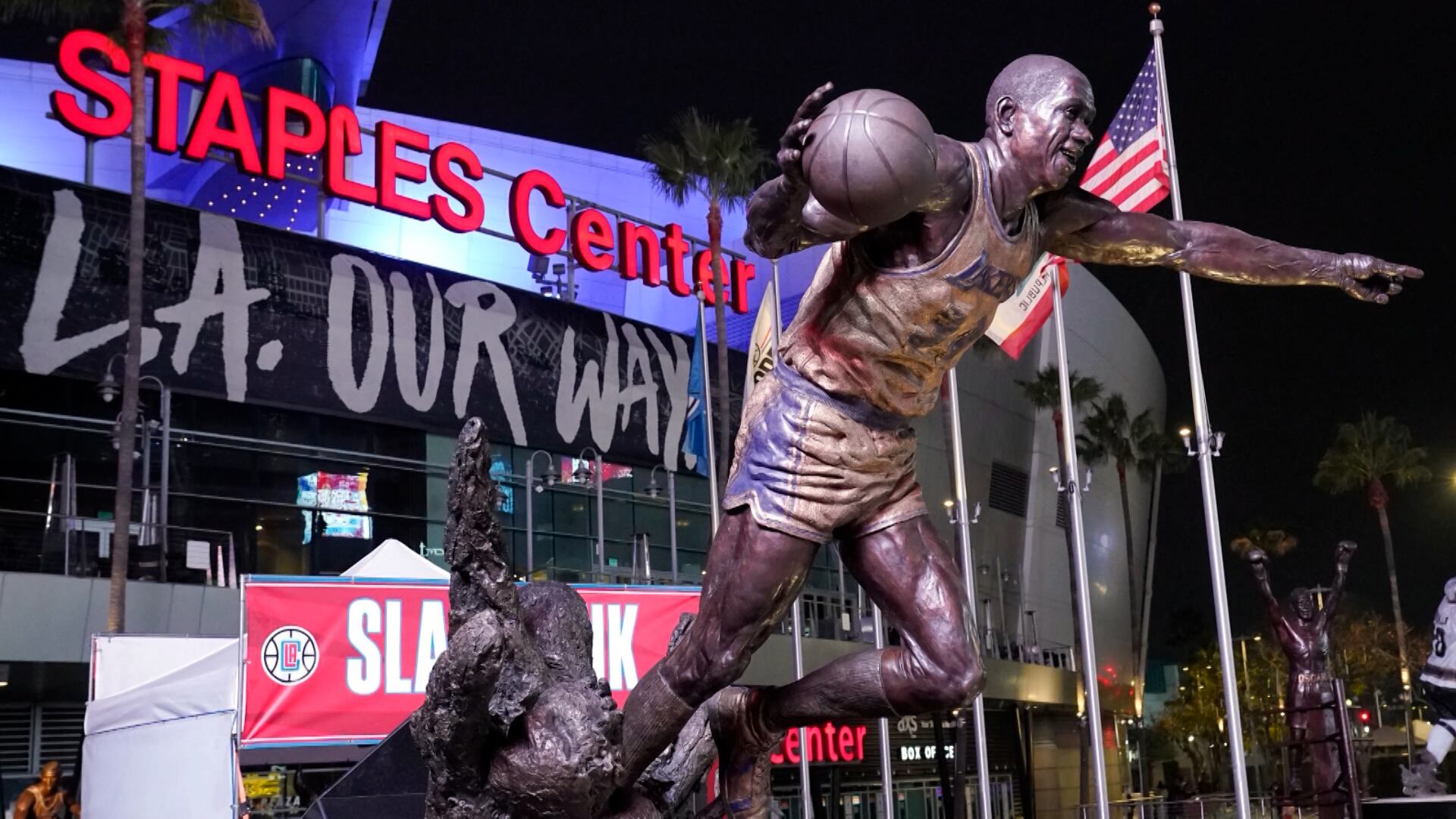
Beginning Christmas Day, the home of the Los Angeles Lakers, Clippers, Kings, and Sparks, the Staples Center, will go by the name Crypto.com Arena after a massive $700 million deal with AEG. Steven Kalifowitz, the chief marketing officer at Crypto.com, and Todd Goldstein, the chief revenue officer at AEG, joined Cheddar to talk about the historic changeover in naming rights and what other changes that fans entering the arena might expect.
Earlier this week, Qualcomm announced an extension of its partnership with BMW as it moves to help build the technology for automated driving. Nakul Duggal, general manager at Qualcomm, joined Cheddar to provide some background on the collaboration and how the company has been able to navigate the global chip shortage amid the pandemic. "We have invested in advance, in very specific packaging capacity and technology, with our suppliers so that we actually have the capacity available to be able to service that demand," Duggal said.
Small businesses are seeing loans in a new light thanks to the pandemic, according to a survey from PayPal and Wakefield research. The study found that the stigma surrounding accepting loans has largely been removed among a majority of small business owners who realize they are not a sign of a struggling business, but a way to stay competitive. Bernardo Martinez, VP of global merchant lending at PayPal, joined Cheddar to discuss the results of the survey and provide tips to owners looking to grow their businesses.