By Marcia Dunn

SpaceX’s Elon Musk said Thursday that the first orbital flight of his towering Starship — the world's most powerful rocket ever built — could come in another month or two.

While he anticipates failures, he’s confident Starship will reach orbit by the end of this year.

Musk provided his first major Starship update in more than two years while standing alongside the 390-foot (119-meter) rocket at SpaceX's Texas spaceport. He urged the nighttime crowd, “Let’s make this real!”

“This is really some wild stuff here,” he said. “In fact, hard to believe it's real.”

NASA plans to use the fully reusable Starship to land astronauts on the moon as early as 2025. Musk, meanwhile, hopes to deploy a fleet of Starships to create a city on Mars, hauling equipment and people there.

For now, the initial flights would carry Musk's internet satellites, called Starlinks, into orbit.

“There will probably be a few bumps in the road, but we want to iron those out with satellite missions and test missions” before putting people on board, he said.

SpaceX's Super Heavy first-stage booster has yet to blast off. But the futuristic, bullet-shaped, steel Starship — perched on top and serving as the upper stage — successfully launched and landed on its own last May, following a series of spectacular explosions. The rocketship soared more than 6 miles (10 kilometers).

SpaceX is awaiting approval from the Federal Aviation Administration before proceeding with Starship's next phase: going into orbit. Musk said he expects the go-ahead in March and that the rocket should be ready to fly by then as well. That would put the launch in the next couple of months, he added.

If the FAA demands more information about potential environmental impacts or lawsuits emerge, Musk said Starship launches could move to NASA's Kennedy Space Center in Florida. But that would delay the first orbital launch by more than half a year, he noted.

The full-size Starships are massive — taller than NASA's past and present moon rockets, with approximately double the liftoff thrust.

Besides Florida's Cape Canaveral and the southern tip of Texas near Boca Chica, Starships could ultimately launch from floating ocean platforms anywhere in the world, Musk said. He envisions Starships launching three times a day — “rapid reusability" — with refilling stations in space for the longer destinations like Mars. The first refilling test could happen by the end of next year, he said.

Musk estimates a Starship launch could wind up costing less than $10 million — maybe even just a few million dollars with a high flight rate, which would bring down prices. He called it “crazy low” and “ridiculously good” by current space standards.

Starship already has one private customer: a Japanese entrepreneur who has bought a flight around the moon and plans to take a dozen artists with him. Musk hinted there are others interested in buying trips, saying future announcements would be forthcoming.

Until now, SpaceX has relied on its much smaller Falcon rockets to launch satellites, as well as astronauts and cargo to the International Space Station for NASA. Its first private flight, purchased by a billionaire, was last September. Another is coming up at the end of March, this one to the space station with three businessmen who are paying $55 million apiece.

___

The Associated Press Health and Science Department receives support from the Howard Hughes Medical Institute’s Department of Science Education. The AP is solely responsible for all content.

Share:
More In Business
Paving the Way for Women in the Spirits Industry; Sustainability That Gives Back to The Planet and Social Causes
On this episode of ChedHER, Amira Rasool, CEO and Founder of The Folklore, discusses her $1.7 million pre-seed funding round and why she's being intentional about the investors she's working with; Brittany Merrill-Yeng, co-founder Skrewball Whiskey, reveals the origins of Skrewball Whisky, experiencing a period of rapid growth, and navigating a male-dominated industry; Suz Hernandez, Owner of MamaP, breaks down how her company is combining eco-friendly and sustainable products with a mission to donate to non-profits that help people and the planet.
State of Lactation Support in the U.S.; Perks of Having a Business Mentor
On this episode of ChedHER: CEO of The Lactation Network breaks down how they are expanding access to lactation support for families nationwide; CEO of Vanta explains the importance of a security team for startups; Midwest Divison Area Manager at JPMorgan Chase discusses the perks of having a business mentor.
Oil Prices Surge as Russia Invades Ukraine
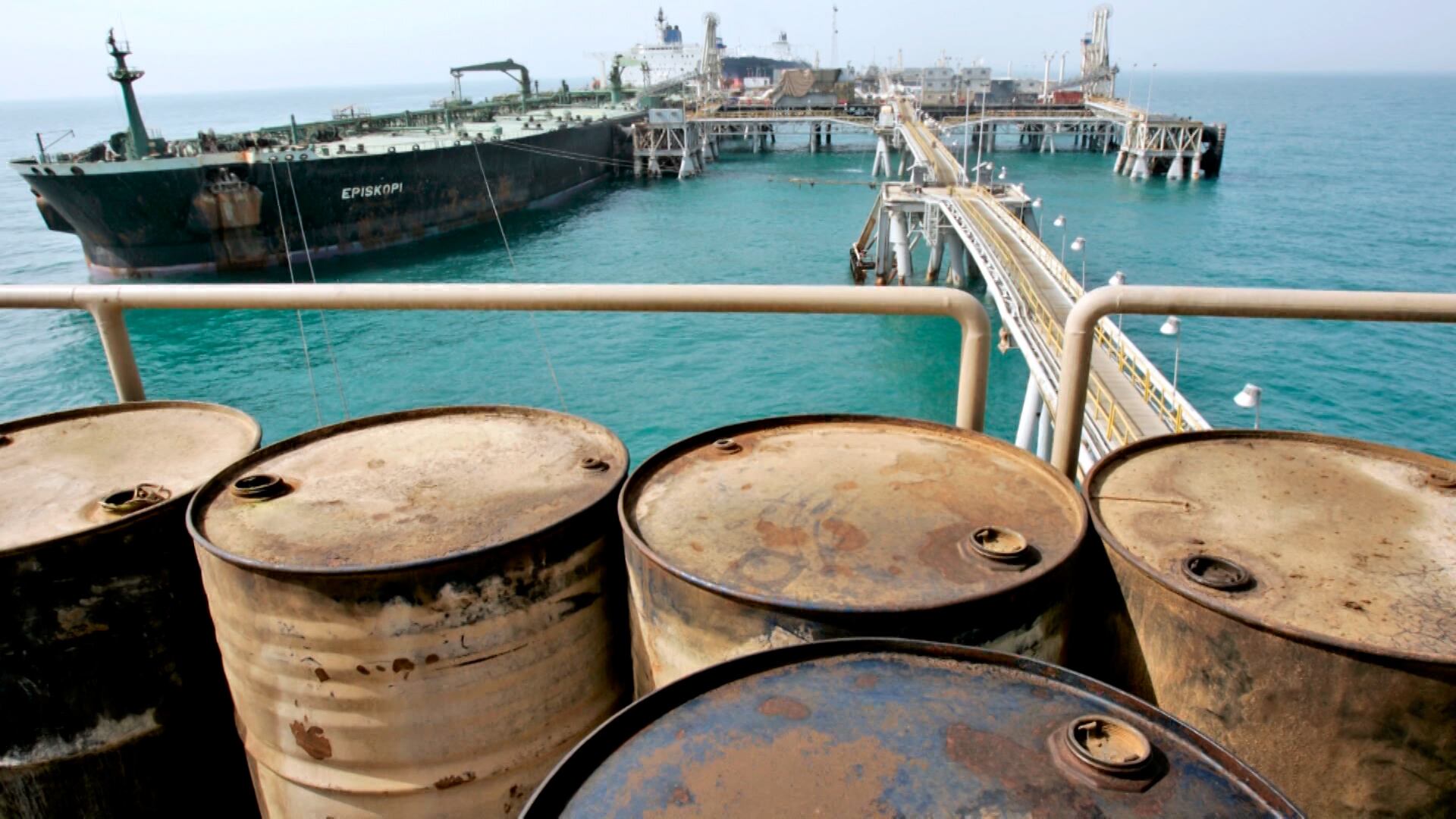
The global oil benchmark has crossed the $100 per barrel mark for the first time since 2014. Oil prices have surged nearly 10 percent since Russia's invasion of Ukraine. Russia is the number two oil producer in the world, and it comes at a time when global oil supplies have already been constrained over the course of the past year. Rob Thummel, portfolio manager at Tortoise, joined Cheddar Movers to discuss.
The State of Russia's Economy Following a Worldwide Boycott
Russia's economy is falling on hard times as businesses throughout the world continue to shut out the country after its invasion of Ukraine. Cheddar News was joined by Christine McDaniel, Senior Research Fellow at the Mercatus Center, to learn more about the situation.
Tech Companies Announce Long-Delayed Back-To-Office Plans
Tech companies such as Google, Apple, and Twitter are the latest to announce back-to-office plans. Google has asked its employees to return starting on April 4th. Heidi Brooks, senior lecturer in organizational behavior at Yale University School of Management, joins Cheddar News to discuss.
Envoy Hopes to Ease Return to Office for Workers
Businesses face more challenges for building a positive work environment as offices reopen. Workplace tech platform Envoy's At Work Report showed that hybrid work is currently in vogue, featuring focused work in both the office and at home. Annette Reavis, chief people officer for Envoy, joined Cheddar to discuss how employers can smooth the rough edges for their returning employees. "It is about hybrid though, it's really important for the future that we change our mindset from five days a week," she said. "Those are days of the past to working hybrids. So when you're in the office, you're focused, you're working cross-functionally."
Impact on Consumers as More Companies Leave Russian Market
Following the invasion of Ukraine, a multitude of Western companies have paused doing business with Russia. PepsiCo, Coca-Cola, McDonald's, and Starbucks are the most recent companies to temporarily cease operations in Russia. Dean of Miami Herbert Business School at the University of Miami, John Quelch, joined Cheddar News to discuss what message this sends to Russia and the Russian consumer. “I would not underestimate the collective strength of all of these multinational companies, essentially coming together to make their collective statement in support of the political statements that have come out of Washington," he said.
Load More