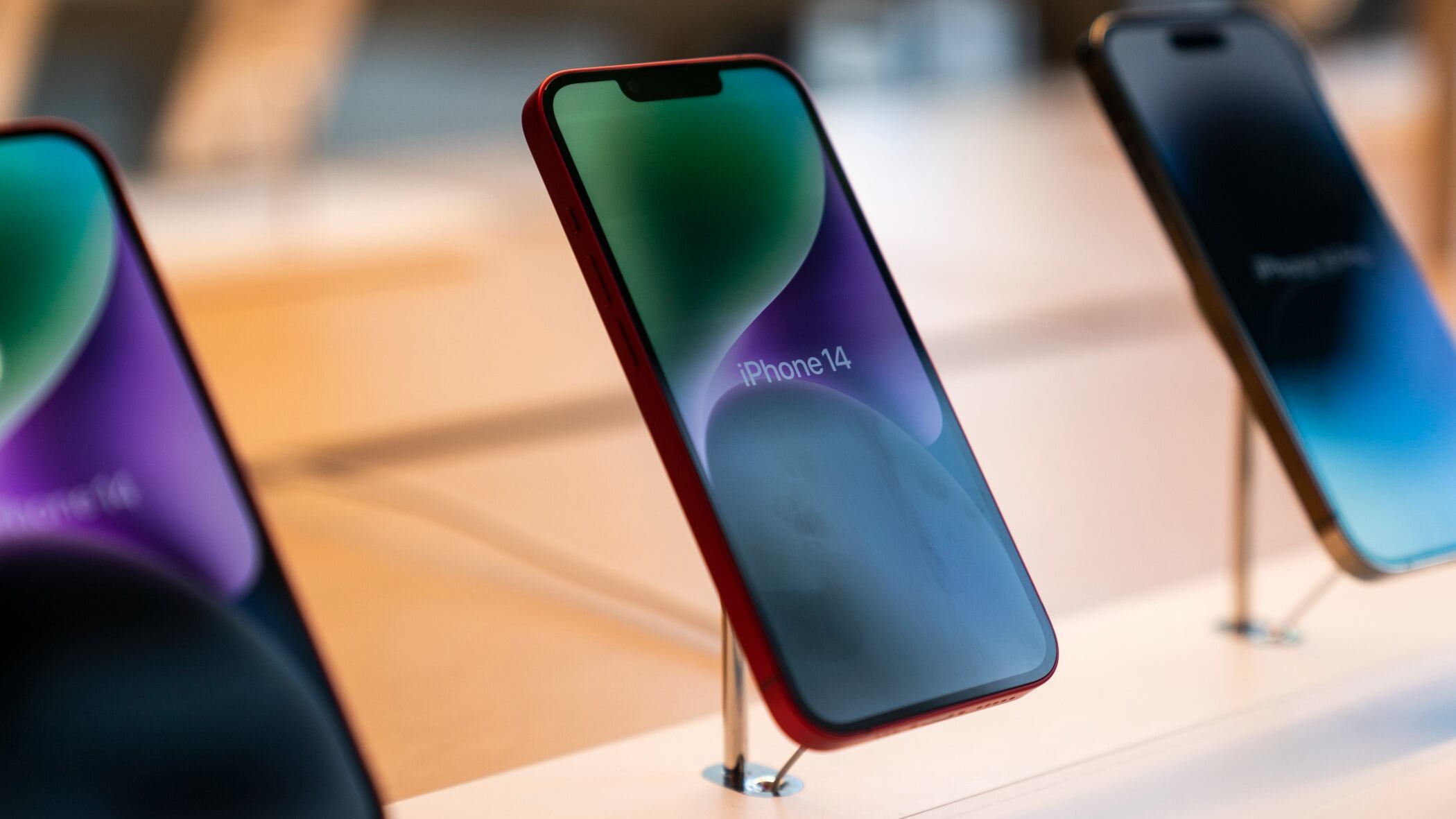
The new iPhone 14 smartphones are on display at an Apple Store at The Grove in Los Angeles, Friday, Sept. 16, 2022. (AP Photo/Jae C. Hong)
Global smartphone shipments saw their largest-ever single decline in the fourth quarter of 2022, plunging 18.3 percent year-over-year, according to data from the International Data Corporation (IDC).
The drop rounds out a 11.3 percent decline for all of 2022 for a total of 1.21 billion units, which is the lowest annual shipment amount since 2013.
"We have never seen shipments in the holiday quarter come in lower than the previous quarter," said Nabila Popal, research director at IDC, in a news release. "Heavy sales and promotions during the quarter helped deplete existing inventory rather than drive shipment growth."
The downward trend has been ongoing for years but intensified in 2022. As global economic uncertainty increases, vendors are increasingly cautious in planning shipments, as they focus on profitability over maximizing sales and risking accumulating too much inventory.
"Even Apple, which thus far was seemingly immune, suffered a setback in its supply chain with unforeseen lockdowns at its key factories in China," Popal said.
While Apple is still the biggest smartphone maker in the world, the company shipped 14.9 percent fewer units in 2022 than the year before for a total of 72.3 million.
Samsung's smartphone sales were also down 15.6 percent, and China-based Xiaomi saw its sales plunge more than 26 percent.
"We continue to witness consumer demand dwindle as refresh rates climb past 40 months in most major markets," said Anthony Scarsella, another research director for IDC. "With 2022 declining more than 11% for the year, 2023 is set up to be a year of caution as vendors will rethink their portfolio of devices while channels will think twice before taking on excess inventory."
On a positive note, he said consumers are likely to see more generous trade-in offers and promotions this year, as companies new ways to drive sales and upgrades.
Waymo's self-driving taxis have been in the spotlight for both negative and positive reasons. This week, the automated ride-hailing taxis went viral after a San Francisco woman gave birth inside a Waymo taxi while on her way to the hospital. A Waymo spokesperson on Wednesday confirmed the unusual delivery. It said the company's rider support team detected unusual activity inside the vehicle and alerted 911. The taxi arrived safely at the hospital before emergency services. Waymo's popularity is growing despite heightened scrutiny following an illegal U-turn and the death of a San Francisco cat. The company, owned by Alphabet, says it is proud to serve riders of all ages.
OpenAI has appointed Slack CEO Denise Dresser as its first chief of revenue. Dresser will oversee global revenue strategy and help businesses integrate AI into daily operations. OpenAI CEO Sam Altman recently emphasized improving ChatGPT, which now has over 800 million weekly users. Despite its success, OpenAI faces competition from companies like Google and concerns about profitability. The company earns money from premium ChatGPT subscriptions but hasn't ventured into advertising. Altman had recently announced delays in developing new products like AI agents and a personal assistant.
President Donald Trump says he will allow Nvidia to sell its H200 computer chip used in the development of artificial intelligence to “approved customers” in China. Trump said Monday on his social media site that he had informed China’s leader Xi Jinping and “President Xi responded positively!” There had been concerns about allowing advanced computer chips into China as it could help them to compete against the U.S. in building out AI capabilities. But there has also been a desire to develop the AI ecosystem with American companies such as chipmaker Nvidia.
The end of 2025 is almost upon us. And it’s time to unpack Spotify Wrapped. On Wednesday, the music streaming giant delivered its annual recap — giving its hundreds of millions of users worldwide a look at the top songs, artists, podcasts and other audio they listened to over the past year. Spotify isn’t the only platform to roll out a yearly glimpse of data collected from consumers’ online lives. But since its launch about a decade ago, Wrapped has become one of the most anticipated. And Spotify is billing the 2025 edition to be the biggest yet, with a host of new features it hopes may also address some disappointments users had last year.
Elon Musk’s X unveiled a feature that lets users see where an account is based. Online sleuths and experts quickly found that many popular accounts, often posting in support of the U.S. MAGA movement with thousands or hundreds of thousands of followers, are based outside the U.S. This raises concerns about foreign influence in U.S. politics.