Small Businesses Continue to Suffer from Rent Inflation
By Mae Anderson
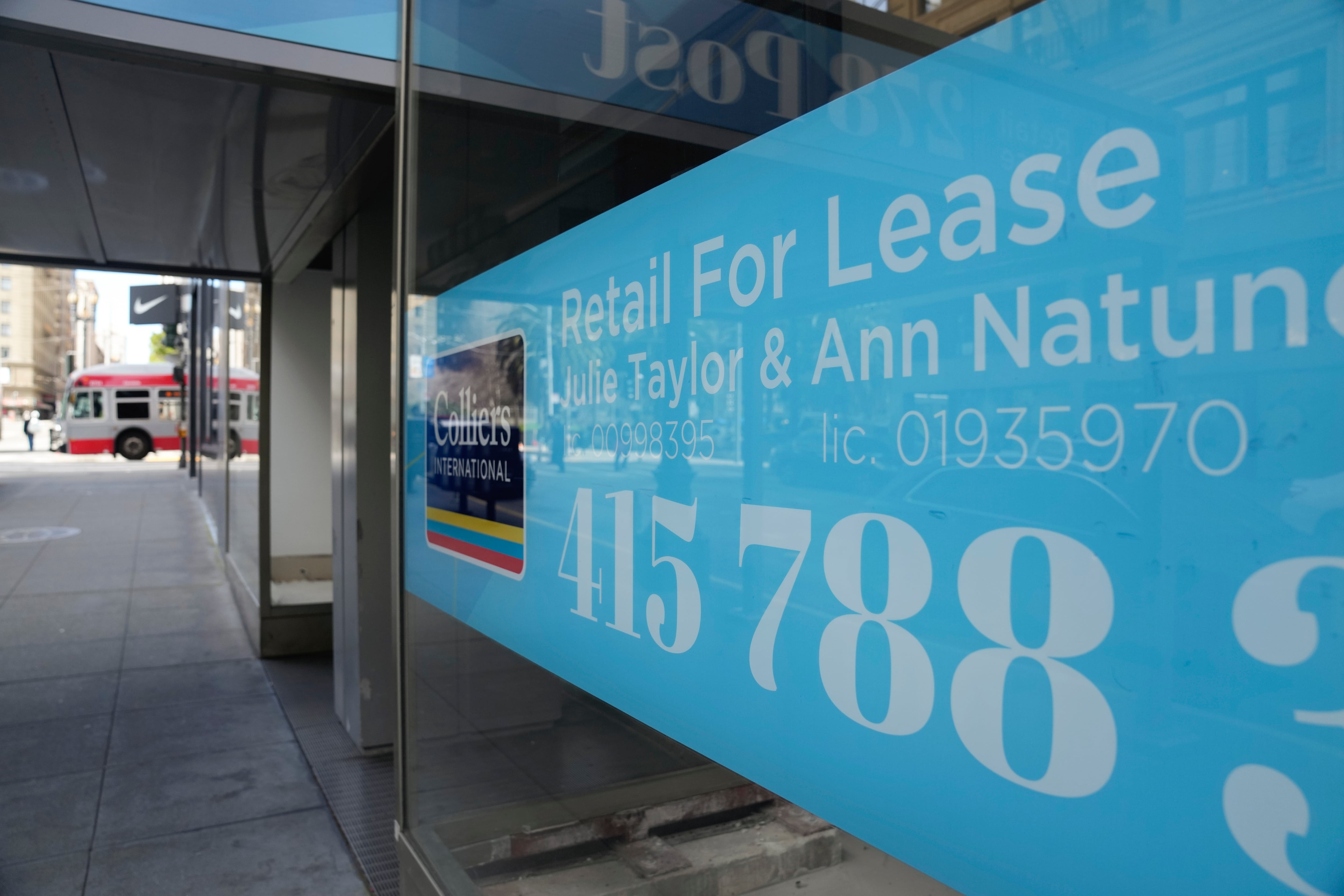
FILE - Retail spaces for lease are seen near Union Square in San Francisco, Feb. 27, 2024. Rent inflation is a pressure point for small businesses, according to new data from the Bank of America Institute. (AP Photo/Eric Risberg, File)
NEW YORK (AP) — Cost pressures continue to hurt small businesses.
In particular, rent inflation is a pressure point for small businesses, according to new data from the Bank of America Institute. The average monthly share of rent in total payments through May is 9.1%, up significantly from the 2019 average of 5.9%.
Some parts of the country have higher rents. In Las Vegas, for example, the average share of rent in May was more than double the national average.
But easing wage inflation has taken some pressure off of small businesses. Bank of America Institute found total nonfarm payroll growth remains strongest in the South. Payroll payments in cities like Charlotte and Tampa are over 30% higher than in 2019.
To calculate rent share, Bank of America analyzed internal data, specifically from small businesses that automatically pay rent out of their Bank of America accounts.
The average monthly rent payment growth per small business client was up 12% year-over-year in May. The rent payments per client closely track the nonresidential real estate rents component of the Producer Price Index, which suggests the increases are largely due to inflation rather than small businesses upgrading to bigger or better space.
Another bright spot from internal data: A metric called the inflow-to-outflow ratio, which Bank of America Institute views as a proxy for profits, rose in May and reached its highest level since March 2023. However, the ratio still remains on average lower than the past few years.
Dena Jalbert, Head of M&A at Align Advisory, discusses the state of mergers and acquisitions in 2025 and beyond, highlighting key trends and opportunities.
Kim Perell, author and entrepreneur, shares actionable tips and tricks to help current and aspiring entrepreneurs kick off 2026 with confidence and momentum.
Emera CEO Scott Balfour discusses soaring energy demand, AI-driven grid challenges, clean-power investments, and how the company is building a resilient future.
JB Mackenzie discusses Robinhood’s new entertainment prediction markets, letting users engage with pop culture, award shows, and more through low-stakes bets.
Rhett Power shares his startup journey, lessons from his early years and insights from his book on overcoming negative self-talk to lead with confidence.
Despite inflation, Americans aren’t giving up the gym. Crunch Fitness CEO Jim Rowley discusses strong growth, value-driven expansion and what the future holds.
Home prices far outpacing incomes, low inventory, and higher living costs are reshaping the market. WSJ’s Veronica Dagher breaks down the challenges ahead.
As commercial options tighten, more travelers are turning to private aviation. Wheels Up CEO George Mattson breaks down capacity and demand challenges.
Layoffs, hiring slowdowns, and shifting skill demands dominate this year’s job talk. LinkedIn’s Kory Kantenga explains what workers should watch for next.