Slack beat expectations in its second quarter earnings report, posting $145 million in sales after the bell on Wednesday. The company was expected to report $141.25 million in sales.
Slack’s stock, however, fell swiftly in after hours trading due to weaker-than-expected guidance for the third quarter. The earnings report was the company’s first release since going public in June under the ticker WORK on the New York Stock Exchange.
“We remain focused on expansion within existing customers and growing our large enterprise customer base,” Allen Shim, Slack’s chief financial officer, said in a statement. Shim added that the company’s revenue growth was 58 percent year-over-year increase.
The popular workplace messaging platform posted a net loss per share of $0.14, better than the expected loss of $0.18. Slack, however, said it expects a loss of $0.08 to $0.09 per share in the third quarter, slightly more than what analysts were expecting.
It also said revenue growth would slow from 58 percent to less than 48 percent, which seemed to worry investors after hours with shares falling more than 15 percent. Yet the drop comes after the stock gained more than an 8 percent during the trading day Wednesday.
Since its founding in 2014, Slack has grown to be used by over 600,000 organizations in 150 countries. The platform, which has free and paid subscription plans, is now used by an estimated 10 million people who send over 1 billion messages a week. Shim added that Slack also increased its paid customer base by 720 clients, which marked a 75 percent year-over-year jump.
Slack’s market debut earlier this summer followed several other major tech startups, such as Uber ($UBER) and Lyft ($LYFT), that went public this year.
Forgoing the traditional initial public offering process, Slack directly listed its shares on the market. The big difference between that and an IPO is that the company did not issue new shares, but instead, existing shareholders sold their stock to public investors. That means, unlike Uber and Lyft, Slack did not raise additional capital as part of the IPO.
The last major company to complete a direct listing was Spotify ($SPOT), which went public in April 2018.
“This is an entirely new category of software enabling a once-in-a-generation shift in the way people work together,” Stewart Butterfield, the company's CEO and co-founder, added in a statement. “We believe channel-based collaboration is so superior to email-based communication for work, that this shift is inevitable.”
'Unicorn Hunters' gives business owners the potential of reaching a billion-dollar valuation, but before they can get the capital they have to impress the 'Circle of Money.' Rosie Rios, former U.S. Treasurer and co-host of 'Unicorn Hunters,' joins Cheddar News to talk more about the show.
Stocks closed lower Thursday, with the Nasdaq falling close to 2.5% for its worst day since September. Tech stocks dragged on the index, which is down nearly 3% for the week. Investors are continuing to respond to the Federal Reserve's taper timeline and interest rate announcement, as well as keeping an eye on the COVID-19 omicron variant as cases spike in major metropolitan areas like New York. David Sadkin, president and partner at Bel Air Investment Advisors, joins Cheddar News' Closing Bell to discuss.
There's a new ETF designed to offer investors exposure to 'meme stocks.' Roundhill Investments launched it earlier this month and says the ETF is the first that is explicitly designed to track the performance of meme stocks. Roundhill Investments Vice President of Research Mario Stefanidis joins Cheddar News' Closing Bell to discuss.
Jared Madfes, Partner at Tribe Capital, joins Cheddar's Closing Bell, where he says crypto investors should continue to focus on the long-term despite the recent price boost in the hours following Wednesday's Fed decision.
Mobile bill payment application Papaya recently raised $50 million in a series B round led by Bessemer Venture Partners.
Papaya lets users take a photo of any bill, and the app's AI-powered 'bill understanding technology' pays the bill in seconds. The company says its goal is to help people spend more time on things that matter, by making bill-paying as painless and quick as possible. Papaya CEO and co-founder Patrick Kann joined Cheddar News' Closing Bell to discuss.
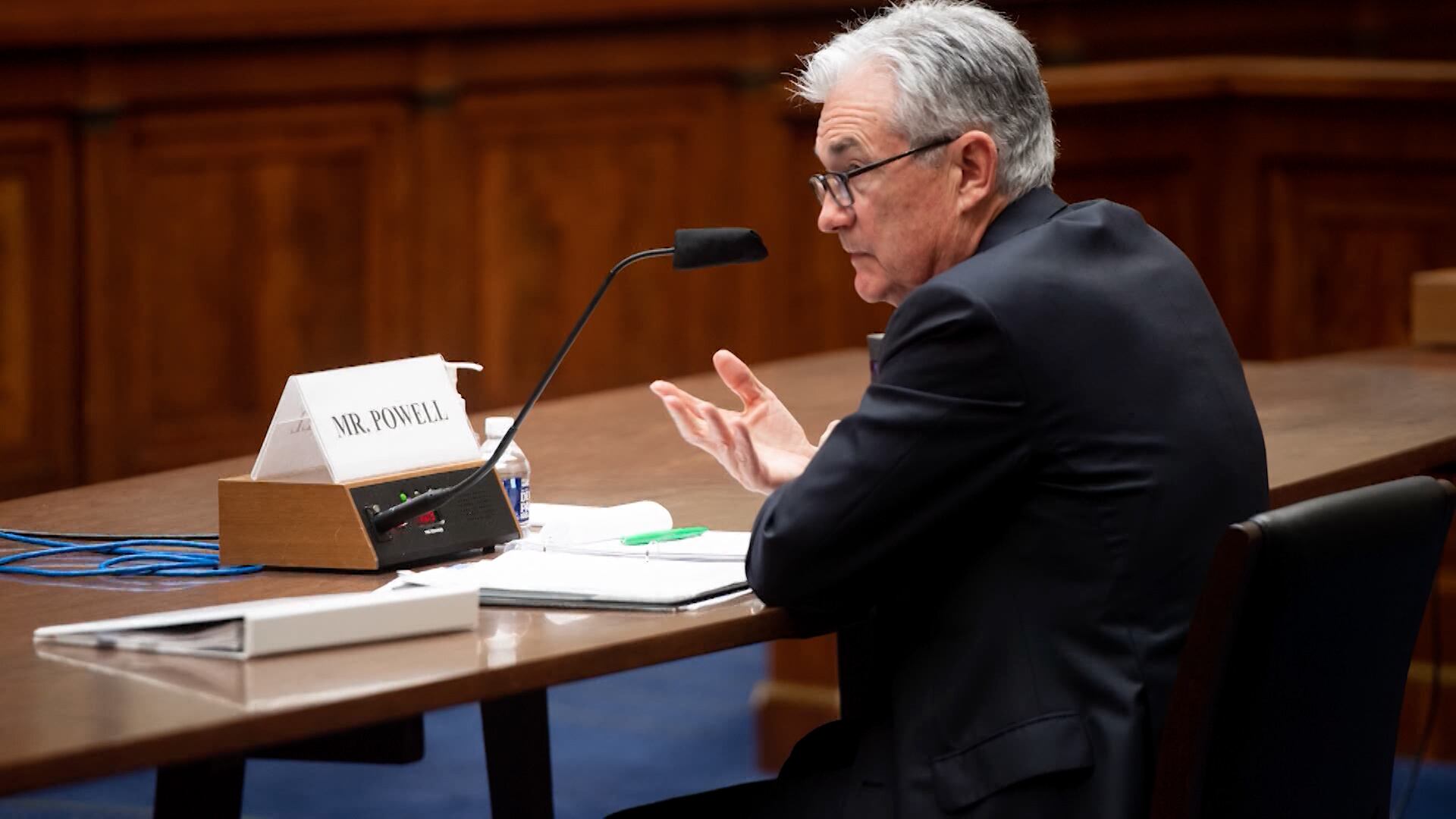
Markets jumped on the Federal Reserve's announcement it would speed up its tapering timeline and institute three rate hikes in 2022 — but that was before the COVID-19 omicron variant seemed to be a threat. This announcement also comes as it took the central bank a number of weeks to recognize that inflation does not seem to be transitory as consumers feel price pressure across the board. Bill Adams, senior economist at PNC, joins Cheddar News' Closing Bell to discuss the Fed's moves, how the ongoing pandemic could continue to impact the economy, the Fed's dual mandate, and more.
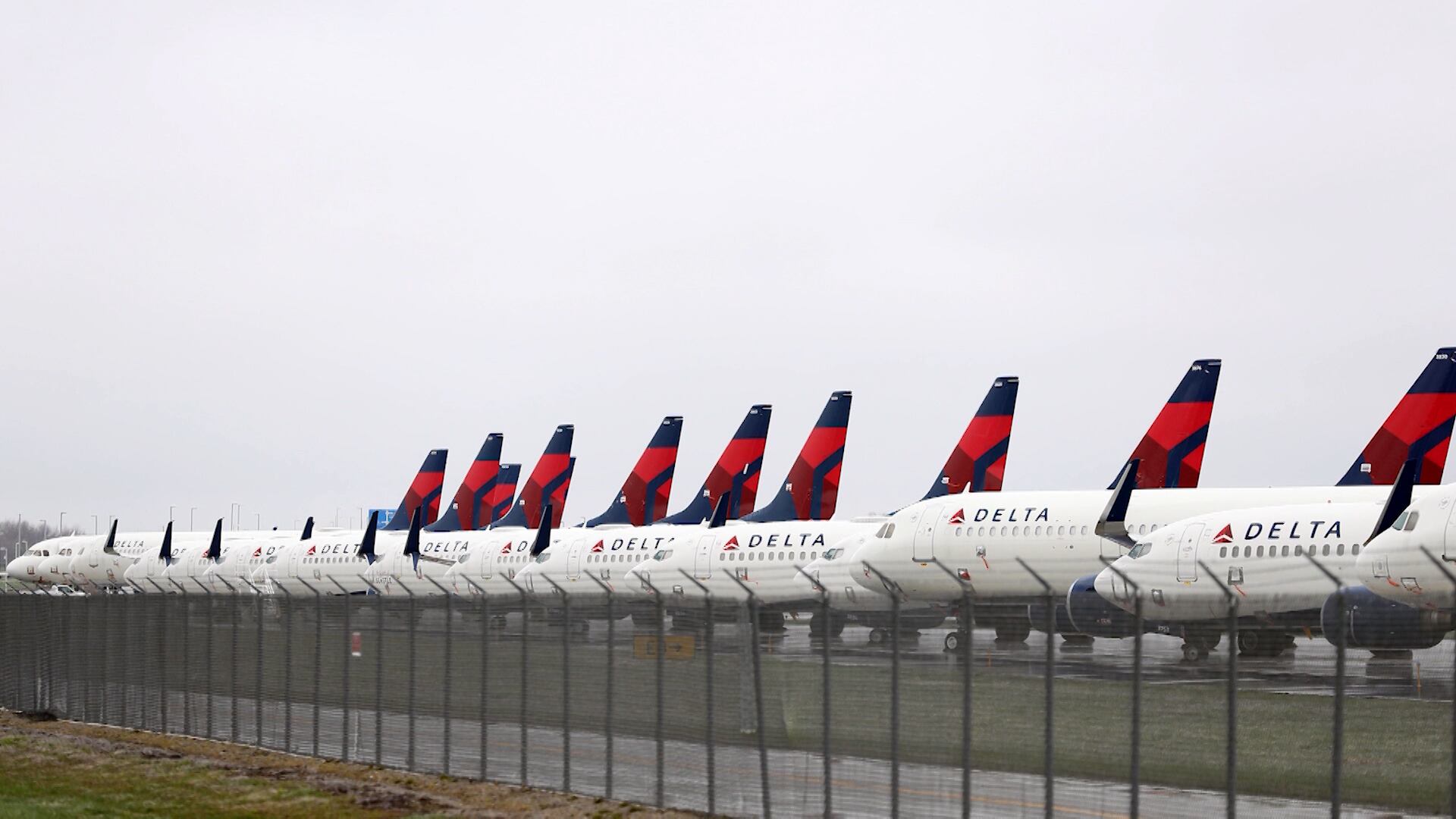
Delta Air Lines CFO Dan Janki joined Cheddar's Kristen Scholer to talk about the airline's 2022 outlook on its Capital Markets Day as the travel industry recovers from pandemic disruptions. The airline projects a return to profitability next year despite the emergence of the omicron variant during the peak holiday season. Janki said that there had been no impact on domestic travel as of yet, but the company is remaining vigilant for any change. He did note that there had been some international fallout as countries implemented travel restrictions.
Tom Shannon, Bowlero CEO, joined Cheddar to discuss the decision to bring the company to the New York Stock Exchange via a SPAC merger with Isos Acquisition Corporation. Shannon said one of the goals of the public offering is to expand operations internationally, noting that Bowlero has the potential to reach worldwide markets due to the sport's popularity. "Bowling is a global market, and I'll give you an example. In South Korea, there are three million league bowlers and 1,200 bowling centers in South Korea alone," he said.