Slack beat expectations in its second quarter earnings report, posting $145 million in sales after the bell on Wednesday. The company was expected to report $141.25 million in sales.
Slack’s stock, however, fell swiftly in after hours trading due to weaker-than-expected guidance for the third quarter. The earnings report was the company’s first release since going public in June under the ticker WORK on the New York Stock Exchange.
“We remain focused on expansion within existing customers and growing our large enterprise customer base,” Allen Shim, Slack’s chief financial officer, said in a statement. Shim added that the company’s revenue growth was 58 percent year-over-year increase.
The popular workplace messaging platform posted a net loss per share of $0.14, better than the expected loss of $0.18. Slack, however, said it expects a loss of $0.08 to $0.09 per share in the third quarter, slightly more than what analysts were expecting.
It also said revenue growth would slow from 58 percent to less than 48 percent, which seemed to worry investors after hours with shares falling more than 15 percent. Yet the drop comes after the stock gained more than an 8 percent during the trading day Wednesday.
Since its founding in 2014, Slack has grown to be used by over 600,000 organizations in 150 countries. The platform, which has free and paid subscription plans, is now used by an estimated 10 million people who send over 1 billion messages a week. Shim added that Slack also increased its paid customer base by 720 clients, which marked a 75 percent year-over-year jump.
Slack’s market debut earlier this summer followed several other major tech startups, such as Uber ($UBER) and Lyft ($LYFT), that went public this year.
Forgoing the traditional initial public offering process, Slack directly listed its shares on the market. The big difference between that and an IPO is that the company did not issue new shares, but instead, existing shareholders sold their stock to public investors. That means, unlike Uber and Lyft, Slack did not raise additional capital as part of the IPO.
The last major company to complete a direct listing was Spotify ($SPOT), which went public in April 2018.
“This is an entirely new category of software enabling a once-in-a-generation shift in the way people work together,” Stewart Butterfield, the company's CEO and co-founder, added in a statement. “We believe channel-based collaboration is so superior to email-based communication for work, that this shift is inevitable.”
Ross Gerber, Co-Founder, President, and CEO of Gerber Kawaski Wealth and Investment Management, joins Cheddar News' Closing Bell, where he says now is a great opportunity to buy low on Tesla after shares fell in light of the EV giant's latest earnings report.
High-speed connectivity solutions provider Credo went public on the Nasdaq on Thursday, raising $200 million in its IPO. CEO Bill Brennan, joined Cheddar to discuss its entry into the capital markets and the next chapter for the company. "We're going to be focused on what we have been focused on, which is really creating, creating innovative connectivity solutions that really pushed the edge on efficient power as well as very effective cost," he said.
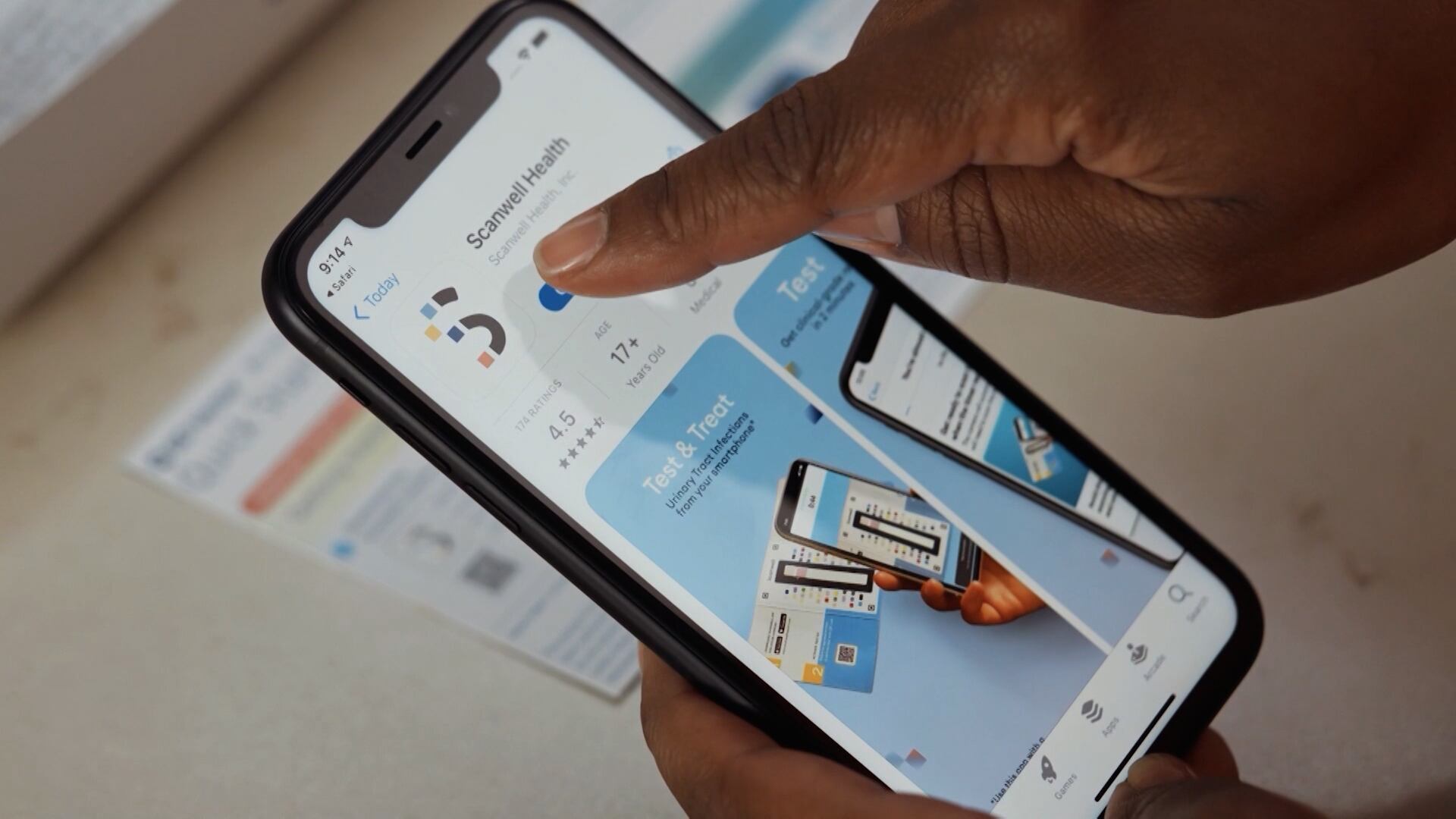
BD Veritor is a variation of the at-home COVID test that uses a smartphone to interpret the results. The test is taken via a nose swab test strip that is then scanned by your phone’s camera with the result clearly displayed as positive or negative. James Walker, vice president of integrated diagnostics USA for BD, joined Cheddar to discuss how the test hopefully takes the "guesswork out of testing." Walker also went into what BD is doing to deal with the surging demand for at-home tests amid the omicron spread. "While we don't disclose how much we produce, we have capacity to manufacture up to 12 million rapid antigen tests per month and are delivering on our commitments to distributors and retailers," he said.
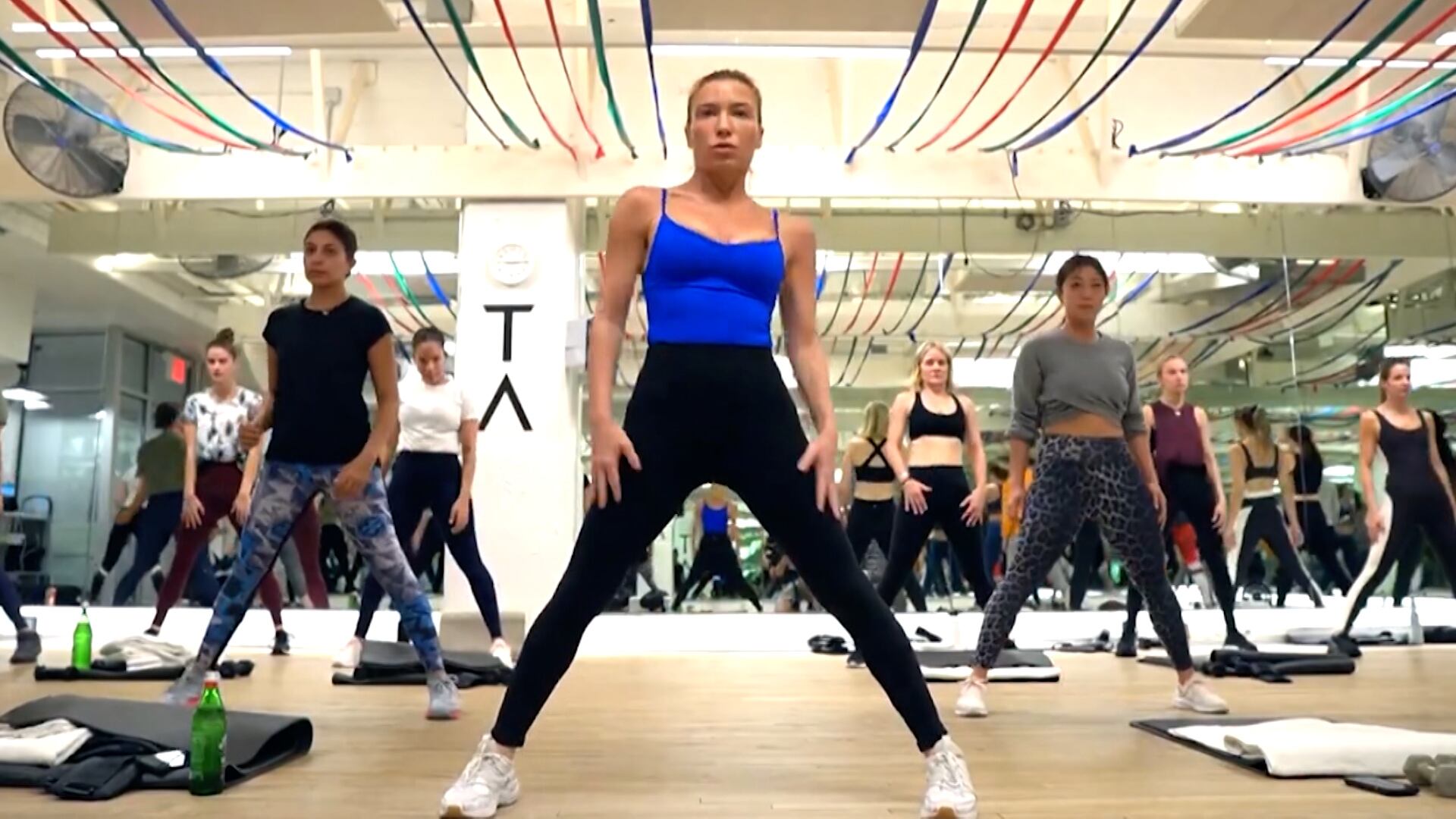
Citi recently began collaborating with fitness entrepreneur Tracy Anderson to promote its Custom Cash Credit card. Pam Habner, CEO of U.S. Branded Cards for Citi, along with Tracy Anderson, creator of The Tracy Anderson Method, joined Cheddar to discuss how health and fitness matched up with a cash back credit card. "The fact that Citi is going 'hey if you lead a healthy lifestyle, we're going to help you out. We understand that it's more expensive and we're going to give you cash back for living your best life,'" Anderson said about the partnership, which also includes a custom promotional Spotify playlist.
Stocks closed lower Thursday amid continued volatility. The S&P 500 was down 10% from its record high, the Dow was down 7%, and the Nasdaq was 4% away from bear market territory as it closed 16% below its record high. Investors are still processing this week's Federal Reserve announcement about a potential first rate hike in March. Chris Gaffney, President of World Markets at TIAA Bank, joins Cheddar News' Closing Bell to discuss today's close, the Fed's announcement, predictions about interest rate hikes, and more.
Low-code app development platform Crowdbotics raised $22 million in a Series A funding round led by Jackson Square Ventures. Crowdbotics has helped more than 14,000 customers launch apps without having to learn how to code. The company can offer a team of expert developers to help companies launch custom apps, or provide the means for companies to develop apps themselves. Crowdbotics CEO Anand Kulkarni joined Cheddar News' Closing Bell to discuss.
Comcast announced that the company has beaten its projected earnings for Q4. However, the telecommunications giant fell short of its predictions for customer growth.