Slack beat expectations in its second quarter earnings report, posting $145 million in sales after the bell on Wednesday. The company was expected to report $141.25 million in sales.
Slack’s stock, however, fell swiftly in after hours trading due to weaker-than-expected guidance for the third quarter. The earnings report was the company’s first release since going public in June under the ticker WORK on the New York Stock Exchange.
“We remain focused on expansion within existing customers and growing our large enterprise customer base,” Allen Shim, Slack’s chief financial officer, said in a statement. Shim added that the company’s revenue growth was 58 percent year-over-year increase.
The popular workplace messaging platform posted a net loss per share of $0.14, better than the expected loss of $0.18. Slack, however, said it expects a loss of $0.08 to $0.09 per share in the third quarter, slightly more than what analysts were expecting.
It also said revenue growth would slow from 58 percent to less than 48 percent, which seemed to worry investors after hours with shares falling more than 15 percent. Yet the drop comes after the stock gained more than an 8 percent during the trading day Wednesday.
Since its founding in 2014, Slack has grown to be used by over 600,000 organizations in 150 countries. The platform, which has free and paid subscription plans, is now used by an estimated 10 million people who send over 1 billion messages a week. Shim added that Slack also increased its paid customer base by 720 clients, which marked a 75 percent year-over-year jump.
Slack’s market debut earlier this summer followed several other major tech startups, such as Uber ($UBER) and Lyft ($LYFT), that went public this year.
Forgoing the traditional initial public offering process, Slack directly listed its shares on the market. The big difference between that and an IPO is that the company did not issue new shares, but instead, existing shareholders sold their stock to public investors. That means, unlike Uber and Lyft, Slack did not raise additional capital as part of the IPO.
The last major company to complete a direct listing was Spotify ($SPOT), which went public in April 2018.
“This is an entirely new category of software enabling a once-in-a-generation shift in the way people work together,” Stewart Butterfield, the company's CEO and co-founder, added in a statement. “We believe channel-based collaboration is so superior to email-based communication for work, that this shift is inevitable.”
Alex Gladstein, Chief Strategy Officer for the Human Rights Foundation, joins Closing Bell, where he explains where tech experts are getting it wrong when they call crypto risky and unproven. He also stresses the importance of crypto and points to how Ukraine was able to use Bitcoin during the onset of the Russian invasion.
API platform RapidAPI recently became a unicorn with a $1 billion valuation after raising $150 million in a Series D funding round led by Softbank Vision Two Fund. Microsoft's Venture Fund, M12, and Andreessen Horowitz also participated. RapidAPI says it provides the world's largest API hub which enables millions of developers and companies to build software faster. Iddo Gino, founder and CEO of RapidAPI, joins Cheddar News' Closing Bell to discuss.
The PGA Tour has announced that it will suspend players that are competing in the LIV Golf event that teed off today. At least 17 players, including names like Phil Mickelson, Dustin Johnson, and Sergio Garcia are banned from the PGA Tour competition. Hilary Fordwich, a business analyst and golf expert, joined Cheddar News to discuss why the PGA had to go this route. This is a threat to the future of golf for them, and there's been many contentions about them not being fair and that this is vindictive," she said. "Don't forget, of course, they represent sort of a monopoly in the history of golf. So you've got two sides to this story. You've got those the purists, those that feel that golf should only be a certain way and that there are only these limited events that the PGA puts on. And then you've got other people who are saying … this is all about money"
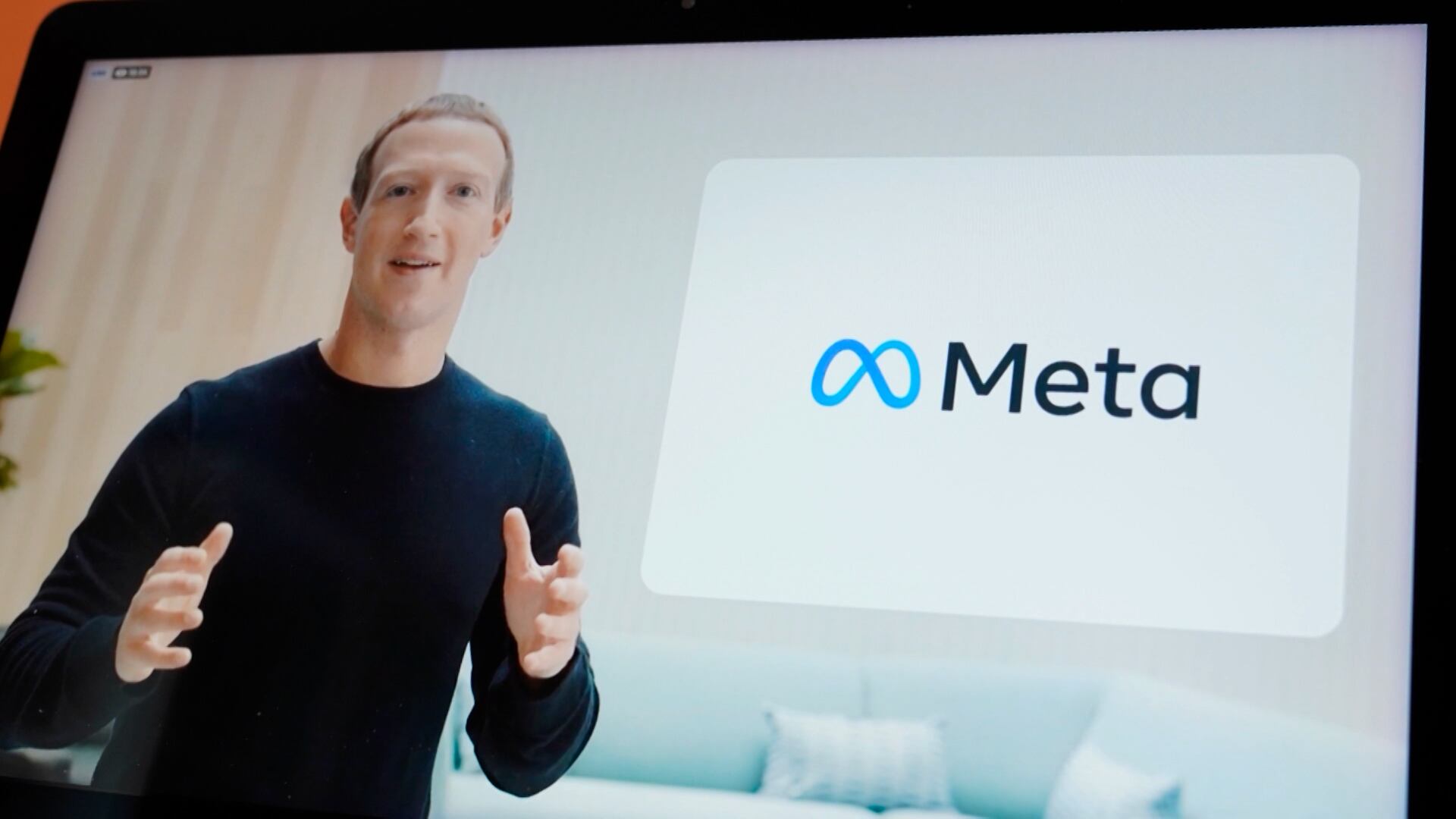
Facebook parent Meta officially has changed it’s ticker symbol from ‘FB’ to ‘META’. Paul Meeks, a portfolio manager, Independent Solutions Wealth Management, and a professor of practice in the Baker School of Business at The Citadel, joined Cheddar News to discuss why the tech giant has had to make big changes to its name, its ticker, and its business plans. "When you see what's happening in digital advertising — and there was a slowdown there even before the threat of a recession, which could cause a even more drastic slowdown next year — they had to pivot," he said. Meeks noted he sees Facebook dominating in the metaverse space going forward — whatever that may end up being.
Sports merchandising company Fanatics announced it will be making trading cards featuring college athletes, a deal made possible by the NCAA's change to NIL rules for its players. Anchors Kristen Scholer and Ken Buffa break down the deal for Cheddar.
Catching you up on today’s top business headlines with household wealth falling in Q1 for the first time in two years, Meta officially changing its ticker symbol from ‘FB’ to ‘META’, and updates on Tesla.
The European Union has approved a 40 percent quota for women to sit on company boards. This comes as only 9 of the 27 EU member states have gender equality legislation.
Amanda Victoria, co-founder and CEO of Siponey, joins Cheddar News to talk about the company's canned cocktails. The spritz is made with only four ingredients — wildflower honey, aged rye whiskey, sparkling water, and fresh lemon juice.