An entire population of adults has not been accounted for when it comes to administering COVID-19 vaccinations. Pregnant women, who are at higher risk of severe illness if they contract the virus, were excluded from vaccine clinical trials, and now there is debate and concern about whether or not they are safe for expecting mothers.
March of Dimes CEO Stacey Stewart said the exclusion of pregnant women in vaccine testing is an outdated process and a roadblock for the advancement of science.
"It's 2021, we need to take a more modern approach to how we advance science, especially as it relates to pregnant women [and] to newborn babies," Stewart told Cheddar. "At the March of Dimes, we've been a long advocate for newborn screening for all the things that would help us to make sure that moms and babies are protected,"
While the CDC and the World Health Organization both agree that patients should consult with a doctor to make the best decision for themselves and their baby, the impact of the vaccines, particularly the Moderna and Pfizer/BioNTech mRNA vaccines that do not use the live version of the virus, on pregnancies is unknown. So far, both companies are monitoring women who became pregnant after getting vaccinated.
According to Stewart, the fact that the Moderna and Pfizer's vaccines do not "influence or alter the DNA" signals that they would be a safe option for pregnant women to consider.
"What we are saying at the March of Dimes is consult your health care practitioner," she said. "But by all means, know that as a pregnant woman you are at potentially higher risk of severe illness if you contract COVID-19, so we would certainly recommend that women give serious thought to receiving the vaccine when they're able to."
Last week, NIAID Director Dr. Anthony Fauci said of the more than 10,000 pregnant women that have been vaccinated, no major incidents have been reported, which Stewart said is a good indicator of safety.
"If a woman is at high risk, is an essential worker, is at high risk of being in contact with someone that has COVID-19, is at high risk herself of severe illness because of comorbidities, please consider the vaccine because it could save your life. It could save the life of your baby as well," she noted.
The Falcon 9 'Block 5', which theoretically can be reused 100 times without much maintenance, took off Friday afternoon from the Kennedy Space Center in Florida. The rocket carried a communications satellite into orbit for Bangladesh and then successfully landed back on a platform in the Atlantic.
The 'Block 5' rocket is the first Falcon 9 rocket that can theoretically be reused 10 times without any maintenance, and up to 100 times with just minor servicing. If SpaceX can pull off seven successful 'Block 5' launches, the company could get clearance from NASA to do manned missions, says Will Goodman, managing editor of Rockets Are Cool.
Mark Kaufman, science reporter at Mashable, discusses California's history-making decision to mandate solar panels on all new homes and low-rise apartment buildings. [We talk what this means for the solar panel companies and the rest of the U.S.](https://mashable.com/2018/05/09/california-becomes-first-state-to-mandate-solar-panels-on-new-homes)
Rob Marvin, associate features editor for PCMag, discusses the biggest announcements from Microsoft's Build conference. Marvin weighs in on Microsoft introducing AI for Accessibility, an integration between its digital assistant Cortana and Amazon Alexa.
Zachariah Reitano's Roman Health is using the treatment of erectile dysfunction to save lives by helping men discover the sometimes very serious underlying causes of the condition.
Emily Manor-Chapman, a NASA engineer on the 'InSight' lander, explains what the new mission to Mars hopes to accomplish.
The on-demand app that connects patients with doctors has seen rapid growth in the past few years, particularly in mental health services, and recently raised an additional $74 million in funding. "Not only does it make access to a doctor much, much easier, it also addresses a lot of the stigma associated with mental health," says CEO Hill Ferguson.
Jill Steinberg, the wife of Cheddar's CEO, took the DIY genetic test out of curiosity and found out she was prone to breast cancer. "There's always something there to learn," says Anne Wojcicki, CEO and founder of 23andMe.
Is the surface of a comet really a winter wonderland? Not exactly. Cheddar's Pat Jones explains what's going on in this viral space gif.
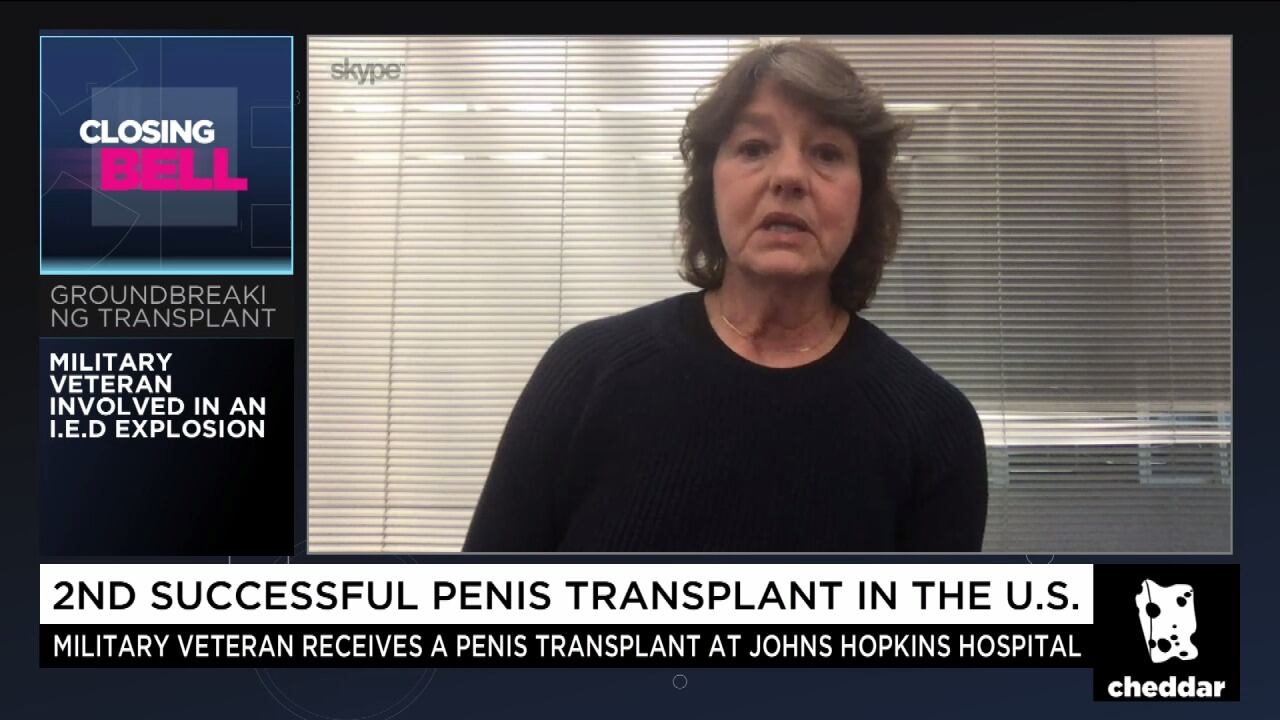
John Hopkins Hospital recently completed the second-ever successful penis transplant in the U.S., an incredibly complex surgery that lasted 14 hours. New York Times reporter Denise Grady explains why the vet needed the surgery in the first place.