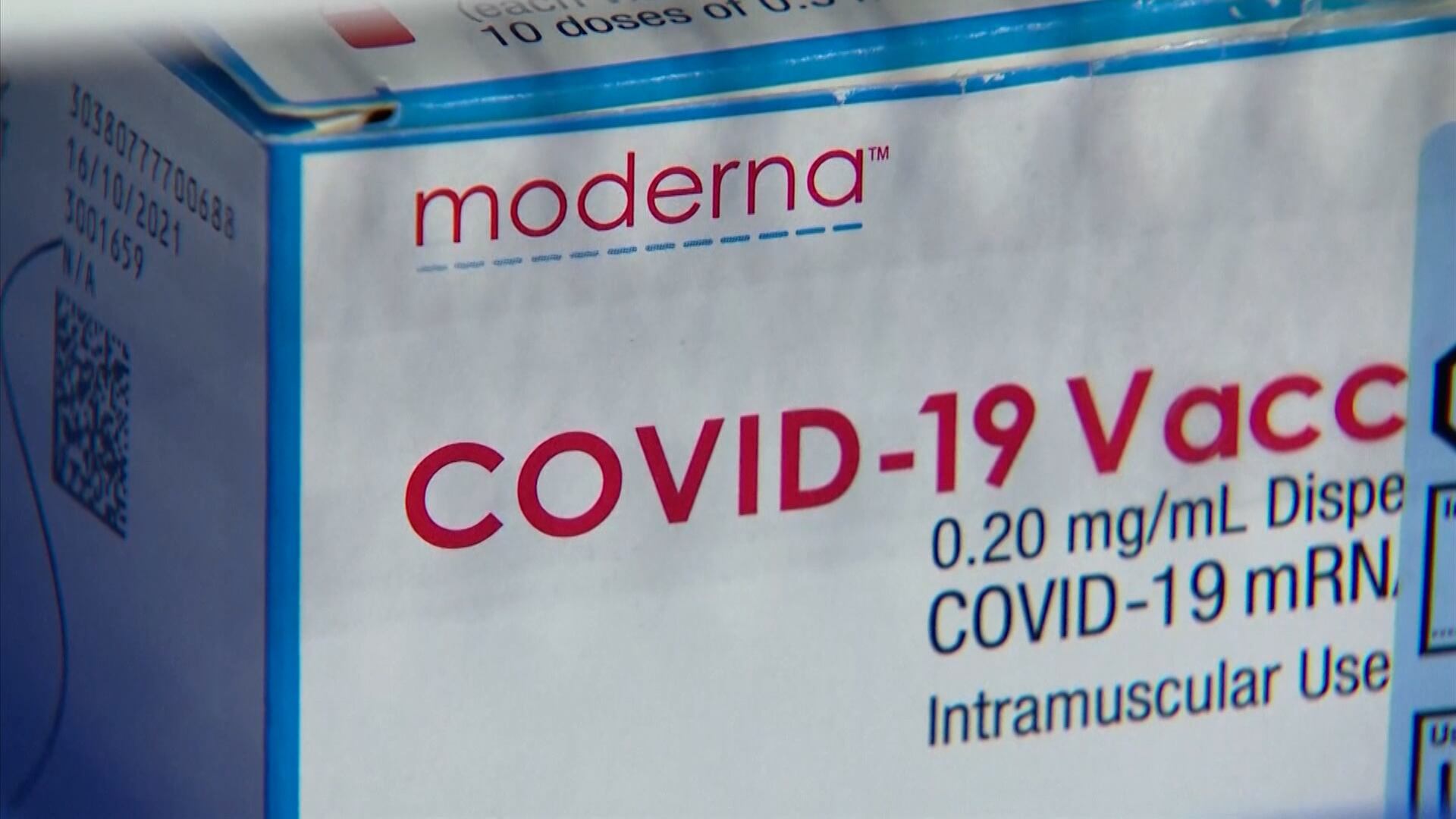
An entire population of adults has not been accounted for when it comes to administering COVID-19 vaccinations. Pregnant women, who are at higher risk of severe illness if they contract the virus, were excluded from vaccine clinical trials, and now there is debate and concern about whether or not they are safe for expecting mothers.
March of Dimes CEO Stacey Stewart said the exclusion of pregnant women in vaccine testing is an outdated process and a roadblock for the advancement of science.
"It's 2021, we need to take a more modern approach to how we advance science, especially as it relates to pregnant women [and] to newborn babies," Stewart told Cheddar. "At the March of Dimes, we've been a long advocate for newborn screening for all the things that would help us to make sure that moms and babies are protected,"
While the CDC and the World Health Organization both agree that patients should consult with a doctor to make the best decision for themselves and their baby, the impact of the vaccines, particularly the Moderna and Pfizer/BioNTech mRNA vaccines that do not use the live version of the virus, on pregnancies is unknown. So far, both companies are monitoring women who became pregnant after getting vaccinated.
According to Stewart, the fact that the Moderna and Pfizer's vaccines do not "influence or alter the DNA" signals that they would be a safe option for pregnant women to consider.
"What we are saying at the March of Dimes is consult your health care practitioner," she said. "But by all means, know that as a pregnant woman you are at potentially higher risk of severe illness if you contract COVID-19, so we would certainly recommend that women give serious thought to receiving the vaccine when they're able to."
Last week, NIAID Director Dr. Anthony Fauci said of the more than 10,000 pregnant women that have been vaccinated, no major incidents have been reported, which Stewart said is a good indicator of safety.
"If a woman is at high risk, is an essential worker, is at high risk of being in contact with someone that has COVID-19, is at high risk herself of severe illness because of comorbidities, please consider the vaccine because it could save your life. It could save the life of your baby as well," she noted.
Vaccine maker Pfizer delayed its COVID shot for kids allegedly due to a lack of data on how it would perform against the omnicron variant, according to the Wall Street Journa. Peter Pitts, professor and founder of the Center for Medicine in the Public Interest and a former FDA associate commissioner, joined Cheddar News Wrap to break down why the authorization can't be rushed. "Going forward, the FDA wants to look at data specifically against omicron, and it looks like that's going to be a three-shot regimen versus two, which was efficient against delta but not omicron because obviously omicron is more infectious," said Pitts.
Walker Ross, Assistant Professor of Sports Business Management at Florida Southern College, joins Business of Sports: The Beijing Winter Olympics 2022, where he says that actions Beijing and other Olympic host sites have been implementing to combat climate change has simply not been enough to offset their carbon footprint.
Bamboo-based toilet paper company Cloud Paper raised $5 million in a recent funding round. Its product is a bamboo-based alternative to traditional toilet paper made from trees, and its mission is to end the deforestation caused by traditional paper products. Cloud Paper says the raise will allow it to make significant investments in its supply chain, product development, and hiring. Ryan Fritsch, a co-founder of Cloud Paper, joined Cheddar News' Closing Bell to discuss.
Space tourism company World View plans to launch its first commercial flights in early 2024, with voyages to take off from iconic locations around the world like the Grand Canyon — but seemingly at a flexible price point. Dale Hipsh, president of tourism and exploration at World View, joined Cheddar to discuss what a trip to the stratosphere would look like with his company and its much less expensive take on space travel. "Our technology allows us to be more democratic, to offer more opportunities for people to experience near space, and that overview effect," he said. "So we're really thrilled to be bringing it to market."
A recent NOAA report found America's coastline could experience a century's worth of sea rise in just 30 years. By 2050, water on the U.S. coast will be 10-12 inches higher, causing major eastern cities to be hit regularly with floods, even on sunny days. Gary Mitchum, professor of physical oceanography at the University of South Florida, joins Cheddar News to discuss.
The Biden administration is launching a new task force to promote the use of 'cleaner' construction materials with lower life cycle emissions. This comes as the White House works to speed up government purchases of greener products. Sweta Chakraborty, climate change expert and U.S. president of "We Don't Have Time," joins Cheddar News to discuss.
Stephen Gardner, director at ETF Managers Group, explains why investors shouldn't be rushing to sell vaccine stocks like Moderna or BioNTech even as the spread of COVID-19 slows down.
On this episode of Cheddar Innovates: Evolution Devices CEO breaks down how the Evowalk wearable device can help those with walking impairments; Cresilon CEO explains how he's created a plant-based gel to easily treat wounds in both humans and animals; A look at Curiosity Stream's 'The Colorado Problem.'
Pier Mantovani, Founder and CEO of Evolution Devices, joins Cheddar Innovates to discuss how the Evowalk wearable device can help those with walking impairments, and how remote physical therapy is becoming a reality.