Pipe Bomb Maker Used Crude Tools of Terror, Says Former Counter-Terrorism Official
*By Carlo Versano*
An attempted mail bombing of several prominent Democrats and CNN's New York office used techniques that have grown more common among terrorists in recent years, said Jarrod Bernstein, a former counter-terrorism official in the Obama administration.
Bernstein spoke to Cheddar Wednesday afternoon as the [flurry of apparently politically-motivated threats](https://cheddar.com/videos/possible-explosives-sent-to-hillary-clinton-and-barack-obama) tapped into a sense among many Americans that ー less than two weeks before a pivotal election ー the country's political discourse is on a knife's edge.
The devices that were intended for George Soros, former president Barack Obama, former Secretary of State and presidential candidate Hillary Clinton, former A.G. Eric Holder, Rep. Maxine Waters (D-CA), and CNN's New York office appeared similar and part of a "high concept, low technology" trend that worries counter-terrorism officials, Bernstein said.
That trend includes homemade bombs, commandeered vehicles, and anything else that can be used to inflict mayhem, no matter how crudely.
While not particularly high-tech, the devices seemed to be capable of detonating, Bernstein said. "It doesn't need to be a very sophisticated device to do a lot of damage."
The number of devices and the addressees, all high-profile Democrats who are frequent targets of right-wing ire ー including insults from President Trump ー suggested a motivated individual or group trying to influence our political discourse, according to Bernstein.
"I don't think we've ever seen a scare as widespread as this ー this close to an election," he said.
For full interview [click here](https://cheddar.com/videos/bombs-and-suspicious-packages-sent-to-cnn-obama-clinton-and-other-high-profile-dems).
As Russia continues to invade Ukraine, its tech outsourcing sector is at risk. Over the past few years, the country has become a popular outsourcing destination for American and European tech companies, but now the future of that industry is uncertain. Isabelle Bousquette, enterprise technology reporter, for The Wall Street Journal, discusses what repercussions the crisis might have on the industry, and what companies are doing to mitigate possible disruptions.
In a nearly 3,700 page UN report, climate scientists outline the imminent dangers caused by climate change, saying fossil fuels are 'choking humanity.' The report calls some of the impacts of global warming 'irreversible,' warning of extreme consequences in the near future. Kristie L. Ebi, Professor of Global Health and Environmental and Occupational Health Sciences, University of Washington joined Cheddar's Opening Bell to discuss.
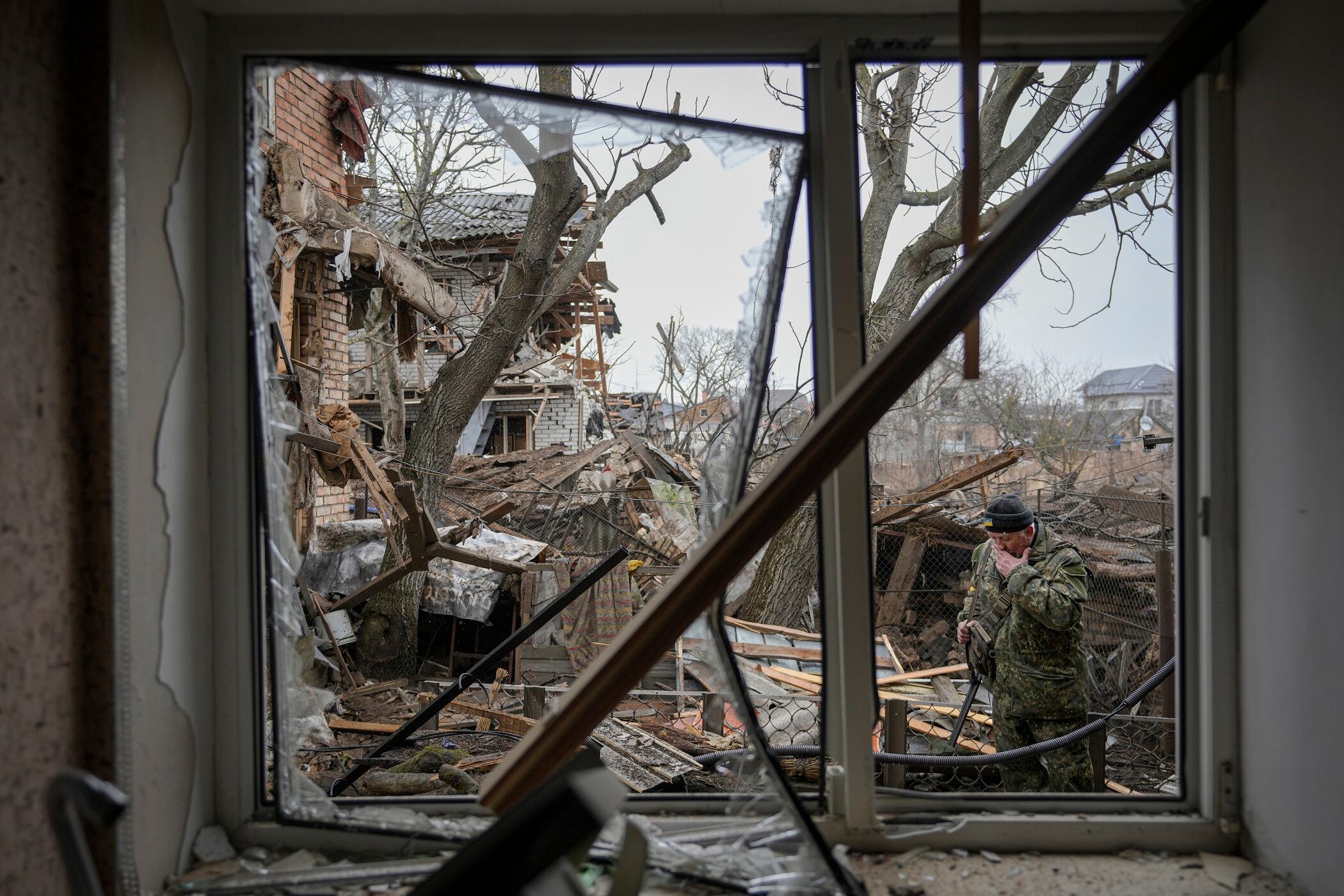
Ukrainian President Volodymyr Zelenskyy has signed an application for Ukraine's membership in the European Union, pleading with the bloc to accept this request. It comes as Russian forces push further into Ukraine, forcing at least half a million refugees to flee. Benjamin Schmitt, Postdoctoral Research Fellow at Harvard University and Senior Fellow at the Center for European Policy Analysis, breaks down the latest in Ukraine.
A growing wave of major U.S. companies have taken steps to cut ties with Russia or offer support to Ukraine, as tensions escalate in the region. Exxon, Apple and Boeing are just the latest companies to make the move, following the likes of Google, Meta and BP who have all announced plans to exit the region in response to the conflict. Courtney Vinopal, Breaking News Reporter, Quartz joined Cheddar's Opening Bell for more.
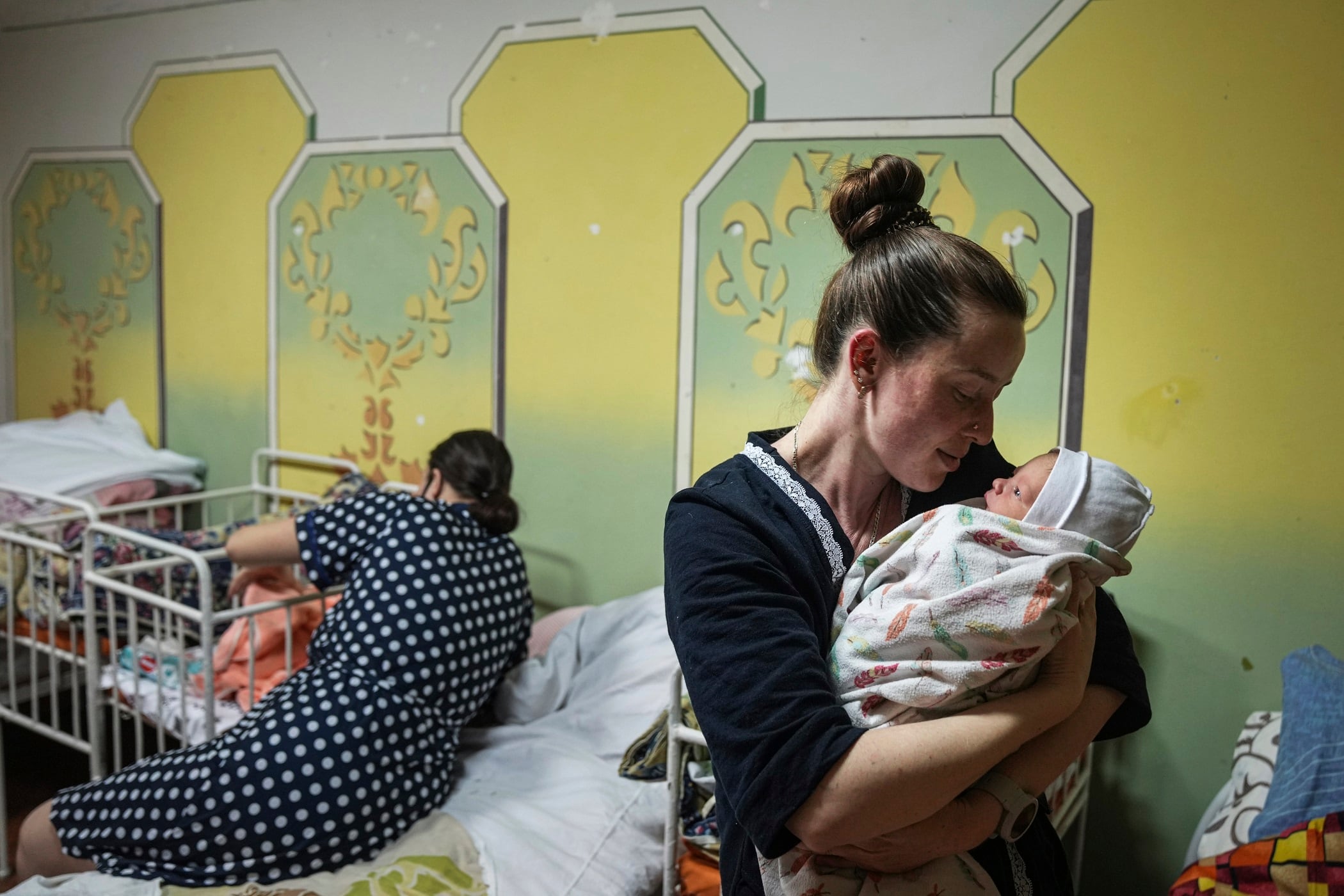
A hospital basement in Ukraine’s coastal city of Mariupol has transformed into a bomb shelter and maternity ward amid shelling during Russia’s invasion.
World leaders are currently dealing with a handful of pressing issues, including Russia's invasion of Ukraine, inflation, and not to mention the COVID-19 pandemic; but it could be argued that the most pressing issue is one that has experienced its fair share of neglect in the past -- climate change. As tensions escalate between Russia and Ukraine, there is fear the focus on climate will once again be pushed aside. However, the White House appears to be making some effort to prevent that from happening. The White House Office of Science and Technology held a first-of-its-kind roundtable discussion with some of the nation's leading climate scientists on Thursday. Michael Mann, Director of the Earth System Science Center at Pennsylvania State University, and author of the book 'The New Climate War' joins Cheddar News' Closing Bell to discuss his experience as one of the climate scientists at the White House event.
Scott Clemons, Partner and Chief Investment Strategist at Brown Brothers Harriman, joins Cheddar News' Closing Bell, where he discusses the factors leading to the sell-off on Wall Street today and explains why uncertainty is worse than bad news for the investors.
U.S. stocks rebounded to end higher on Thursday after President Biden announced new sanctions against Russia following the country's attack on Ukraine. The Dow was down 859 points at its lowest point of the session, before ultimately finishing the day in the green. Melissa Armo, founder and owner of the Stock Swoosh, joins Cheddar News' Closing Bell to discuss.
People of African and Middle Eastern descent fleeing from Russia’s invasion of Ukraine are facing the double trauma of racism at the borders. Professor of law and migration studies at the University of San Francisco, Bill Hing, joined Cheddar News Wrap to discuss what some are describing as a double standard for other refugees escaping the war. "Those that are from the Middle East and from Africa who just happen to be in Ukraine, for example on a student visa, they are not going to be able to get into Poland or another area of the Schengen area because they are not natural Ukrainian," he said.