Pipe Bomb Maker Used Crude Tools of Terror, Says Former Counter-Terrorism Official
*By Carlo Versano*
An attempted mail bombing of several prominent Democrats and CNN's New York office used techniques that have grown more common among terrorists in recent years, said Jarrod Bernstein, a former counter-terrorism official in the Obama administration.
Bernstein spoke to Cheddar Wednesday afternoon as the [flurry of apparently politically-motivated threats](https://cheddar.com/videos/possible-explosives-sent-to-hillary-clinton-and-barack-obama) tapped into a sense among many Americans that ー less than two weeks before a pivotal election ー the country's political discourse is on a knife's edge.
The devices that were intended for George Soros, former president Barack Obama, former Secretary of State and presidential candidate Hillary Clinton, former A.G. Eric Holder, Rep. Maxine Waters (D-CA), and CNN's New York office appeared similar and part of a "high concept, low technology" trend that worries counter-terrorism officials, Bernstein said.
That trend includes homemade bombs, commandeered vehicles, and anything else that can be used to inflict mayhem, no matter how crudely.
While not particularly high-tech, the devices seemed to be capable of detonating, Bernstein said. "It doesn't need to be a very sophisticated device to do a lot of damage."
The number of devices and the addressees, all high-profile Democrats who are frequent targets of right-wing ire ー including insults from President Trump ー suggested a motivated individual or group trying to influence our political discourse, according to Bernstein.
"I don't think we've ever seen a scare as widespread as this ー this close to an election," he said.
For full interview [click here](https://cheddar.com/videos/bombs-and-suspicious-packages-sent-to-cnn-obama-clinton-and-other-high-profile-dems).
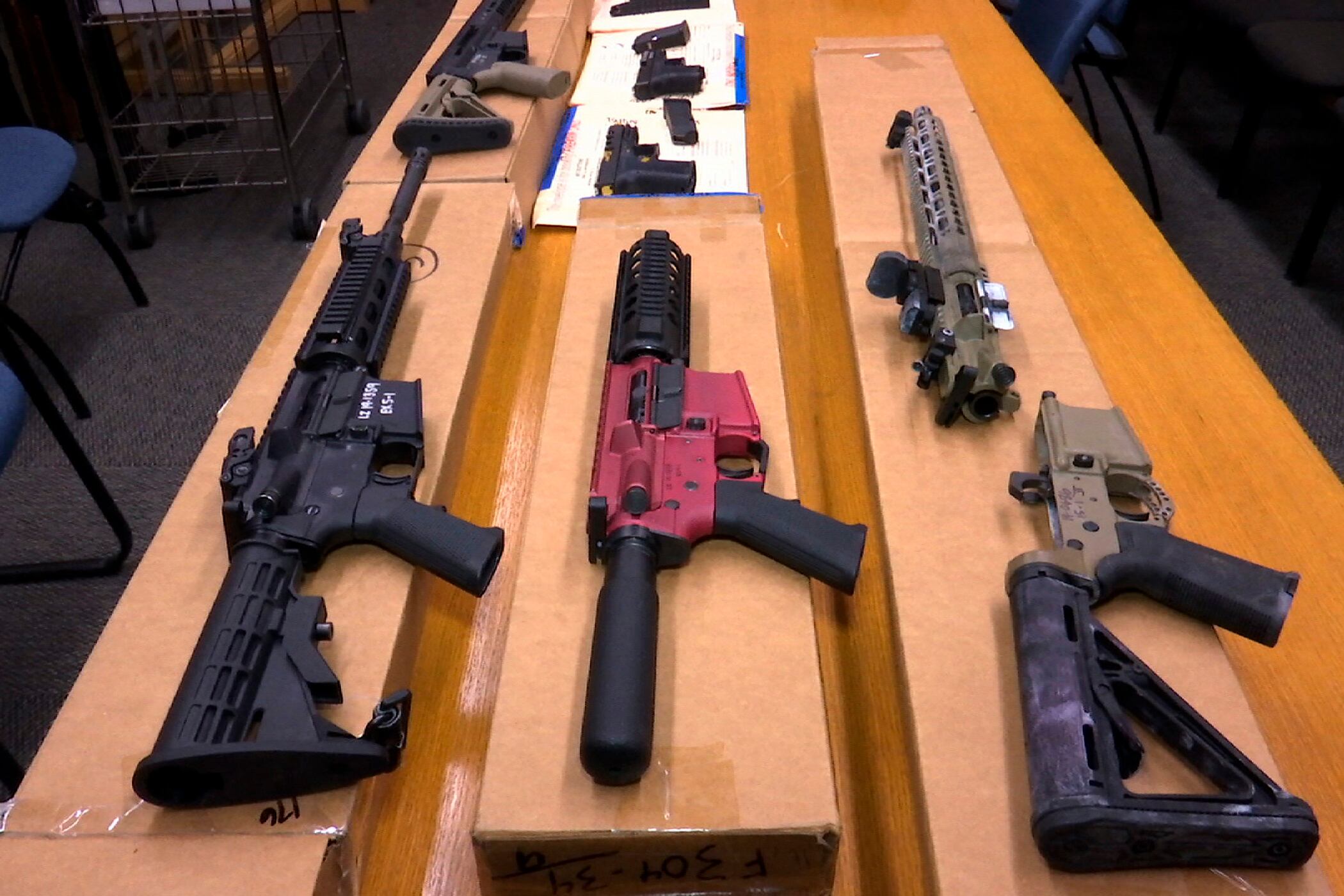
Rukmani Bhatia, Senior Federal Affairs Manager at Giffords, joined Cheddar News' Closing Bell to discuss the importance of regulating ghost guns as a way to curb U.S. gun violence, which kills more than 40,000 Americans every year.
Gary Schlossberg, Global Strategist at Wells Fargo Investment Institute, joined Cheddar News' Closing Bell to discuss the dire situation caused by Russia's war on Ukraine, as the region is key for exporting grains and corn, and as the UN Food & Agriculture Organization says food prices rose to the highest levels ever in March.
Christine McDaniel, Senior Research Fellow at the Mercatus Center, joined Cheddar News' Closing Bell to break down the long list of sanctions that the U.S. has levied against Russia since its invasion of Ukraine, and the impact - or lack thereof - they are having on Russia.
President Joe Biden is taking fresh aim at “ghost guns" and also announced the nomination of Steve Dettlebach, who served as a U.S. attorney in Ohio from 2009 to 2016, to run the ATF.
Stefanie O'Connell Rodriguez joined Cheddar's Opening Bell to discuss her newest mini-series on REAL SIMPLE's Money Confidential podcast, called 'Taxes in 10.'
As the Russian invasion of Ukraine continues, social media giant Meta said that it's using its technology to help the beleaguered nation Erin Egan, chief privacy officer, and Andrew Schroeder, vice president of research and analysis for direct relief, joined Cheddar News to discuss using data towards humanitarian relief. "Our goal with the program is to help organizations on the ground by sharing privacy-protected data sets to enable them to respond to crisis," Egan explained.
Catching you up on what you need to know on April 11, 2022, with updates on the Russia-Ukraine War, France’s presidential election, the record deforestation of the Amazon Rainforest, retail giant Amazon's objection to the Staten Island union vote, the worsening baby formula shortage, a lawsuit against Rutgers Law School, and a stomach illness possibly linked to Lucky Charms cereal.
Between Bells executive producer Conor White recaps some of the biggest stories of the week, and teaches Baker Machado and Hena Doba a thing or two at the same time. It's This Week In Trivia!