By Andrew Taylor
The Senate passed an unparalleled $2.2 trillion economic rescue package steering aid to businesses, workers and health care systems engulfed by the coronavirus pandemic.
The unanimous vote Wednesday came despite misgivings on both sides about whether it goes too far or not far enough and capped days of difficult negotiations as Washington confronted a national challenge unlike it has ever faced.
The 880-page measure is the largest economic relief bill in U.S. history. Majority Leader Mitch McConnell appeared somber and exhausted as he announced the vote — and he released senators from Washington until April 20, though he promised to recall them if needed.
“Pray for one another, for all of our families and for our country,” said McConnell, R-Ky.
“The legislation now before us now is historic because it is meant to match a historic crisis,” said Minority Leader Chuck Schumer, D-N.Y. “Our health care system is not prepared to care for the sick. Our workers are without work. Our businesses cannot do business. Our factories lie idle. The gears of the American economy have ground to a halt.”
The package is intended as relief for an economy spiraling into recession or worse and a nation facing a grim toll from an infection that’s killed more than 21,000 people worldwide. Treasury Secretary Steven Mnuchin, asked how long the aid would keep the economy afloat, said: “We’ve anticipated three months. Hopefully, we won’t need this for three months.”
Underscoring the effort’s sheer magnitude, the bill finances a response with a price tag that equals half the size of the entire $4 trillion-plus annual federal budget. The $2.2 trillion estimate is the White House’s best guess.
Insistently optimistic, President Donald Trump said of the greatest public health emergency in anyone’s lifetime, “I don’t think its going to end up being such a rough patch” and anticipated the economy soaring “like a rocket ship” when it’s over.
“The government has temporarily shut down the economy because of this disease, and the government must help those who are hurt by it,” said Sen. Lamar Alexander, R-Tenn.
The drive by leaders to speed the bill through the Senate was slowed as four conservative Republican senators from states whose economies are dominated by low-wage jobs demanded changes, saying the legislation as written might give workers like store clerks incentives to stay on unemployment instead of return to their jobs since they may earn more money if they’re laid off than if they’re working. They settled for a failed vote to modify the provision.
Other objections floated in from New York Gov. Andrew Cuomo, who has become a prominent Democrat on the national scene as the country battles the pandemic. Cuomo, whose state has seen more deaths from the pandemic than any other, said, “I’m telling you, these numbers don’t work.”
Ardent liberals like Rep. Alexandria Ocasio-Cortez were restless as well, but top Washington Democrats assured them that additional coronavirus legislation will follow this spring and signaled that delaying the pending measure would be foolish.
The sprawling measure is the third coronavirus response bill produced by Congress and by far the largest. It builds on efforts focused on vaccines and emergency response, sick and family medical leave for workers and food aid.
House Speaker Nancy Pelosi, D-Calif., swung behind the bipartisan agreement, saying it “takes us a long way down the road in meeting the needs of the American people.”
Senate passage delivered the legislation to the Democratic-controlled House, which is expected to pass it Friday. House members are scattered around the country. House Majority Leader Steny Hoyer, D-Md., said the measure would pass by voice vote without lawmakers having to return to Washington.
The package would give direct payments to most Americans, expand unemployment benefits and provide a $367 billion program for small businesses to keep making payroll while workers are forced to stay home.
It includes a heavily negotiated $500 billion program for guaranteed, subsidized loans to larger industries, including airlines. Hospitals would get significant help as well.
Six days of arduous talks produced the bill, creating tensions among Congress’ top leaders, who each took care to tend to party politics as they maneuvered and battled over crafting the legislation. But failure was not an option — nor was starting over — which permitted both sides to include their priorities.
“This is a proud moment for the United States Senate and the country, and we’re going to win this battle,” McConnell told reporters afterward. “We’ve pivoted from impeachment to 100-to-nothing on this rescue package ... this is about as flawless as you could possibly be.” The vote actually was 96-0 because several members missed the vote out of concerns they have been exposed to the virus.
Sen. Rand Paul, R-Ky., has tested positive for it, while GOP Whip John Thune returned to South Dakota on Wednesday after feeling ill.
The bill would provide one-time direct payments to Americans of $1,200 per adult making up to $75,000 a year and $2,400 to a married couple making up to $150,000, with $500 payments per child.
A huge cash infusion for hospitals expecting a flood of COVID-19 patients grew during the talks to an estimated $130 billion. Another $45 billion would fund additional relief through the Federal Emergency Management Agency for local response efforts and community services.
Democrats said the package would help replace the salaries of furloughed workers for four months, rather than the three months first proposed. Furloughed workers would get whatever amount a state usually provides for unemployment, plus a $600-per-week add-on, with gig workers like Uber drivers covered for the first time.
Businesses controlled by members of Congress and top administration officials, including Trump and his immediate family members, would be ineligible for the bill’s business assistance.
Schumer boasted of negotiating wins for transit systems, hospitals and cash-hungry state governments that were cemented after Democrats blocked the measure in votes held Sunday and Monday.
But Cuomo said the Senate package would send less than $4 billion to New York, far short of his estimate that the crisis will cost his state up to $15 billion over the next year. More than 280 New Yorkers have died from the virus, a death toll more than double that of any other state.
Still, Pelosi said the need for more money for New York is “no reason to stop the step we are taking.”
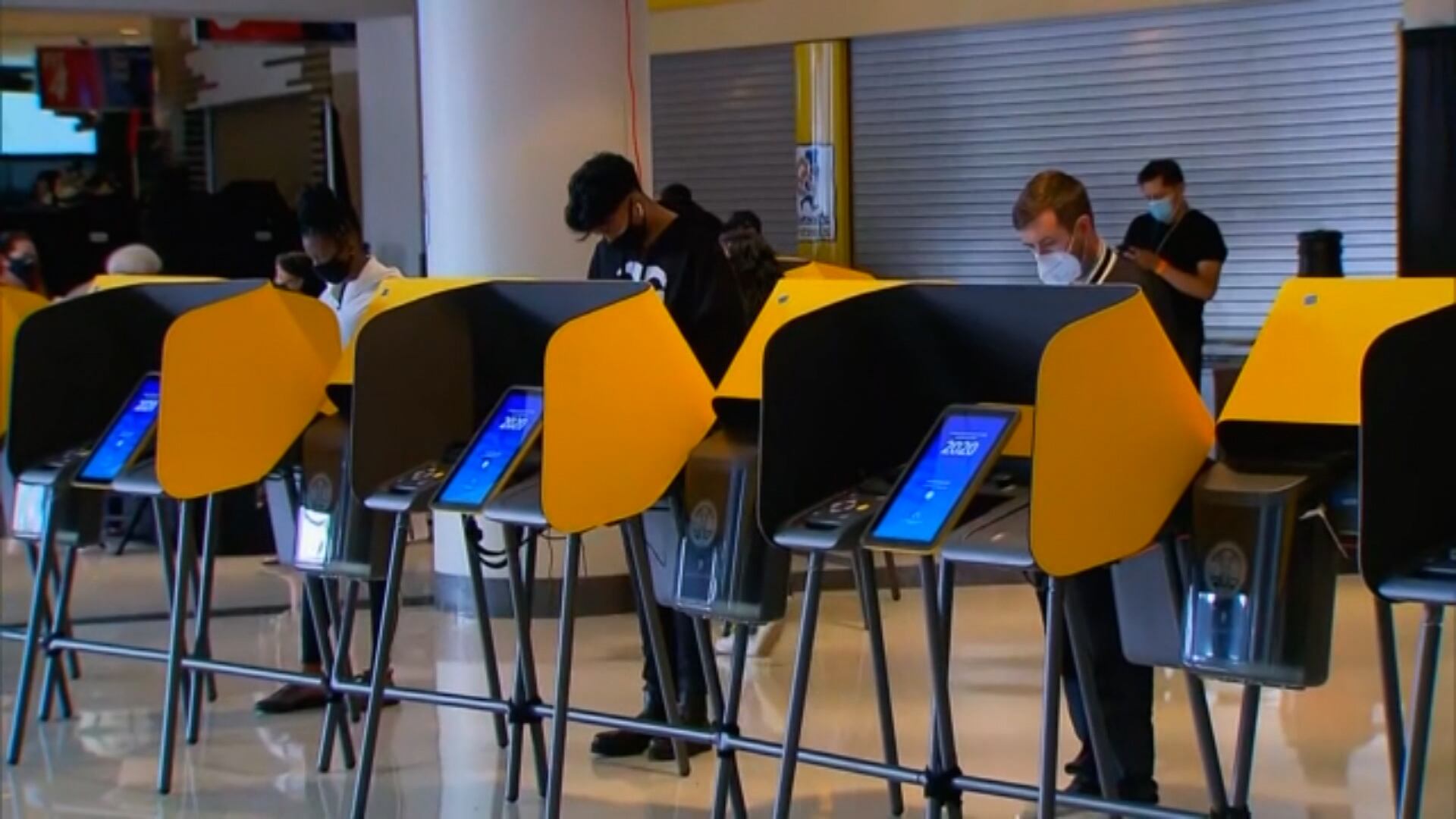
Pelosi was a force behind $400 million in grants to states to expand voting by mail and other steps that Democrats billed as making voting safer but Republican critics called political opportunism. The package also contains $15.5 billion more for a surge in demand for food stamps as part of a massive $330 billion title for agency operations.
State and local authorities would receive up to $150 billion in grants to fight the virus, care for their residents and provide basic services.
Republicans won inclusion of an employee retention tax credit that’s estimated to provide $50 billion to companies that retain employees on payroll and cover 50% of workers’ paycheck up to $10,000. Companies would also be able to defer payment of the 6.2% Social Security payroll tax.
A companion appropriations package ballooned as well, growing from a $46 billion White House proposal to $330 billion, which dwarfs earlier disasters — including Hurricane Katrina and Superstorm Sandy combined.
Europe is enacting its own economic recovery packages, with huge amounts of credit guarantees, government spending and other support.
Germany, Europe’s biggest economy, has agreed to commit more than 1 trillion euros ($1.1 trillion) in fiscal stimulus and support — roughly 30% of that nation’s entire annual output. France, Spain and Italy have launched similar programs.
For most people, the new coronavirus causes mild or moderate symptoms, such as fever and cough that clear up in two to three weeks. For some, especially older adults and people with existing health problems, it can cause more severe illness, including pneumonia, or death.
In the United States, more than 69,000 people have been sickened and more than 1,000 have died.