In this May 7, 2020, file photo, Sen. Tim Scott, R-S.C., speaks during a Senate Health Education Labor and Pensions Committee hearing on new coronavirus tests on Capitol Hill in Washington. Senate Republicans are poised to unveil an extensive package of policing changes that includes new restrictions on police choke holds and other practices as President Donald Trump signals his support following the mass demonstrations over the deaths of George Floyd and other black Americans. Scott, the sole African American Republican in the Senate, has been crafting the package set to roll out Wednesday. (AP Photo/Andrew Harnik, Pool, File)
By Lisa Mascaro
Driven by a rare urgency, Senate Republicans are poised to unveil an extensive package of policing changes that includes new restrictions on police chokeholds and other practices as President Donald Trump signals his support following the mass demonstrations over the deaths of George Floyd and other black Americans.
Sen. Tim Scott of South Carolina, the sole African American Republican in the Senate, has been crafting the package set to roll out Wednesday. While it doesn't go as far as a sweeping Democratic bill heading toward a House vote, the emerging GOP legislation shares similar provisions as Congress rushes to respond.
With Trump set to announce executive actions on law enforcement as soon as Tuesday, the crush of activity shows how quickly police violence and racial prejudice are transforming national party priorities.
“I think we’re going to get to a bill that actually becomes law,” Scott said Sunday on NBC's “Meet the Press.” Scott said the chokehold, in particular, “is a policy whose time has come and gone.”
The GOP package is one of the most extensive proposed overhauls to policing procedures yet from Republicans, who have long aligned with Trump's “law and order” approach but are suddenly confronted with a groundswell of public unrest in cities large and small over police violence.
Over the weekend, the shooting death of Rayshard Brooks during a routine stop by a white officer in Atlanta led to an outcry, more protests, and the police chief's swift ouster.
The Republican bill would create a national database of police use-of-force incidents, encourage police body cameras, and include a long-stalled effort to make lynching a federal hate crime.
Additionally, the GOP package is expected to restrict the use of chokeholds by withholding certain federal funds to jurisdictions that continue to allow the practice, according a Senate Republican unauthorized to discuss the pending bill and granted anonymity.
Democrats have said the GOP package doesn't go far enough in the aftermath of Floyd's death and the outpouring of protests and Black Lives Matter demonstrations over the number of black Americans killed at the hands of law enforcement.
In particular, the Republican bill does not address the issue of “qualified immunity," as the Democrats' bill does, which aims to enable those injured by law enforcement personnel to sue for damages. The White House has said that is a line too far. As an alternative, Scott has suggested a “decertification” process for officers involved in misconduct.
“This is not a time for lowest common denominator, watered-down reforms,” said Sen. Cory Booker, D-N.J., a co-author of the Democratic bill, on CBS's “Face the Nation.” “It’s a time to stop the problem.”
Yet Democrats signaled a willingness to look at the Republican approach for areas of common ground.
"I never call anything a nonstarter," said Rep. James Clyburn of South Carolina, the House's third-ranking Democrat.
Democrats face criticism over activists’ calls to defund the police, and party leaders in Congress have distanced themselves from that approach. The defund movement describes a range of options, from dismantling departments to shifting policing resources to other community services. The Democratic bill does not go that far but would instead provide grant money to departments that want to consider new ways of policing.
“Nobody is going to defund the police,” Clyburn said. “We can restructure the police forces, restructure, reimagine policing. That is what we are going to do.”
The House Judiciary Committee is set to consider the bill midweek, and House lawmakers are scheduled to return to Washington next week for a vote.
Senate Majority Leader Mitch McConnell of Kentucky, whose state has been roiled by the death of Breonna Taylor after police entered her Louisville home, has signaled his interest in legislation.
The Senate Judiciary Committee is scheduled to consider policing issues on Tuesday.
Volatility continues to be the name of the game when it comes to crypto. Bitcoin, the most valuable digital token, saw a small jump today - one of several small rallies throughout the month of March. Caitlin Cook, vice president of crypto education company Onramp Academy, joins Cheddar News' Closing Bell to discuss.
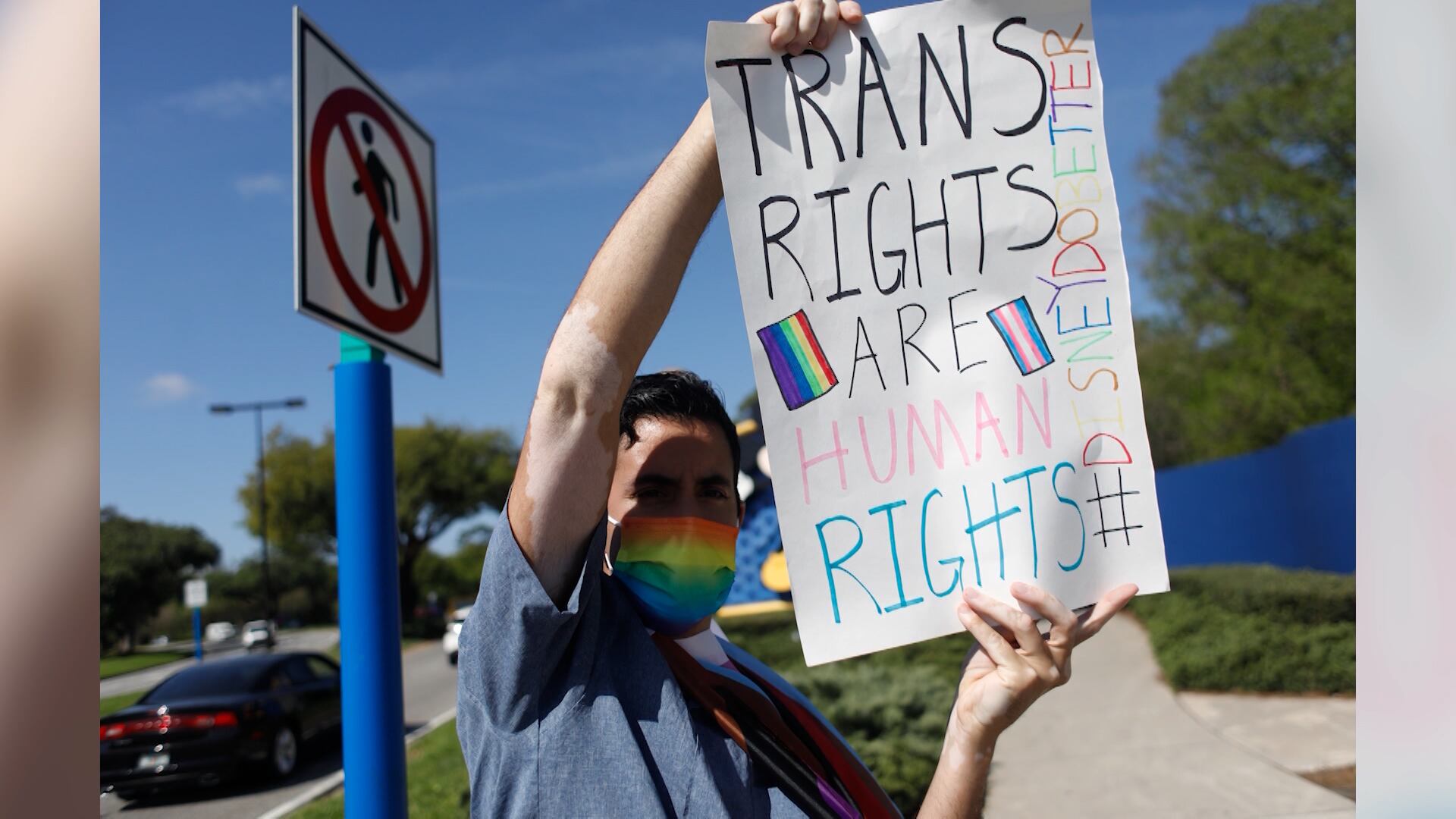
As of March 2022, almost 200 Anti-LGBT+ bills have been introduced in state governments across the country — especially directed at the transgender community. Human Rights Campaign State Legislative Director and Senior Counsel Cathryn Oakley joined Cheddar News to discuss the deluge of legislation. "Unfortunately we are seeing these bills come at transgender youth from every conceivable direction," she said. "Every support that a trans kid has, whether that's their parents, whether that's their family, whether that's their teachers or their guidance counselors or their coaches, whether it's their teammates or the librarians and the books that they read, whether it's curriculum, whether it's even just the ability to acknowledge that LGBTQ people have existed throughout history and are important in the fabric of modern American society. The bills that we are seeing filed across the country are targeting all of those pieces."
President Volodymyr Zelenskyy last week seemed to have put out a video that urged Ukrainians to put down their arms and surrender to Russia. It was later revealed that it was a “deepfake,” a computer-generated video to mimic the Ukrainian leader. Cheddar News speaks with security expert Morgan Wright about how the technology is being used in the war in Ukraine.
After scrutiny over the negative impact on the mental health of children, social media apps have begun adding stricter limitations to parental controls. Jim Steyer, CEO of Common Sense Media, a nonprofit organization focusing on recommendations for entertainment platforms, joined Cheddar News to talk about the changes, why they might not be enough, and what parents can do to help. "It's almost that the companies — whether they're Snapchat, Instagram, YouTube, or whatever — have to start the process from the beginning of designing the product," he said. "They have to be much more clear about age verification so that a 12-year-old and 11-year-old can't get on there." Steyer also pushed for federal legislation to reign in the issue.
As Big Tech companies from the U.S. like Google and Apple managed to build market dominance overseas, the European Union has decided to curb what it sees as monopolistic growth. Greg Martin, the co-founder of Rainmaker Securities, joined Cheddar News to talk about how the impact of the antitrust regulations being adopted. "I think there's a lot of great outcomes here, but those will be far down the road [because] I do think there's some interoperability things that need to be worked out technologically," he said. "But it's going to be really good ultimately for the consumer in my opinion."
Tenicka Boyd is a digital creator making content that reflects her two passions: activism and style. The TikTok star joined Cheddar News to talk about her platform and new looks this Spring. Boyd admitted that at first she wanted to remain anonymous on the social media platform before finding her passion. "I just joined TikTok hoping that no one would find me, and I started creating colorful content," she said. "I didn't know that you could monetize this and really do it full time, and I just followed my passion because I realized that you can have multiple different lives and do multiple different things."
Catching you up on what you need to know on March 25, 2022, with Ukrainian forces retaking Kyiv, 300 deaths reported from the bombing of a theater used as a shelter in Mariupol, U.S. regulators ditch a climate review of natural gas projects, the 94th Academy Awards, and more.
North Korea says it test-fired its biggest intercontinental ballistic missile under the orders of leader Kim Jong Un, who vowed to continue expanding his nuclear arsenal while preparing for a “long-standing confrontation” with the United States.
Ukrainian authorities in the besieged ruins of Mariupol say that about 300 people died when a Russian airstrike blew up a theater where hundreds of civilians were sheltering.