In this May 7, 2020, file photo, Sen. Tim Scott, R-S.C., speaks during a Senate Health Education Labor and Pensions Committee hearing on new coronavirus tests on Capitol Hill in Washington. Senate Republicans are poised to unveil an extensive package of policing changes that includes new restrictions on police choke holds and other practices as President Donald Trump signals his support following the mass demonstrations over the deaths of George Floyd and other black Americans. Scott, the sole African American Republican in the Senate, has been crafting the package set to roll out Wednesday. (AP Photo/Andrew Harnik, Pool, File)
By Lisa Mascaro
Driven by a rare urgency, Senate Republicans are poised to unveil an extensive package of policing changes that includes new restrictions on police chokeholds and other practices as President Donald Trump signals his support following the mass demonstrations over the deaths of George Floyd and other black Americans.
Sen. Tim Scott of South Carolina, the sole African American Republican in the Senate, has been crafting the package set to roll out Wednesday. While it doesn't go as far as a sweeping Democratic bill heading toward a House vote, the emerging GOP legislation shares similar provisions as Congress rushes to respond.
With Trump set to announce executive actions on law enforcement as soon as Tuesday, the crush of activity shows how quickly police violence and racial prejudice are transforming national party priorities.
“I think we’re going to get to a bill that actually becomes law,” Scott said Sunday on NBC's “Meet the Press.” Scott said the chokehold, in particular, “is a policy whose time has come and gone.”
The GOP package is one of the most extensive proposed overhauls to policing procedures yet from Republicans, who have long aligned with Trump's “law and order” approach but are suddenly confronted with a groundswell of public unrest in cities large and small over police violence.
Over the weekend, the shooting death of Rayshard Brooks during a routine stop by a white officer in Atlanta led to an outcry, more protests, and the police chief's swift ouster.
The Republican bill would create a national database of police use-of-force incidents, encourage police body cameras, and include a long-stalled effort to make lynching a federal hate crime.
Additionally, the GOP package is expected to restrict the use of chokeholds by withholding certain federal funds to jurisdictions that continue to allow the practice, according a Senate Republican unauthorized to discuss the pending bill and granted anonymity.
Democrats have said the GOP package doesn't go far enough in the aftermath of Floyd's death and the outpouring of protests and Black Lives Matter demonstrations over the number of black Americans killed at the hands of law enforcement.
In particular, the Republican bill does not address the issue of “qualified immunity," as the Democrats' bill does, which aims to enable those injured by law enforcement personnel to sue for damages. The White House has said that is a line too far. As an alternative, Scott has suggested a “decertification” process for officers involved in misconduct.
“This is not a time for lowest common denominator, watered-down reforms,” said Sen. Cory Booker, D-N.J., a co-author of the Democratic bill, on CBS's “Face the Nation.” “It’s a time to stop the problem.”
Yet Democrats signaled a willingness to look at the Republican approach for areas of common ground.
"I never call anything a nonstarter," said Rep. James Clyburn of South Carolina, the House's third-ranking Democrat.
Democrats face criticism over activists’ calls to defund the police, and party leaders in Congress have distanced themselves from that approach. The defund movement describes a range of options, from dismantling departments to shifting policing resources to other community services. The Democratic bill does not go that far but would instead provide grant money to departments that want to consider new ways of policing.
“Nobody is going to defund the police,” Clyburn said. “We can restructure the police forces, restructure, reimagine policing. That is what we are going to do.”
The House Judiciary Committee is set to consider the bill midweek, and House lawmakers are scheduled to return to Washington next week for a vote.
Senate Majority Leader Mitch McConnell of Kentucky, whose state has been roiled by the death of Breonna Taylor after police entered her Louisville home, has signaled his interest in legislation.
The Senate Judiciary Committee is scheduled to consider policing issues on Tuesday.
Will Rhind, CEO of GraniteShares, joins Cheddar News' Closing Bell, where he says he believes the Fed's plans of increasing rates is taking its toll on some of the more speculative stocks and the technology market.
Mona Zhang, states cannabis policy reporter at POLITICO Pro joins Cheddar News to discuss major factors that caused Canada's retail marijuana sales to drop last year.
The January 6 committee has asked Ivanka Trump to give voluntary testimony, saying there's evidence she was in "direct contact" with her father on the day of the capitol insurrection. I's unclear whether she will comply with the invitation, but it marks the first time the House committee has sought testimony from a member of the former president's family. Bradley Moss, national security attorney, joined Cheddar News to discuss what the committee hopes to learn from Ivanka and what the Supreme Court's decision on Trump's Jan. 6 materials means for the investigation.
Terrell Jermaine Starr, senior fellow with the Atlantic Council and host of the Black Diplomats podcast joins Cheddar News to discuss Russia's attempt to invade Ukraine.
With an increasing number of teachers and staff calling out sick by the day, the state of Oklahoma is turning to an unusual solution. Republican Governor Kevin Stitt has issued an executive order that permits state employees to work as substitute teachers. Shaily Baranwal, founder and CEO of Elevate K-12, joins Cheddar News to discuss.
On Thursday, Secretary of State Antony Blinken addressed the stance of the U.S. and its allies should Russia make any forays into Ukraine, a seeming response to President Biden's remarks that should Putin engage in something short of a full invasion, there might be some indecision among allied nations regarding what to do. Ariel Cohen, a senior fellow at the think tank Atlantic Council, joined Cheddar to discuss the difficulty faced by Blinken wrangling unity as tensions run high in the region. "There'll be a smaller incursion, and the president implied, there'll be a weaker response because our European allies have created this horrible situation where they are dependent on Moscow for their gas supply," Cohen explained.
During a nearly two-hour press conference on Wednesday, President Biden spoke on his accomplishments and challenges from the first year of his presidency, and what his administration hopes to accomplish in the coming year. However, his approval ratings are underwater as COVID remains a big concern for voters — as does inflation, noted Tom Bevan, co-founder and president of polling aggregator RealClearPolitics. "The public thinks [inflation] is priority number one, and the administration is concerned about it, they talk about it, but they're not spending enough time on it as far as the public is concerned," said Bevan.
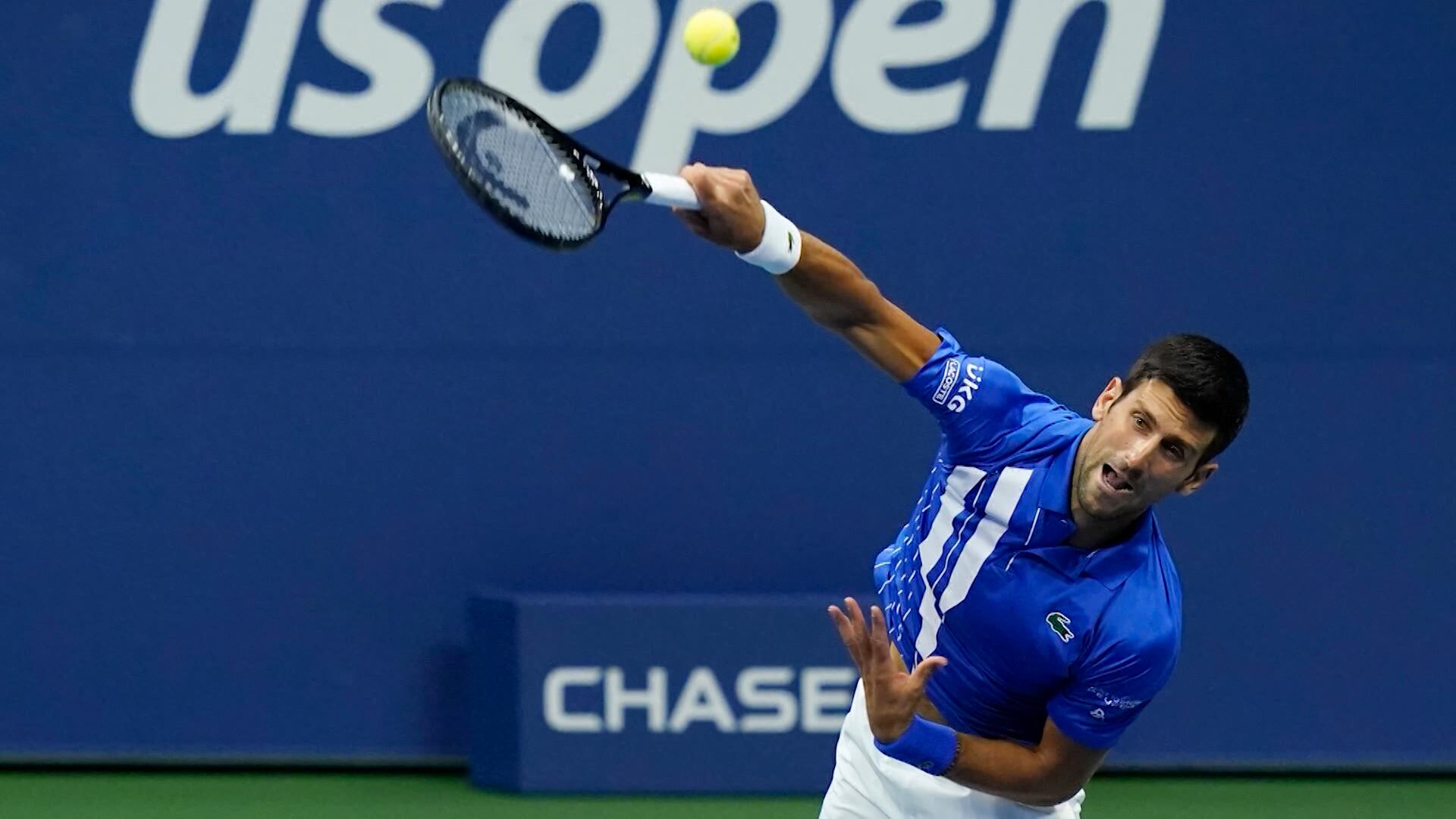
The drama surrounding tennis star Novak Djokovic continues after he was deported from Australia over the weekend due to the nation's COVID-19 vaccine requirements. Djokovic was forced to leave the country on the eve of what was to be his first match in defense of his Australian Open title after three judges ruled in favor of his removal and revealed their reasoning for doing so. Adding to his woes, a law recently passed in France is putting his chances of defending his French Open title in jeopardy. The director of Marist's Center for Sports Communication, Jane McManus, joined Cheddar to discuss the ongoing fallout.
As the midterm elections get ever closer, candidates have been getting creative with their campaigns to stick out and to connect with voters. Gary Chambers, a Democratic candidate for the U.S. Senate from Louisiana, has definitely attracted attention with an advertisement featuring him smoking a blunt, making a point about the inequity of anti-cannabis laws. "We wanted to bring the seriousness of the moment," he said of the ad. "But we also wanted to make sure that people understand that there are 19 states that are legal right now but Black people and brown people are being over-incarcerated in mostly Southern and Midwestern states in America for cannabis possession."