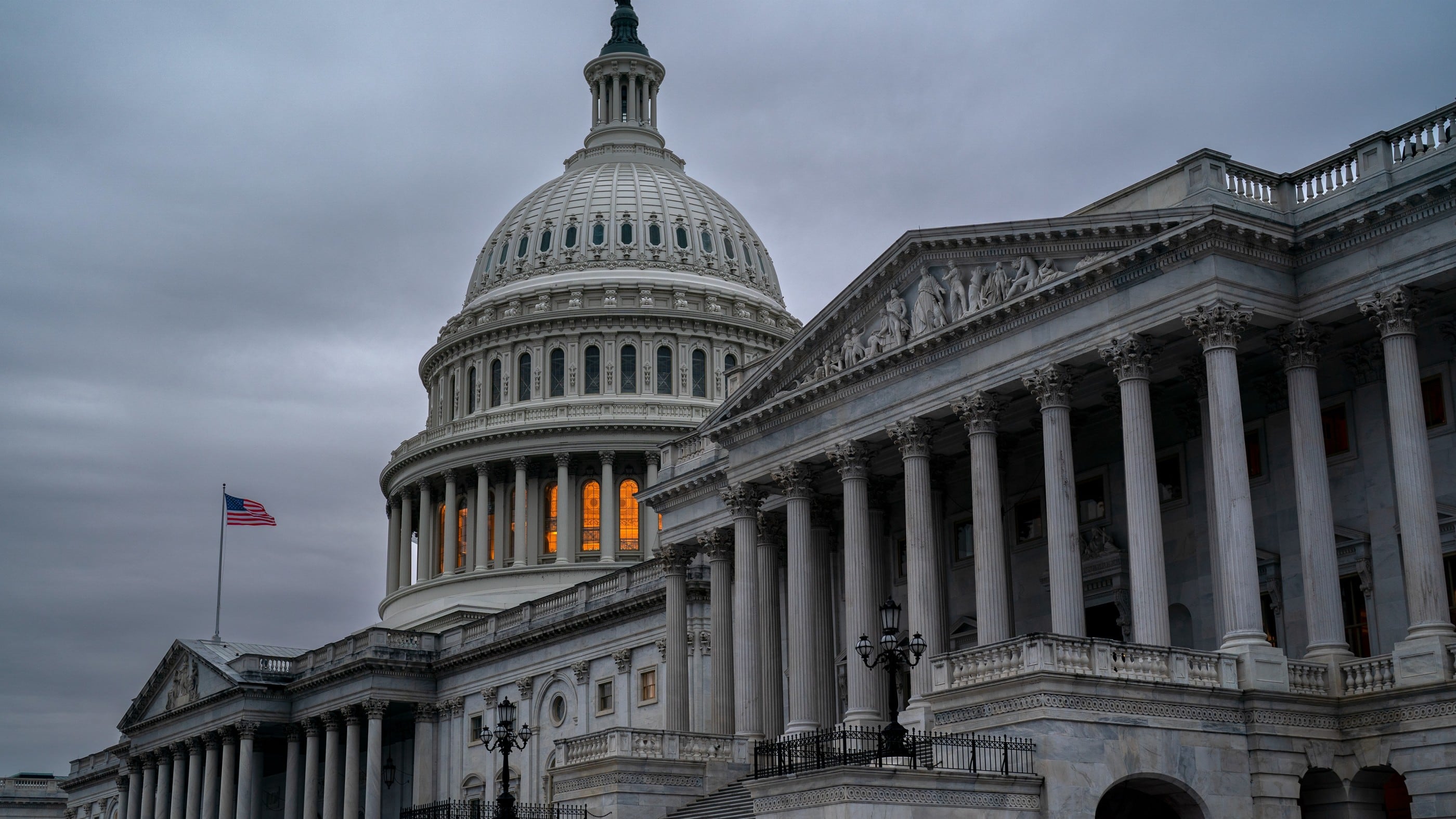
The Senate Banking Committee held a hearing Thursday on the cannabis bill the Secure and Fair Enforcement (SAFE) Banking — a first step toward what advocates hope will be a full vote on the Senate Floor.
The bill seeks to offer safe harbor to banks that service cannabis businesses in legal states and has broad bipartisan support, passing the House of Representatives seven times, both as a standalone bill and shoehorned into other legislation. But it has never come to a vote in the Senate. Senators Steve Daines (R- Mont.) and Jeff Merkley (D-Ore.) reintroduced the bill in late April, together with Representatives Dave Joyce (R-Ohio 14th District) and Earl Blumenauer (D-Ore. 3rd District).
Senators on both sides of the aisle testified during the hearing, called "Examining Cannabis Banking Challenges of Small Businesses and Workers," as did Cat Packer, the vice chair of the Cannabis Regulators of Color Coalition; noted cannabis legalization opponent Kevin Sabet, president and CEO of Smart Smart Approaches to Marijuana; Ademola Oyefeso of United Food and Commercial Workers International Union (UFCW); and Michelle Sullivan of cannabis-focused financial services provider Dama Financial.
Sen. Daines predominantly emphasized the public safety impact of SAFE Banking. Because cannabis businesses carry cash and product, they are often magnets for opportunistic robbers.
"Across my home state of Montana and in communities across the country, legal businesses are facing a public safety crisis," Daines said in his prepared statements.
"The SAFE Banking Act would help address a major cause of this increase in violent crime by providing a safe harbor for depository institutions and service providers to transact with state sanctioned marijuana businesses. In short, this bill would make it much easier for businesses to put their cash into banks," he added.
Merkley agreed, appealing to business owners to consider the implications of conducting business in cash. He added that "it is beyond unacceptable that, with more than half the country embracing some form of legalized cannabis, we would continue to allow this dangerous and untenable situation of forcing legitimate business to operate entirely in cash here in the 21st Century."
Daines made sure to emphasize that the bill is not a cannabis legalization bill and does "not support federal legalization of marijuana."
It was clear his Republican colleague Sen. Tim Scott of South Carolina felt much the same way, saying in prepared statements that he had "concerns with [cannabis]," and expressing worry about money laundering. But he did empathize from the perspective of a former small business owner.
Packer emphasized how barriers to banking could also lead to discrimination in banking access, particularly when it comes to individuals with past convictions. She also offered recommendations for making SAFE Banking more equitable.
In the past, SAFE Banking has run up against opposition in the Senate from within the Democratic party, which tends to be more broadly supportive of cannabis reform. Senate Majority Leader Chuck Schumer (D-N.Y.), and Senators Ron Wyden (D-Ore.), and Cory Booker (D-N.J.), who introduced the Cannabis Administration and Opportunity Act, had previously expressed reluctance to support cannabis-focused bills that did not explicitly address equity. Booker, specifically, expressed opposition. But the three released a joint statement applauding tweaks to the bill that offer similar protections as shield banks to Community Development Financial Institutions (CDFI) AND Minority Depository Institutions, which support underserved communities.
"We look forward to watching this legislation progress through the Banking Committee and working with bipartisan partners to include additional improvements, such as the Harnessing by Pursuing Expungement (HOPE) Act, which would support states that want to expunge cannabis record with grants," they said in a statement.
National Cannabis Industry Association (NCIA) co-founder and CEO Aaron Smith straddled the line between calling for more equitable reform and urging movement on SAFE Banking.
"Comprehensive reforms that would align federal law with the growing number of states regulating cannabis and end the harms associated with decades of failed prohibition are sorely needed. However, the legislative process to achieve those reforms is likely to take several more years and the crisis states are facing due to outdated banking policy demands urgent action," he said in a statement.
As for the cannabis industry, insiders were hopeful that the hearing could lead to full consideration on the Senate floor.
"Anarchy does not reign when cannabis is legalized, obvious to the majority of Americans currently living in legal cannabis states. Today was an important step and we look to the Senate to run, not walk, with the additional steps needed to get to a vote," said Morgan Paxhia, managing partner at Poseidon Investment Management and PSDN ETF.
"The Safe Banking Act's historic hearing in the Senate Financial Services Committee today proved that despite our current state of political rancor, senators from each side of the aisle could agree on the need for cannabis banking reform," lobbyist and Sunburn Cannabis CEO Brady Cobb said.
If the bill makes it through the Senate committees, it could get a full vote in the Senate for the first time.