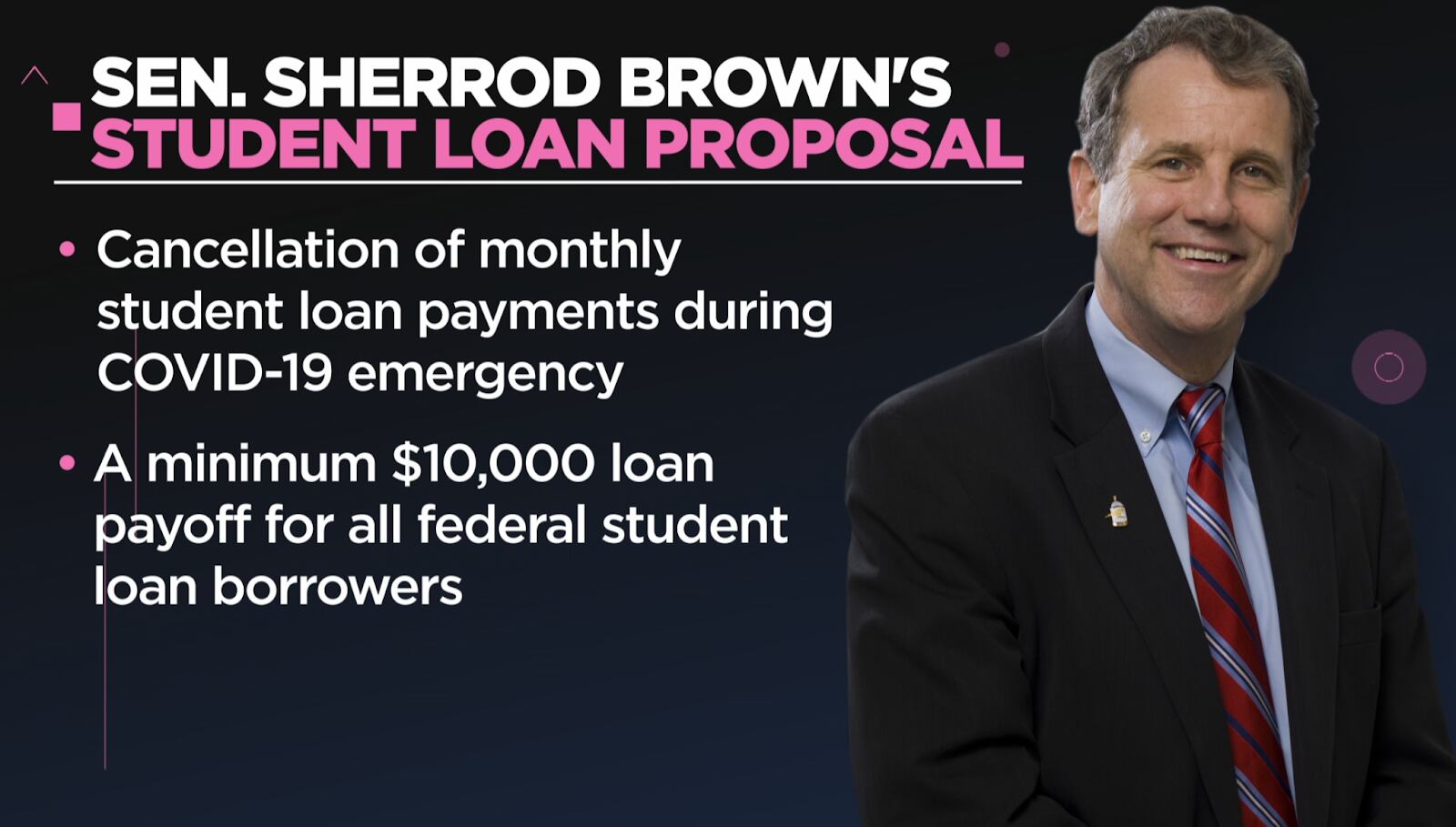
Ohio Senator Sherrod Brown is pushing forward with his proposal to provide a $10,000 payoff to all federal student loan borrowers.
“The next round of stimulus, we want to do that,” Brown told Cheddar from his home in Cleveland, Ohio on Tuesday.
Brown said that he and other Democratic senators have already been partially successful with bringing relief to those burdened by student loan debt.
“Senator Warren and I wanted two major things. We wanted a freeze on payments so nobody had to pay during this six-month or so period,” Brown explained. “We also wanted $10,000 in forgiveness of federal loans. The Republicans wouldn’t accept that. Trump opposed that.”
Brown also lobbied for $4,500 in direct payments for every American adult and child, with restrictions on higher-income families. The $2.2 trillion stimulus package included a one-time payment of $1,200 to most adults and $500 for every child.
When asked about Republicans accusing Democrats of trying to use the coronavirus crisis to push long-sought progressive legislation, Brown shrugged off the criticism saying the government is obligated to take action.
“This is the role of government to help people that are unemployed, to help people that are sick, to help people that are struggling, to help people that are hungry,” he said. “I don’t apologize for a second for any of that.”
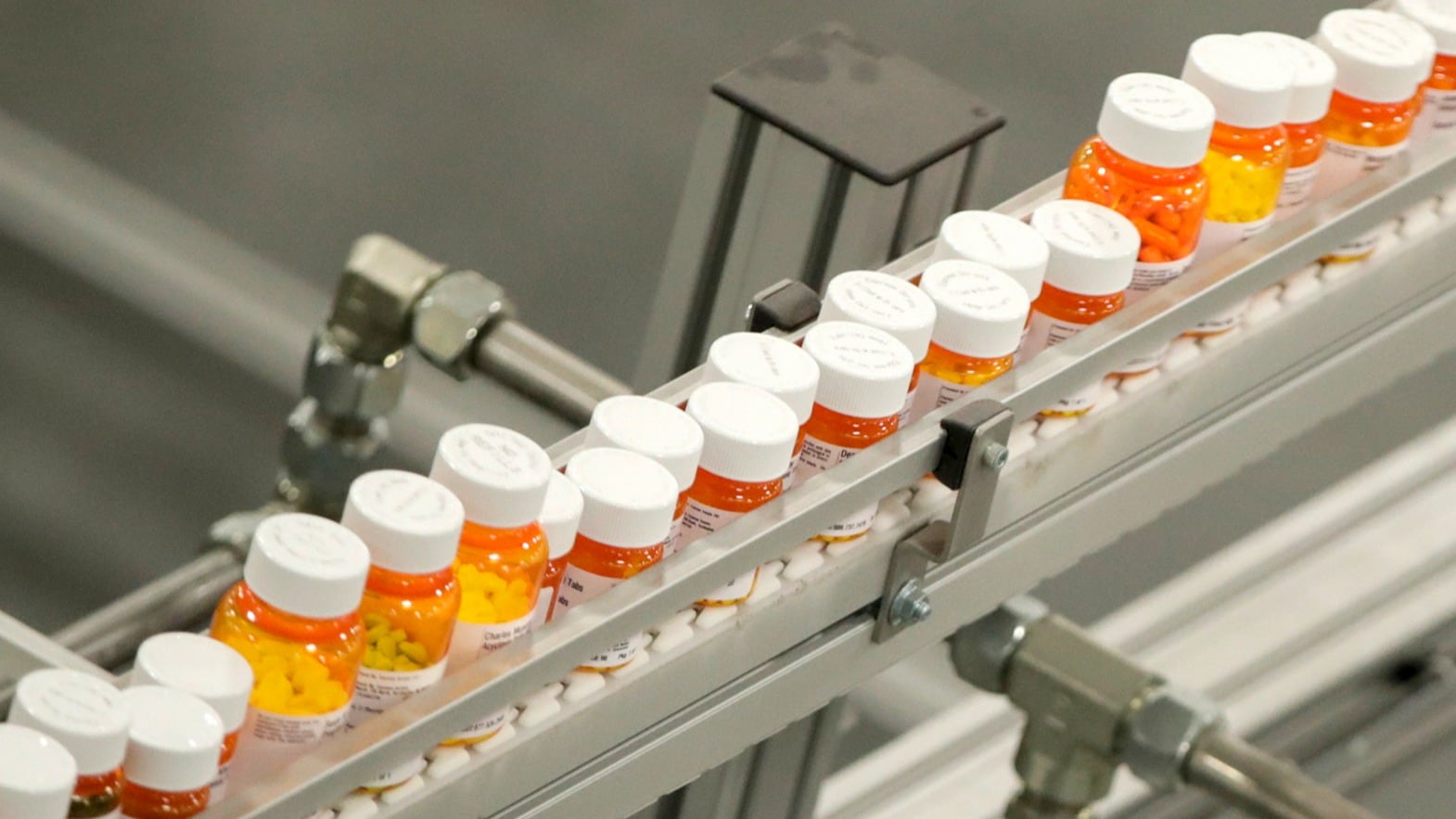
The Biden administration is targeting the blood thinner Eliquis, diabetes treatment Jardiance and eight other medications for Medicare's first-ever drug price negotiations as it seeks to lower medical costs for Americans.
A medical rescue helicopter caught fire and broke apart shortly after takeoff Monday before crashing into an apartment complex near Fort Lauderdale, killing a paramedic captain on board and a resident on the ground, authorities said.
Former President Donald Trump and the 18 people indicted along with him in Georgia are scheduled to be arraigned next week on charges they participated in a wide-ranging illegal scheme to overturn the results of the 2020 election.