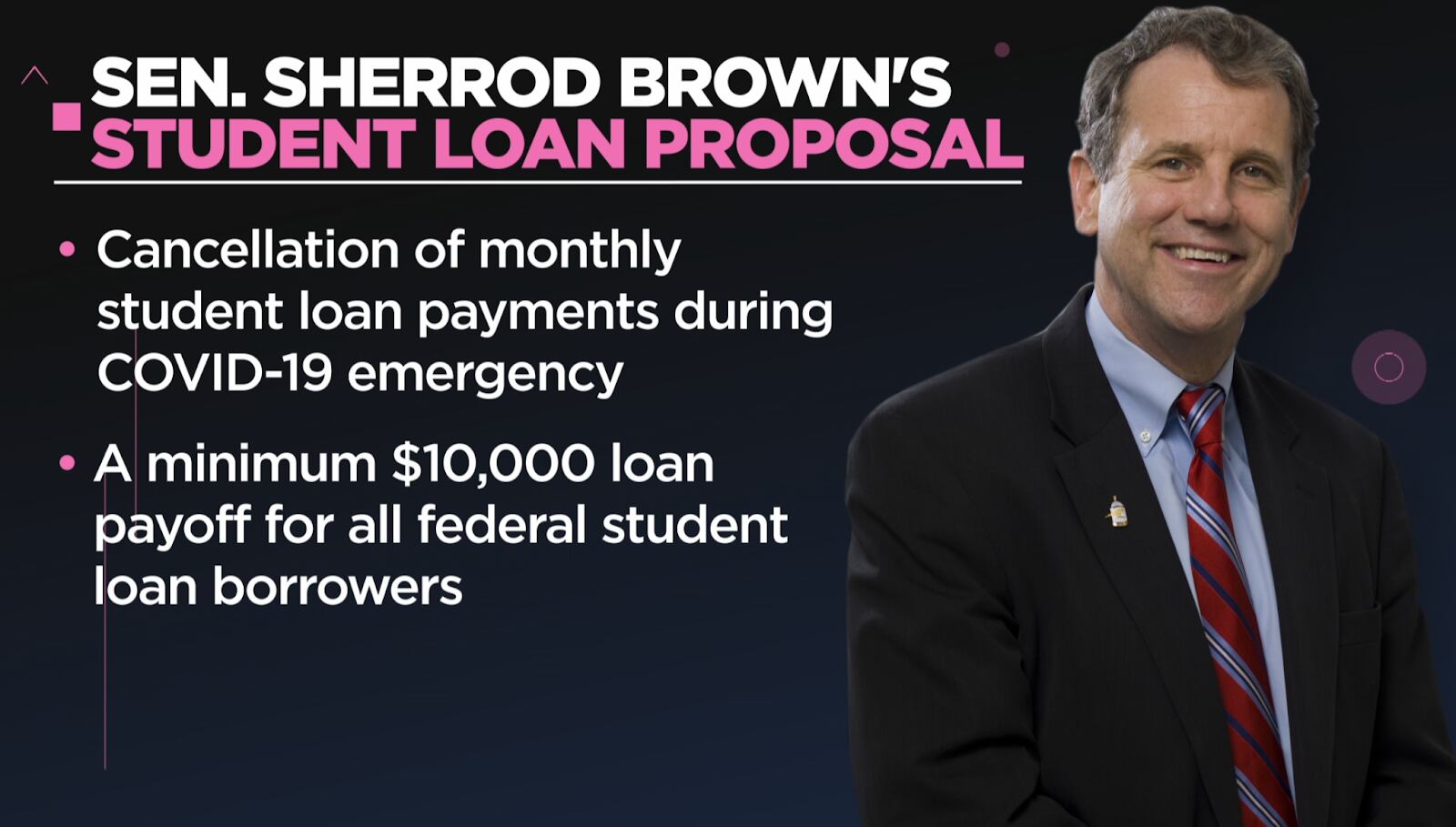
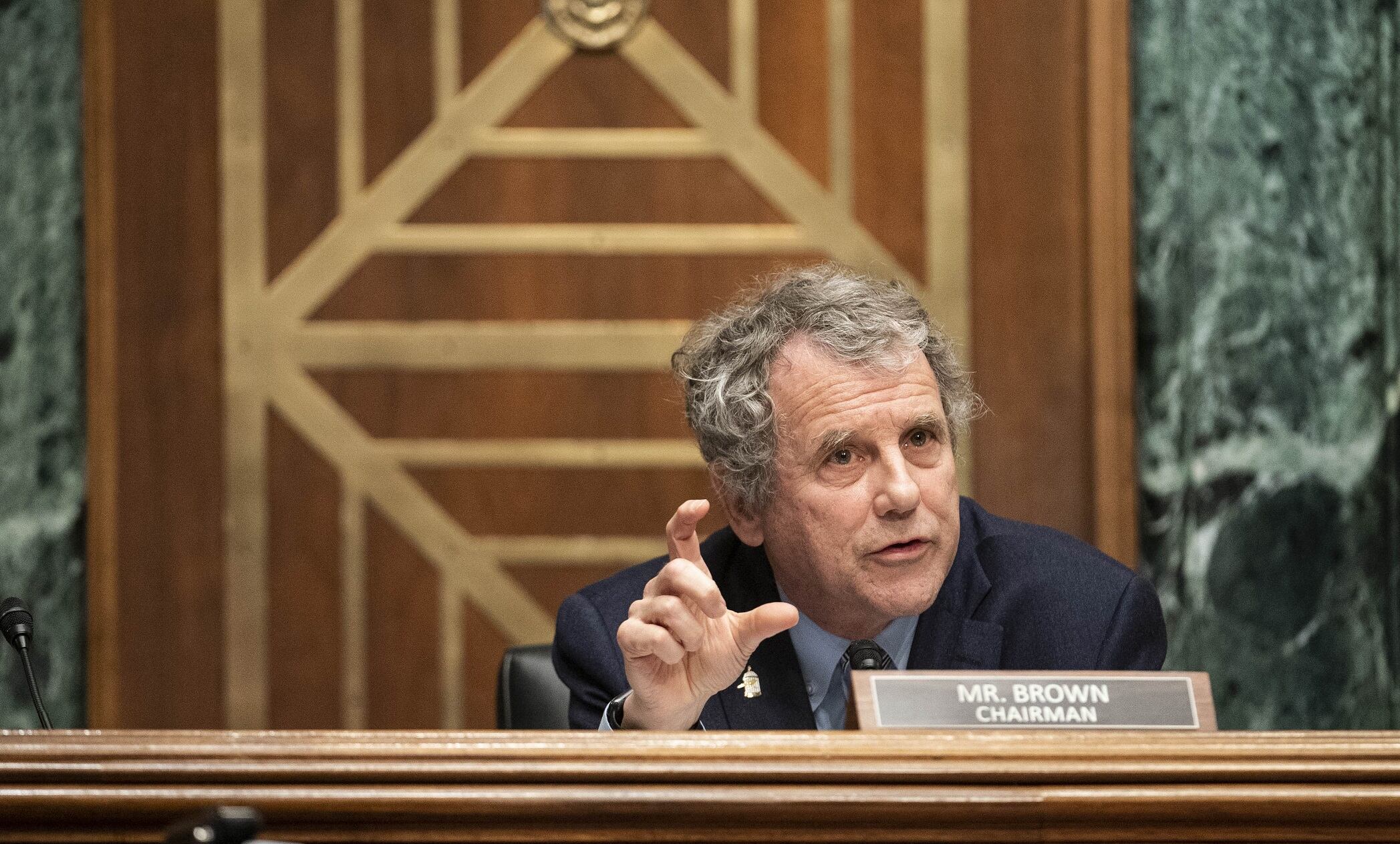
Ohio Senator Sherrod Brown is pushing forward with his proposal to provide a $10,000 payoff to all federal student loan borrowers.
“The next round of stimulus, we want to do that,” Brown told Cheddar from his home in Cleveland, Ohio on Tuesday.
Brown said that he and other Democratic senators have already been partially successful with bringing relief to those burdened by student loan debt.
“Senator Warren and I wanted two major things. We wanted a freeze on payments so nobody had to pay during this six-month or so period,” Brown explained. “We also wanted $10,000 in forgiveness of federal loans. The Republicans wouldn’t accept that. Trump opposed that.”
Brown also lobbied for $4,500 in direct payments for every American adult and child, with restrictions on higher-income families. The $2.2 trillion stimulus package included a one-time payment of $1,200 to most adults and $500 for every child.
When asked about Republicans accusing Democrats of trying to use the coronavirus crisis to push long-sought progressive legislation, Brown shrugged off the criticism saying the government is obligated to take action.
“This is the role of government to help people that are unemployed, to help people that are sick, to help people that are struggling, to help people that are hungry,” he said. “I don’t apologize for a second for any of that.”
Despite the hype and headlines earlier this year around meme stocks and Robinhood, the SEC and FINRA have made few concrete changes around retail investing.
The Senate Committee on Banking, Housing and Urban Affairs held a hotly debated hearing regarding fiat-backed stablecoins on Tuesday that still led to a conclusion the space needed some form of regulation.
Under Chair Jerome Powell, the Federal Reserve is poised this week to execute a sharp turn toward tighter interest-rate policies with inflation accelerating and unemployment falling faster than expected.
Cheddar has been covering the biggest news of the week with some of the biggest names in the biz. In case you missed it, we've pulled together some of the highlights that will keep you informed as we get ready for the week ahead.
A British appellate court opened the door Friday for Julian Assange to be extradited to the United States by overturning a lower court's decision that the WikiLeaks founder's mental health was too fragile to withstand the American criminal justice system.
The number of Americans applying for unemployment benefits plunged last week to the lowest level in 52 years, more evidence that the U.S. job market is recovering from last year’s coronavirus recession.
Congress got a crash course in crypto on Wednesday, as six executives from companies representing a cross-section of the digital economy answered questions from the House Financial Services Committee.