*By Carlo Versano*
Google is "missing an opportunity" by not sending a top official to Capitol Hill next week to testify on election interference and censorship, Sen. Mark Warner (D-Va.) told Cheddar's J.D. Durkin on Wednesday.
Facebook and Twitter are both sending C-Suite executives ー COO Sheryl Sandberg and CEO Jack Dorsey, respectively ー to testify in front of both chambers on Sept. 5.
So far, Google has said it will only dispatch its general counsel, Kent Walker.
"We need policy makers, not simply their lawyers," Warner said.
The heads of the top social and web platforms will head to the Hill to answer questions about how they are combating misinformation campaigns from state actors like Russia and Iran ahead of the midterm elections. Additionally, they are expected to face pointed questions about censorship ー a topic that President Trump has been pushing, most recently on Wednesday afternoon when he told reporters, "I think they treat Republicans and conservatives very unfairly" and such handling "may not be legal."
That echoes the sentiment of several Trump tweets Tuesday which suggested that Google News technology suppressed conservative views. Economic adviser Larry Kudlow said the White House would look into the matter, but many questioned Trump's statements on their face.
"The president doesn't really understand how search algorithms work," Warner said, noting that content is ranked in searches as a result of computer calculations, not human action.
The last time officials from Facebook, Twitter, and Google testified together ー last November on the topic of Russian hacking ー the reaction from lawmakers was largely negative. Since then, each company has shown a more proactive approach to the policing of their platforms.
Warner said he hopes next week's hearings will be forward-looking. "We want to look at solution sets" for these complex problems, he said.
The Senate passed an unparalleled $2.2 trillion economic rescue package steering aid to businesses, workers and health care systems engulfed by the coronavirus pandemic.
resident Donald Trump is imploring Congress to move on critical coronavirus aid without further delay. Senate leaders are trying to overcome late objections to a $2 trillion economic rescue package to ease the financial pain of the pandemic.
Stocks scored their first back-to-back gains since a brutal sell-off began five weeks ago, but much of an early rally faded late in the day as a last-minute dispute threatened to hold up a $2 trillion economic rescue package in Congress.
The U.S. Senate Committee on Banking, Housing and Urban Affairs introduced legislation Tuesday requiring banks to maintain “digital dollar wallets” for coronavirus stimulus payments to consumers.
New York Governor Andrew Cuomo Wednesday afternoon said the greatest strain on the state’s health care system from the coronavirus could come in approximately 21 days, while also providing early indications about steps the state might eventually take to restart the economy.
One of the most influential industries on Capitol Hill was left out of the package that advanced early Wednesday, an apparent setback for a sector that had expected to easily secure $3 billion to fund the purchase of oil to fill the Strategic Petroleum Reserve (SPR).
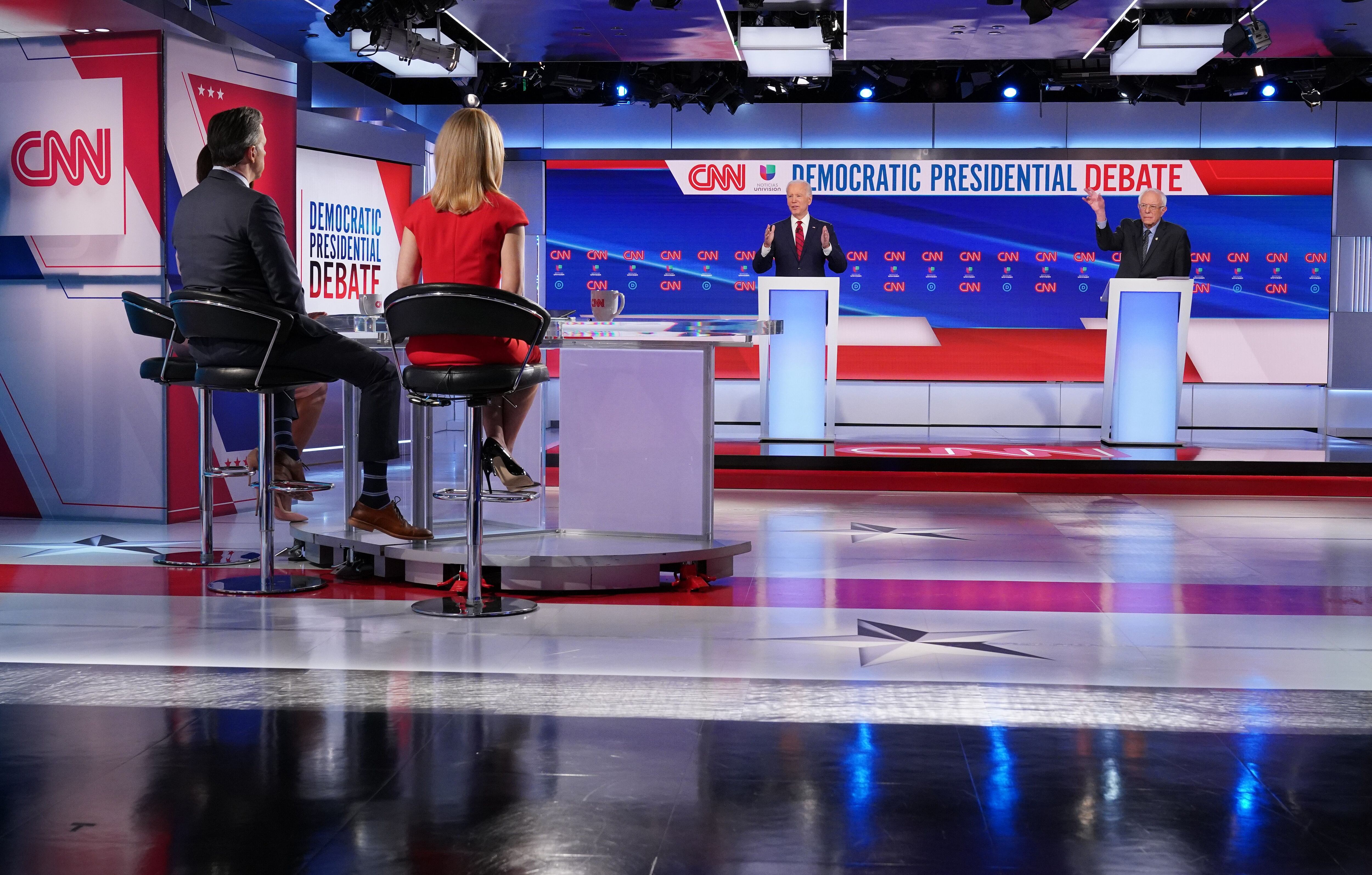
There's no 12th Democratic presidential debate on the horizon now that the nominating process is in a holding pattern due to the coronavirus pandemic.
The Senate will reconvene later Wednesday to vote on the package. But that does not mean the bill is guaranteed to land on President Donald Trump’s desk. The House of Representatives has to pass it, and that may not be an easy feat.
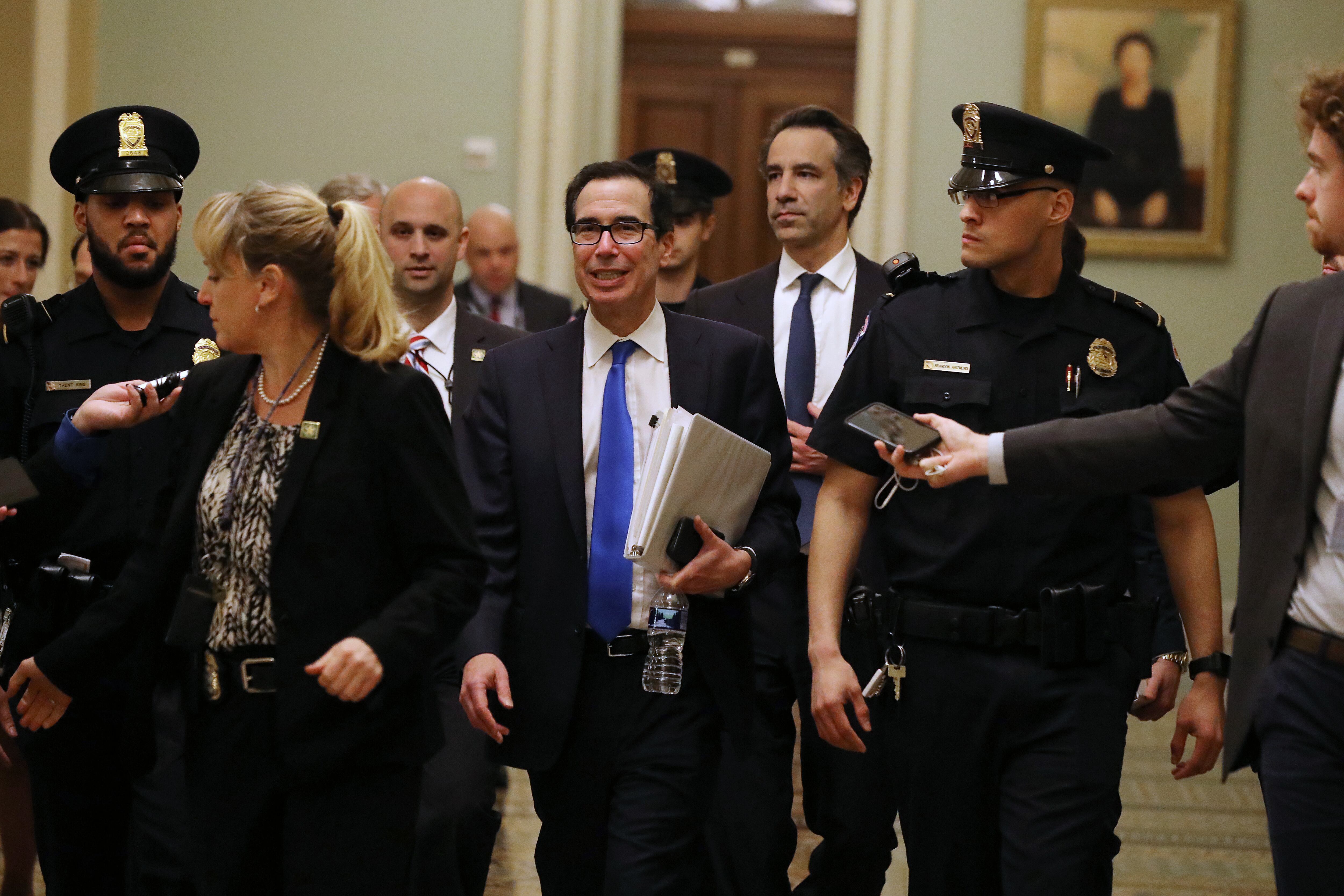
The White House and Senate leaders of both major political parties announced agreement early Wednesday on an unprecedented $2 trillion emergency bill to rush sweeping aid to businesses, workers and a health care system slammed by the coronavirus pandemic.
Stocks are moving tentatively higher in early trading on Wall Street Wednesday after Congress and the White House reached a deal to inject nearly $2 trillion of aid into an economy ravaged by the coronavirus.