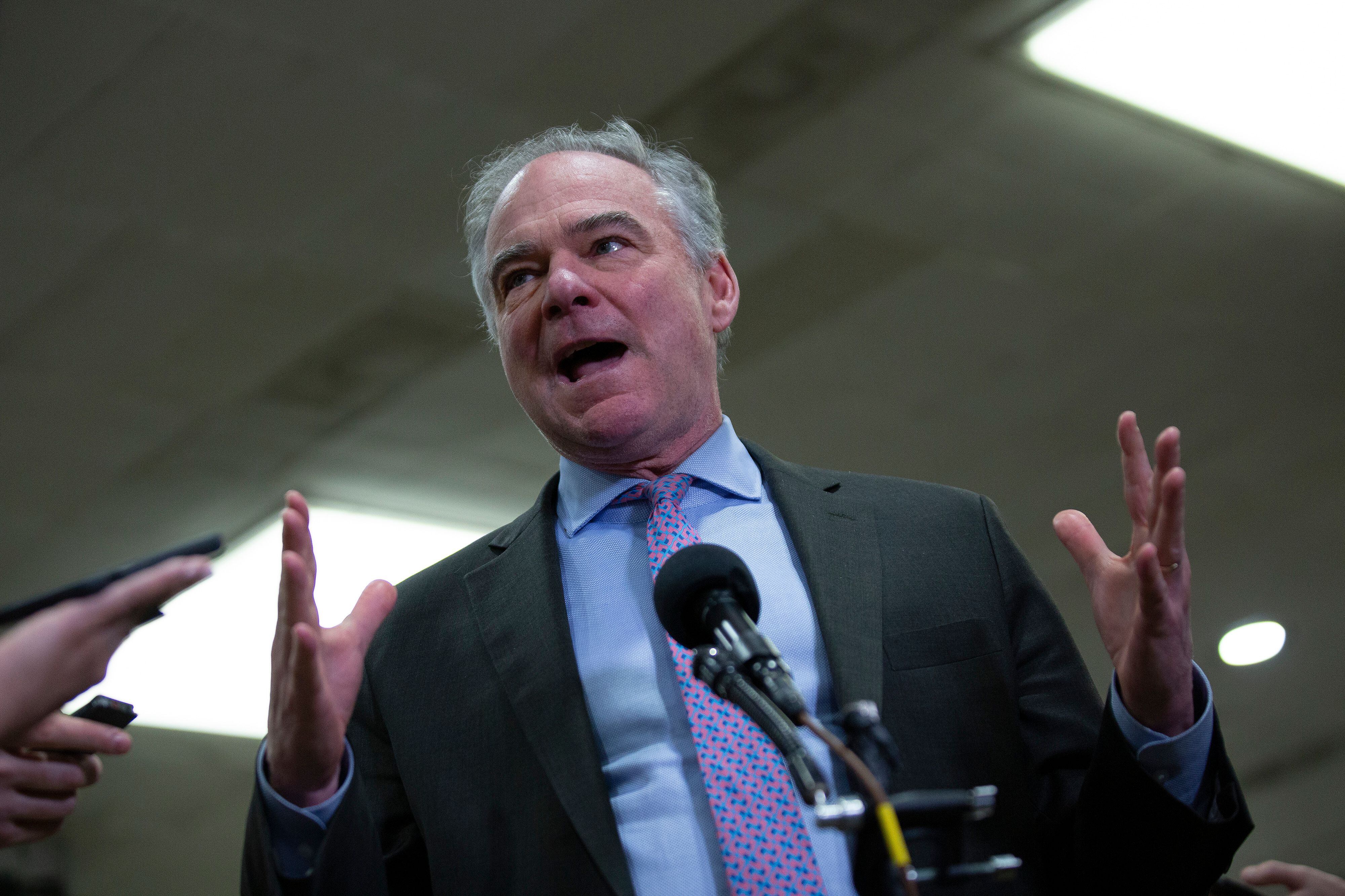
As the Senate enters a new phase of President Donald Trump's impeachment, Senator Tim Kaine (D-Va.) tells Cheddar he sees three things on trial: the U.S. Senate's reputation, the president's behavior, and the American system of justice.
Fifty-three senators in the 116th Senate hold law degrees and will be able to draw upon that knowledge when they enter the chamber to debate the merits of the articles of impeachment.
Kaine and Senator Bob Menendez (D-N.J.), the highest-ranking Latino member in Congress, both told reporters Wednesday that they have been able to use their legal training and experience as practicing attorneys during the trial.
Some of the Republicans expected to break party rank to vote in favor of hearing witnesses hold law degrees too. Senators Mitt Romney (R-Utah) and Lamar Alexander (R-Tenn.) hold law degrees from Harvard University and New York University, respectively. Senator Lisa Murkowski (R-Alaska) worked as an attorney for nearly a decade before joining the Senate.
Before going home to Richmond last weekend, Kaine told Cheddar he viewed the impeachment as putting the president's conduct is on trial along with the capability of the Senate. But after going home and speaking to people at gas stations and grocery stores, he found that the public sees this as a trial of our justice system. "I had thought of it more as the Senate's reputation or what the president's behavior was, but people were talking to me this weekend about that," said Kaine.
"A lot of people in this country have real questions about whether our justice system delivers impartial justice. Does our justice system deliver impartial justice?" he asked. "Or is there a different system for the rich and powerful folks?"
Though Kaine said he hadn't yet brought that point up to his Republican colleagues, he told Cheddar he plans to during the deliberation period about calling witnesses. Senators will have four hours to debate the question of witnesses or documents before voting, which is expected on Friday.
"That's certainly something I'm going to share with them," the senator stated.
During today's press conference, Kaine emphasized that "not once in 17 years did I ever have a trial where there were no witnesses or documents," and he believed that the American people would be able to discern between what a trial is and isn't. However, he told reporters that if no witnesses are called, it will support the "cynicism and anxiety about our system of justice" many Americans might be feeling.
Grant Stark, Director of Research at CapWealth, joins Cheddar News' Closing Bell, where he says that his firm is closely monitoring oil prices amid the geopolitical conflict between Russia and Ukraine, and elaborates on how inflation will continue to be a problem across multiple sectors.
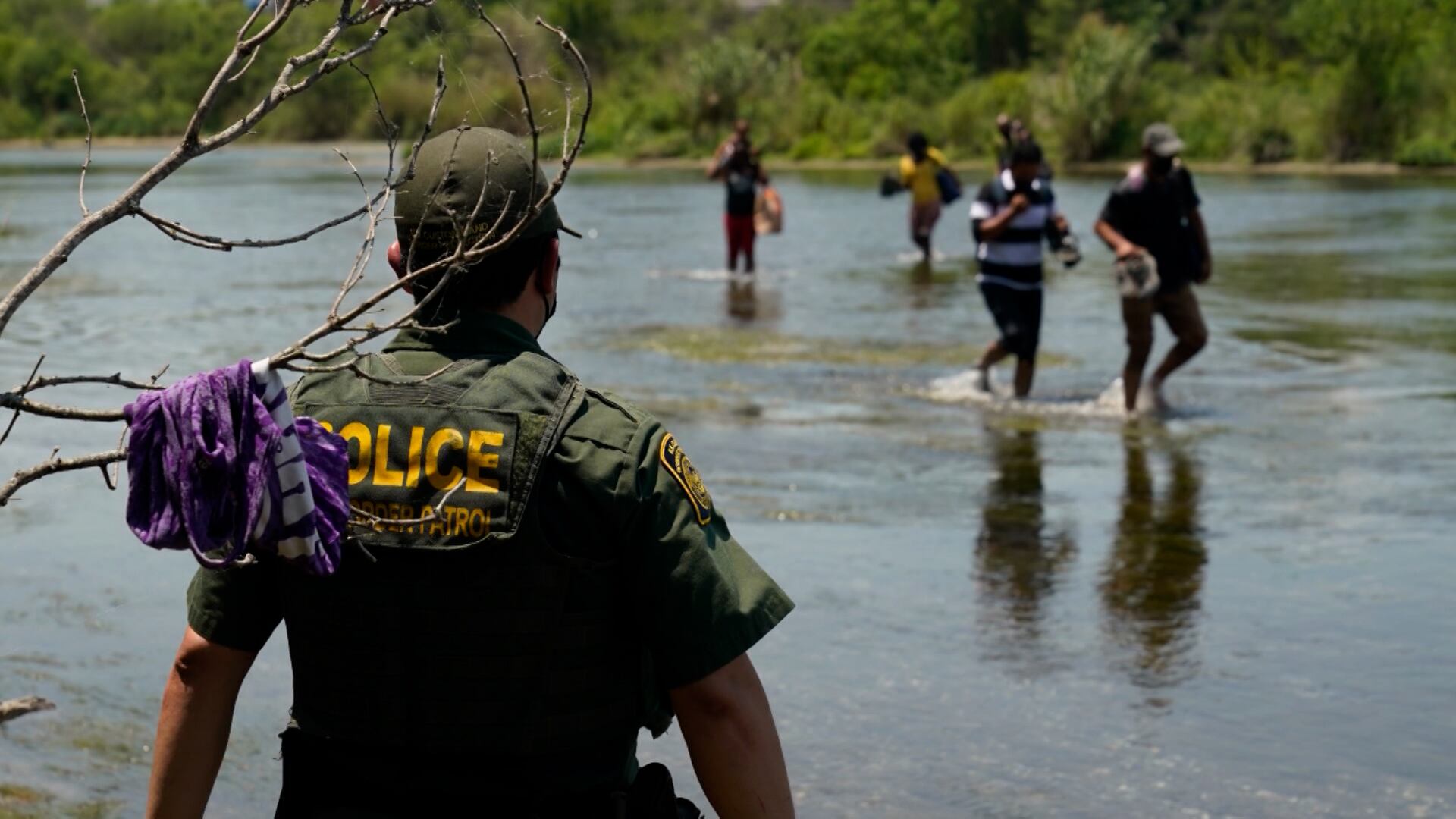
A private prison company plans to run a new pilot program that would place hundreds of migrants caught crossing the U.S.-Mexico border under house arrest. The "home curfew" pilot program is part of "impactful detention reforms," according to a spokesperson for the U.S. Department of Homeland Security. Jacinta Gonzalez, senior campaign organizer with Mijente, joins Cheddar News to discuss.
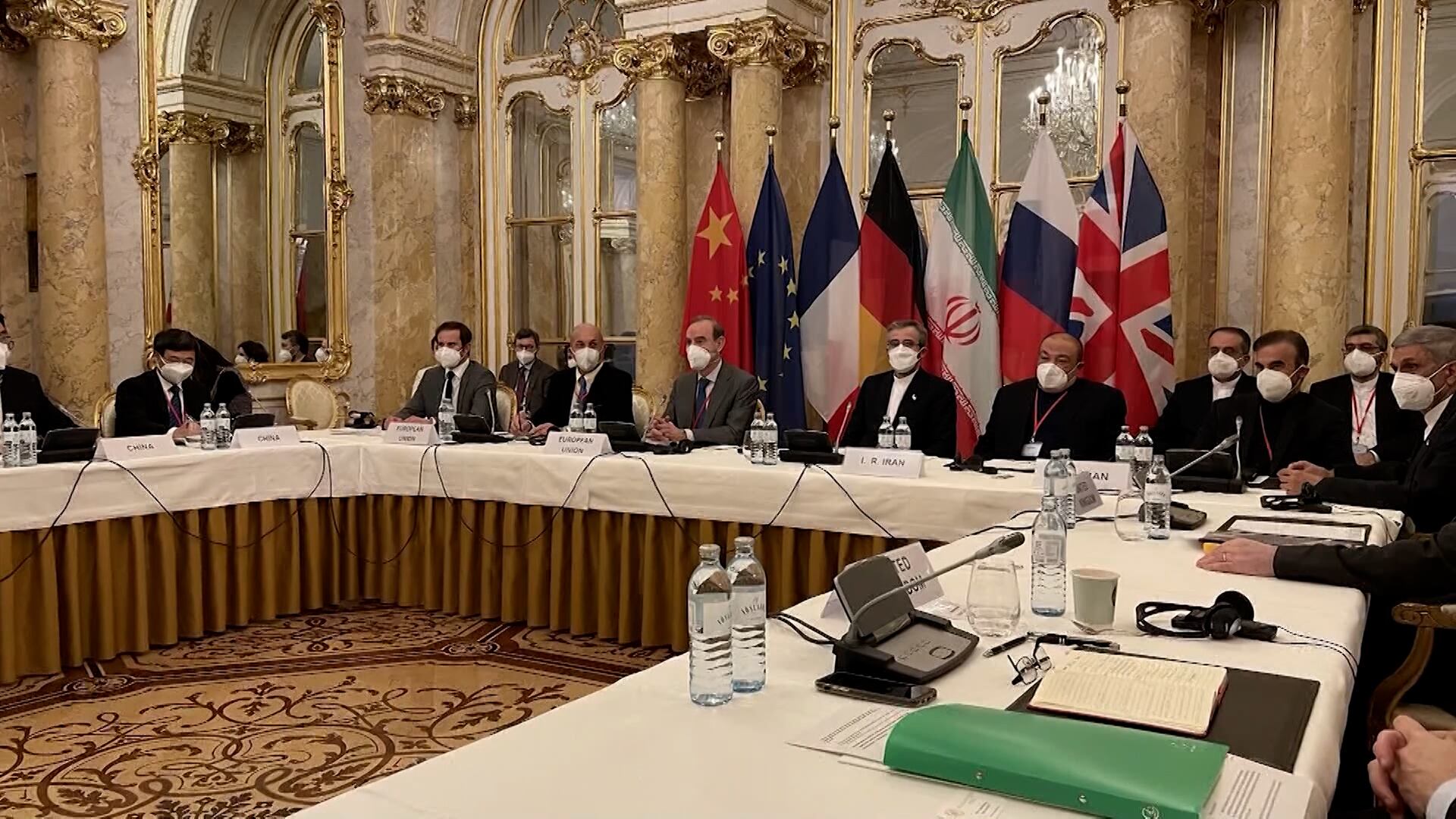
The U.S. is back in negotiations for a nuclear deal with Iran, years after former President Donald Trump withdrew the country from the Joint Comprehensive Plan of Action (JCPOA), which had been meant to curtail the Middle Eastern nation's nuclear ambitions. Former State Department senior advisor to the George W. Bush and Trump administrations, Christian Whiton, joined Cheddar News Wrap to discuss. “It appears to be very similar to the original JCPOA, which does put some constraints on Iran's nuclear program, but also has sunset provisions, including some that in the original plan were expected to take effect in 2025," he said. "And so, if we just reenter that plan, really it just buys perhaps a few years of slowing down, stopping, whatever you want to say, Iran's nuclear program."
The U.S. has announced the first of what could be multiple levels of sanctions against Russia after Moscow recognized two regions of Ukraine as independent. This comes as Britain imposes sanctions on five Russian banks and two oligarchs, and Germany freezes the Nord Stream gas pipeline. Terrell Star, a foreign affairs reporter at The Atlantic Council, joins from Kyiv to discuss.
Growing tensions in Ukraine might soon be impacting consumers in the United States. With Russia on an invasion footing in the region, gas prices are predicted to go up 10 to 15 cents a gallon in the next coming weeks, according to Robert Sinclair, spokesperson for AAA. Sinclair joined Cheddar to break down what could happen even further. "We've been seeing prices go up, and there's been nothing that's happened to affect supplies," he said. "But it's something known as the fear tax where just the talk of something that might interfere with supplies leads to prices going up speculatively."
The end of 3G is upon us. On Tuesday, AT&T became the first major provider to disable its 3G services, and T-Mobile and Verizon plan to follow suit later this year. The shutdowns are expected to impact millions of vehicles that use 3G networks for updates, remote connection, and certain emergency and convenience features. Lance Ulanoff, the U.S. Editor-in-Chief of TechRadar, joined Cheddar's Closing Bell to discuss the ramifications of the changeover.
A new report shows nearly 240 former officials in Congress, the White House, and regulatory agencies have changed careers to work in the crypto industry.
President Biden unveiled new economic sanctions on Russia for what he called "the beginning of a Russian invasion". This came one day after Putin sent troops into two breakaway regions of eastern Ukraine. Alex Ward, national security reporter for POLITICO, explains what these sanctions might do to the global economy.
U.S. stocks ended today's session sharply lower on the heels of rising geopolitical tensions between Russia and Ukraine. Melissa Brown, Managing Director of Applied Research at Qontigo, joins Cheddar News' Closing Bell to discuss.