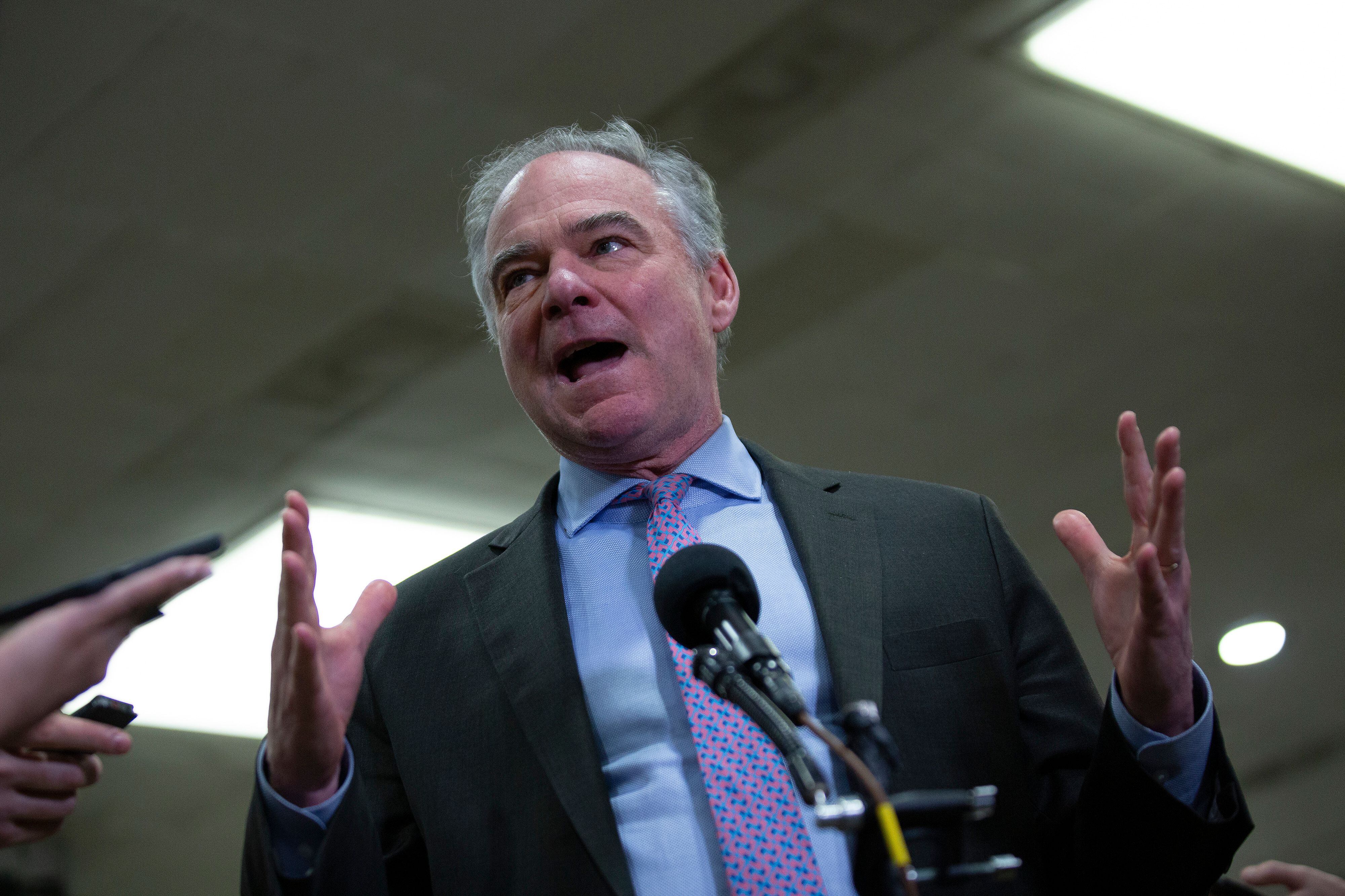
As the Senate enters a new phase of President Donald Trump's impeachment, Senator Tim Kaine (D-Va.) tells Cheddar he sees three things on trial: the U.S. Senate's reputation, the president's behavior, and the American system of justice.
Fifty-three senators in the 116th Senate hold law degrees and will be able to draw upon that knowledge when they enter the chamber to debate the merits of the articles of impeachment.
Kaine and Senator Bob Menendez (D-N.J.), the highest-ranking Latino member in Congress, both told reporters Wednesday that they have been able to use their legal training and experience as practicing attorneys during the trial.
Some of the Republicans expected to break party rank to vote in favor of hearing witnesses hold law degrees too. Senators Mitt Romney (R-Utah) and Lamar Alexander (R-Tenn.) hold law degrees from Harvard University and New York University, respectively. Senator Lisa Murkowski (R-Alaska) worked as an attorney for nearly a decade before joining the Senate.
Before going home to Richmond last weekend, Kaine told Cheddar he viewed the impeachment as putting the president's conduct is on trial along with the capability of the Senate. But after going home and speaking to people at gas stations and grocery stores, he found that the public sees this as a trial of our justice system. "I had thought of it more as the Senate's reputation or what the president's behavior was, but people were talking to me this weekend about that," said Kaine.
"A lot of people in this country have real questions about whether our justice system delivers impartial justice. Does our justice system deliver impartial justice?" he asked. "Or is there a different system for the rich and powerful folks?"
Though Kaine said he hadn't yet brought that point up to his Republican colleagues, he told Cheddar he plans to during the deliberation period about calling witnesses. Senators will have four hours to debate the question of witnesses or documents before voting, which is expected on Friday.
"That's certainly something I'm going to share with them," the senator stated.
During today's press conference, Kaine emphasized that "not once in 17 years did I ever have a trial where there were no witnesses or documents," and he believed that the American people would be able to discern between what a trial is and isn't. However, he told reporters that if no witnesses are called, it will support the "cynicism and anxiety about our system of justice" many Americans might be feeling.
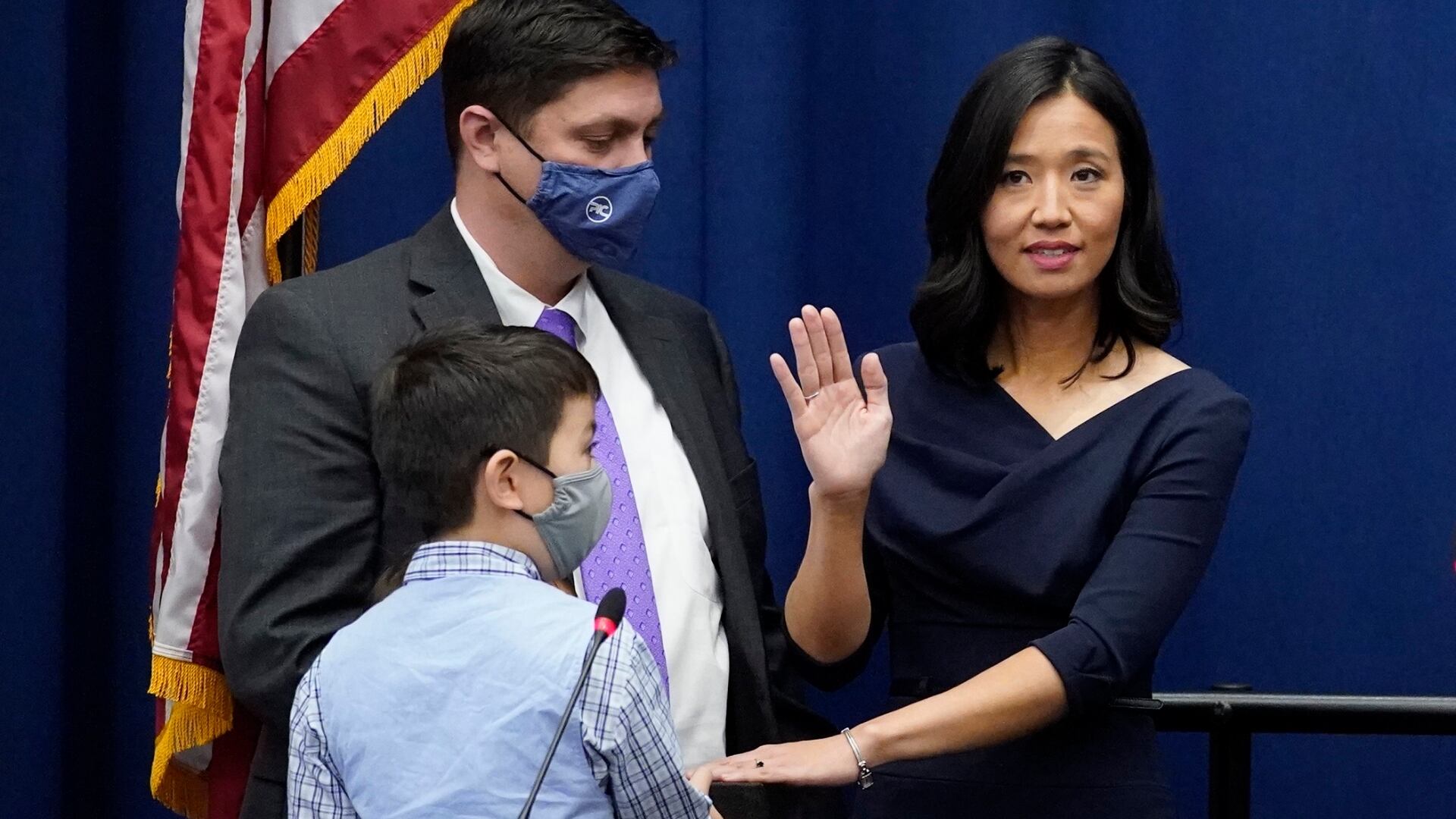
As the 2022 midterm elections fast approach, here are some politicians Americans should be on the lookout for. Democratic Massachusetts state senator Sonia Chang-Diaz, who was the first Latina and Asian American woman to be elected to the state's senate, now has her eye on the governorship with Republican Charlie Baker leaving. New Jersey GOP candidate for Congress, Billy Prempeh also bears watching, and while Boston's newest mayor, Democrat Michelle Wu, was already sworn in last month, all eyes will be on Beantown as the first woman and first person of color to hold the office tries to usher in a new era for the city.
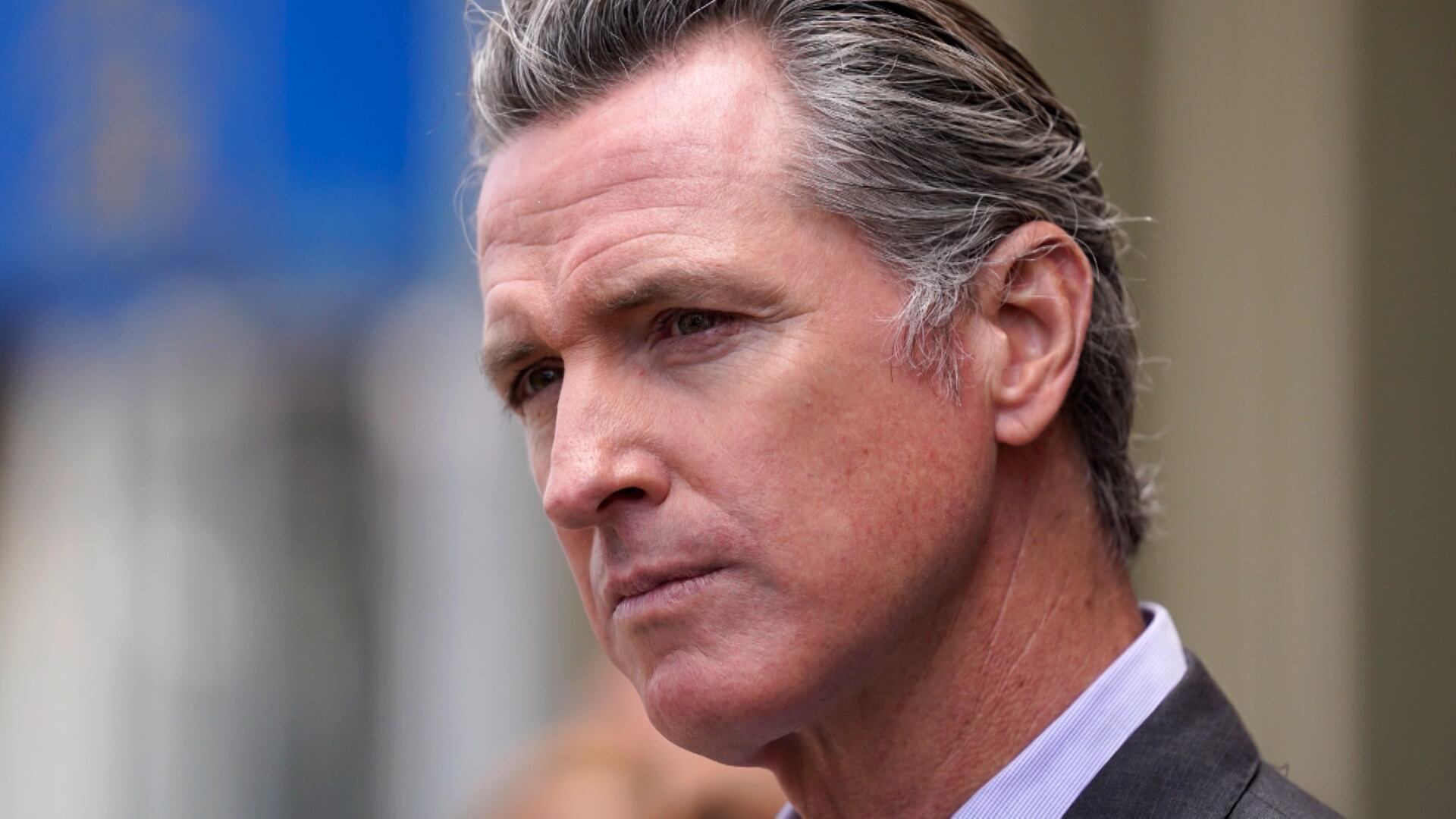
Emily Hoeven, newsletter editor at CalMatters, joins Cheddar News to discuss California Governor Gavin Newsom's gun law modeled after Texas's abortion law.
Chuck Rocha, host of 'Nuestro' podcast and opinion contributor at The New York Times, joins Cheddar News to discuss why Democrats are losing Hispanic voters.
More businesses are requiring workers to return to the office, but there is concern that many employees in the middle class, especially women and people of color, need remote work options for reasons including childcare and financial security. Joan Williams, director of the Center for WorkLife Law at the University of California, joined Cheddar to discuss why office mandates could be detrimental to the middle class. She noted that while companies claim a return to offices would help foster more collaboration and efficiency, reports show that they are successfully able to do their jobs from home.
The U.S. postal service has confirmed that it secretly developed and tested a blockchain-based mobile voting system ahead of the 2020 election. Susan Greenhalgh, senior advisor on election security, Free Speech for People, joins Cheddar News to discuss the cybersecurity complications of a mobile voting system.
The U.S. Supreme Court ruled to allow the controversial Texas abortion law to remain in effect, banning abortion at six weeks and allowing any private citizen to sue a person or doctor aiding or abetting someone seeking an abortion. Outraged at this decision, California Governor Gavin Newsom is working to draft a proposal in line with the law as it relates to guns. Shawn Hubler, California correspondent at the New York Times, joins Cheddar News to discuss.