On Wednesday, the leaders of Facebook, Google, and Twitter will testify on Capitol Hill in front of a subcommittee of the Senate Commerce Committee. Mark Zuckerberg, Sundar Pichai, and Jack Dorsey will all face questions over their companies' use of Section 230 of the Communications Decency Act, which protects online platforms from being held legally accountable for content published by their users.
"One of the things I think they need to hear from us that we are fully aware that the American people no longer trust big tech," Committee member Sen. Marsha Blackburn (R-Tenn.) told Cheddar.
Blackburn has proposed several changes to clarify and modify Section 230, which has been a subject of controversy since the president's executive order in May. That executive order came after Twitter flagged one of the president's tweets for being misleading and called for the FCC to regulate online censorship.
"We would be more specific on who can use the liability protections in 230, how it can be applied, and when it can be applied," said Blackburn. Her changes would also specify who qualifies as a "content creator" and would aim to protect those users, rather than the platforms.
Despite bipartisan agreement that Section 230 needs reform, Democrats and Republicans do not agree on just how to change it. The Democrats aren't on board with the GOP bill that would reign in a company's ability to flag and censor misinformation.
The tech industry, for its part, has said any changes to Section 230 would effectively end free speech online. They argue that without the protection it offers, platforms actually would have to take a stricter approach to flagging, fact-checking, and censoring.
Catching you up on what you need to know on Wednesday, June 1, 2022, House lawmakers hold an emergency hearing on gun control measures in the wake of the Uvalde shooting, the Supreme Court temporarily blocks Texas' law stopping social media moderation, and the James Webb Space Telescope gets a new mission.
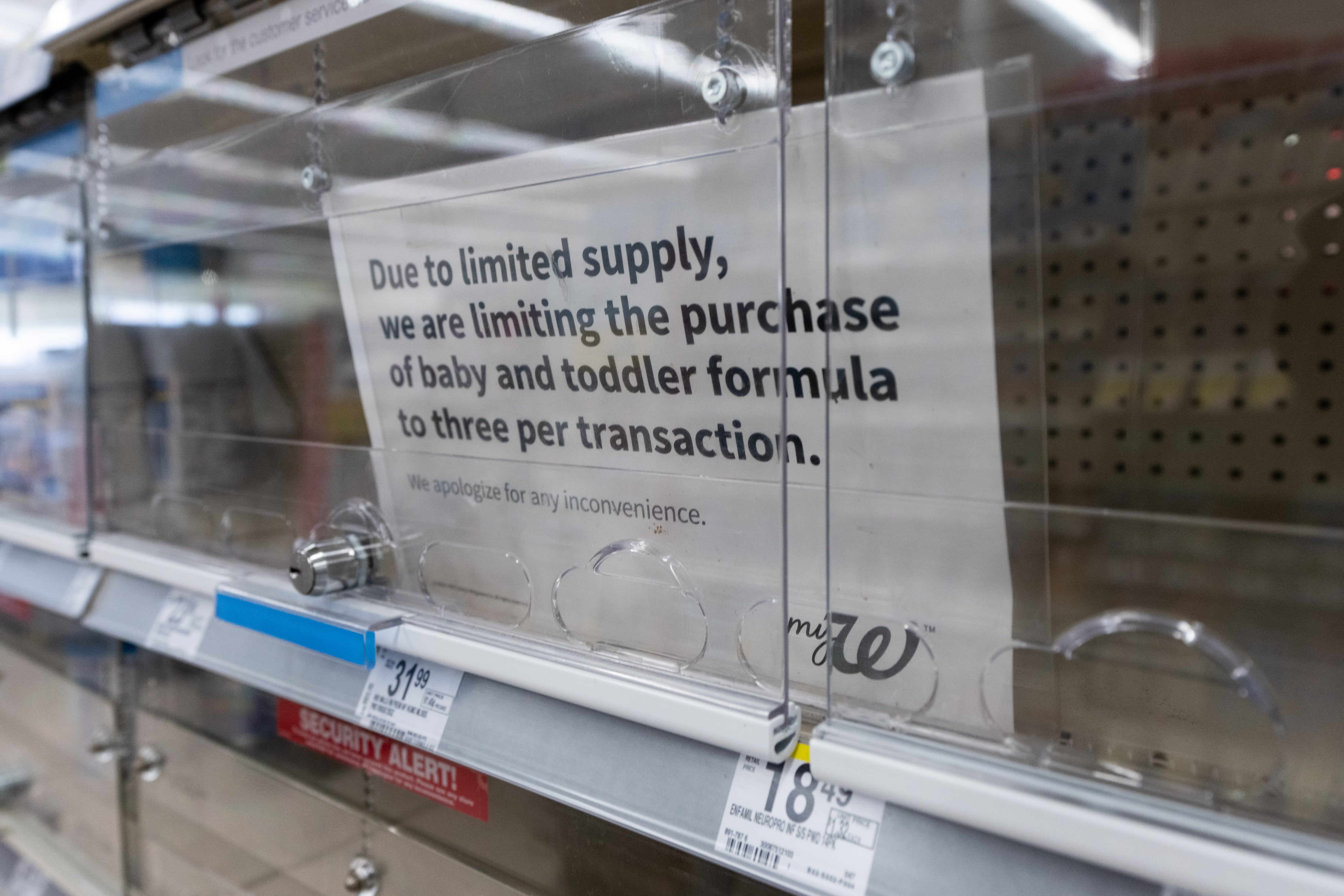
With the baby formula in the United States surging to an out-of-stock rate of 70 percent, the FDA has given Abbott permission to reopen its Michigan plant amid the crisis and authorized foreign imports. Professor Peter Pitts, a former FDA associate commissioner and current president of the Center for Medicine in the Public Interest, joined Cheddar News to discuss the ongoing shortage and its wide impact. “As difficult as things is in urban areas, they’re even worse in small communities and tribal areas where parents can't just go to the next store on the corner," he said. Pitts also noted that the Abbott factory was a "disaster" prior to its shutdown and that it would have been "regulatory malpractice" to have left it open.
Cheddar's Megan Pratz reports from the ground in Uvalde, Texas where the community's grief and frustration with lawmakers and police officers grows as more details emerge.
Catching you up on what you need to know on Tuesday, May 31, 2022, EU leaders agree to ban 90% of Russian oil by year-end, funerals begin in Uvalde, Texas one week after a mass shooting killed 19 children and two adults, and President Biden meets with the world's biggest boy band BTS.
The Week's Top Stories is a guided tour through the biggest market stories of the week, from winning stocks to brutal dips to the facts and forecasts generating buzz on Wall Street.
An inflation gauge closely tracked by the Federal Reserve rose 6.3% in April from a year earlier, just below a four-decade high set in March and the first slowdown since November 2020.
The pain and grief from this week’s shooting in a 4th grade classroom at Robb Elementary School in Uvalde, Texas is still with us. Cheddar's Shannon Lanier ends the week by pausing to remember some of the faces of the 19 children killed and their teachers.
Cheddar New’s reporter Megan Pratz reports from the scene in Uvalde, Texas, with additional details that indicate the shooter was inside Robb Elementary School for more than an hour before law enforcement was able to confront and kill him.