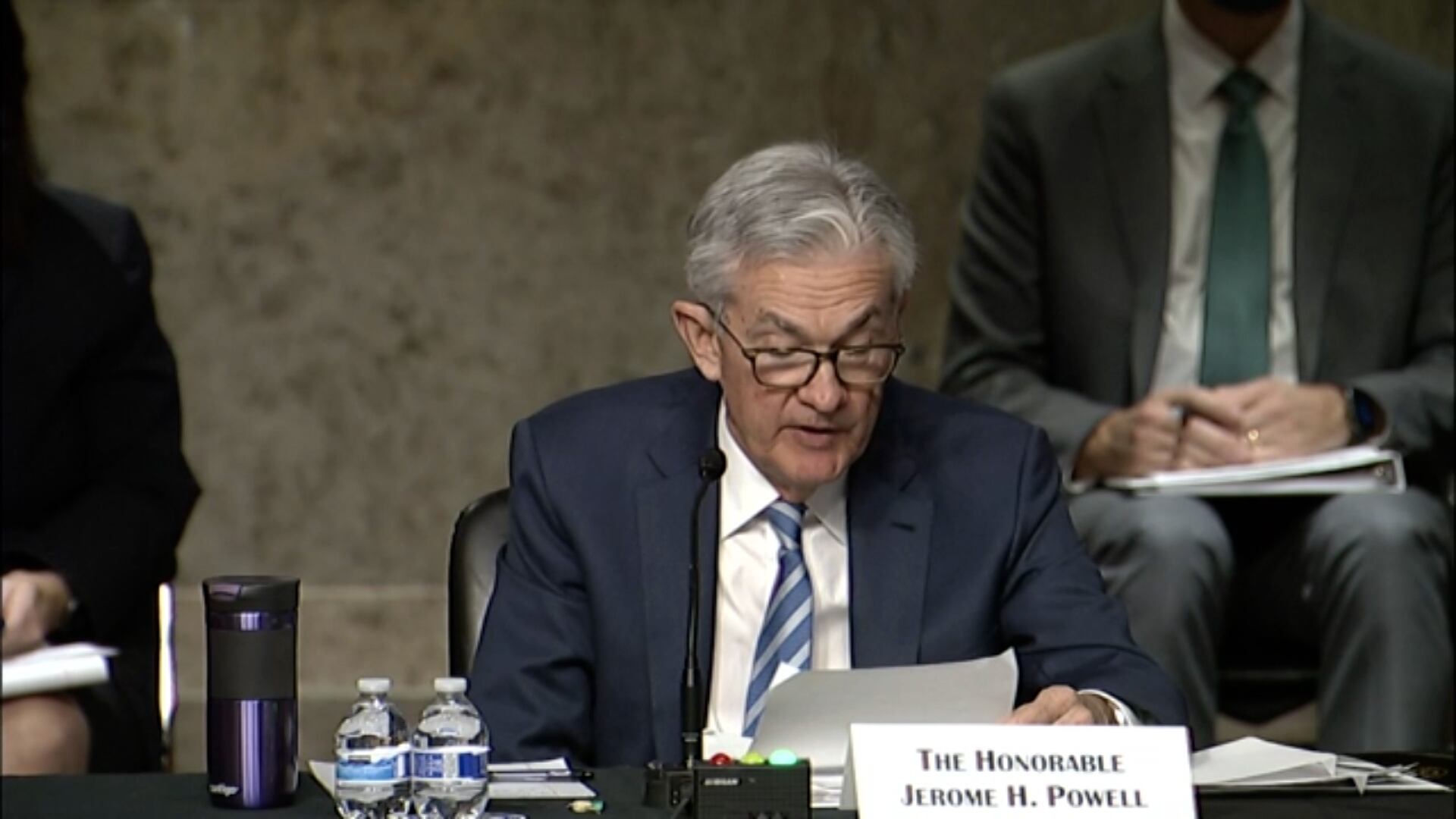
On Wednesday, the leaders of Facebook, Google, and Twitter will testify on Capitol Hill in front of a subcommittee of the Senate Commerce Committee. Mark Zuckerberg, Sundar Pichai, and Jack Dorsey will all face questions over their companies' use of Section 230 of the Communications Decency Act, which protects online platforms from being held legally accountable for content published by their users.
"One of the things I think they need to hear from us that we are fully aware that the American people no longer trust big tech," Committee member Sen. Marsha Blackburn (R-Tenn.) told Cheddar.
Blackburn has proposed several changes to clarify and modify Section 230, which has been a subject of controversy since the president's executive order in May. That executive order came after Twitter flagged one of the president's tweets for being misleading and called for the FCC to regulate online censorship.
"We would be more specific on who can use the liability protections in 230, how it can be applied, and when it can be applied," said Blackburn. Her changes would also specify who qualifies as a "content creator" and would aim to protect those users, rather than the platforms.
Despite bipartisan agreement that Section 230 needs reform, Democrats and Republicans do not agree on just how to change it. The Democrats aren't on board with the GOP bill that would reign in a company's ability to flag and censor misinformation.
The tech industry, for its part, has said any changes to Section 230 would effectively end free speech online. They argue that without the protection it offers, platforms actually would have to take a stricter approach to flagging, fact-checking, and censoring.
Just days after the detection of the Omicron variant, the World Health Organization has agreed to start the process of establishing a global pandemic treaty or accord. Amy Maxmen, senior reporter for Nature, and Dr. Samuel Scarpino, managing director for the Rockefeller Foundation's Pandemic Prevention Institute, joined Cheddar to discuss this effort and what lessons can be learned from the many COVID-19 failures as the world prepares for future pandemics.
It's a mixed bag for the November jobs report. Hiring slowed last month as employers only added 210,000 jobs, massively missing the estimate of 550,000. But there was one bright spot: the unemployment rate fell to 4.2%, with the number of unemployed people dropping to 6.9 million. Both of those numbers are considerably down from their highs at the end of the 2020 recession. Heather Boushey, a member of President Biden's Council of Economic Advisers, joined Cheddar to discuss the report and the state of the country's ongoing economic recovery.
As the U.S. continues to face supply chain shortages, President Joe Biden is reassuring U.S. consumers that the supply chain is in "very strong shape" ahead of the all-important holiday season. As supply bottlenecks start to show signs of improvement, the industry may be faced with yet another challenge: the Omicron variant. Rob Caucci, Co-Founder & Co-CEO of Fillogic joined Cheddar's Opening Bell to discuss.
Markets rebounded Monday morning after Friday's deep sell-off that saw the Dow suffer its worse day since 2020. It comes as investors continue to react to the impact of the omicron variant on the broader reopening. Eddie Ghabour, Co-Owner at the Key Advisors Group joined Cheddar's Opening Bell to discuss.
Markets bounced back this morning with travel leading the gains after plunging on Monday as the first case of Omicron was detected in the U.S. Jimmy Lee, CEO, Wealth Consulting Group joined Cheddar's Opening Bell to discuss.
The market saw investors react to comments by the World Health Organization's chief scientist, who suggested existing vaccines are likely to offer protection against the new variant. According to Thomas Hayes, chairman of Great Hill Capital, the next two weeks will be crucial as the markets watch for not only the effects of the Omicron variant, but also the Fed's decision on a taper.
It's Friday at long last. Jill and Carlo cover the latest on Omicron, including a possible superspreader event in NYC. Plus, previewing the November jobs report, a new Zoom feature no one asked for, and when it's no longer a good idea to eat Thanksgiving leftovers.
Following the Mississippi abortion case, the fate of Roe V. Wade is at stake. A decision is expected next summer, right around the time midterm candidates will be making their cases to voters. Laura Packard, executive director of Health Care Voter, joins Cheddar News to discuss how the ruling will impact upcoming elections.