More than two decades after James Bond took out a platoon of baddies with his autonomous BMW, American motorists are still waiting for their chance to step away from their vehicles.
While the debut of Tesla's so-called "Autopilot" cruise control feature in 2014 fueled drivers' dreams that self-piloted vehicles were just around the corner, safely implementing true driverless technology has proved to be a more elusive achievement as the decade comes to a close – and the road to get there far more dangerous.
Self-driving technology was involved in at least five fatal collisions in the U.S. since 2016: four involving a Tesla being driven with Autopilot engaged and one involving the ride-hailing service Uber's self-driving test vehicles.
Investigations into the crashes yielded vastly different findings and underscore the challenges in deploying the technology:
Authorities looking into the Tesla ($TSLA) collisions cited driver inattention or faulty highway safety equipment – one driver, for example, was apparently watching a movie just before slamming into a tractor-trailer, and numerous videos have captured drivers sleeping behind the wheel of their semi-autonomous cars as they speed down the highway.
The probe of the 2018 Uber ($UBER) crash in Arizona, by contrast, where the vehicle fatally struck a person crossing the street, revealed that the Uber vehicles were not programmed to recognize that people often cross the street outside a crosswalk. (As Wired put it: "Uber's Self-Driving Car Didn't Know Pedestrians Could Jaywalk.") Uber shut down the self-driving pilot program but tentatively restarted it earlier this year.
"The hype that started in 2014, 2015, is starting to be hampered, and people are smartly saying, We're not going to put an autonomous vehicle on the roadway until we're certain it's safe," said Carla Bailo, president and CEO of the Center for Automotive Research. "It's tough to make a car drive itself, and it's even tougher to make it drive around a human-driven vehicle because you just don't know what that human brain is going to do."
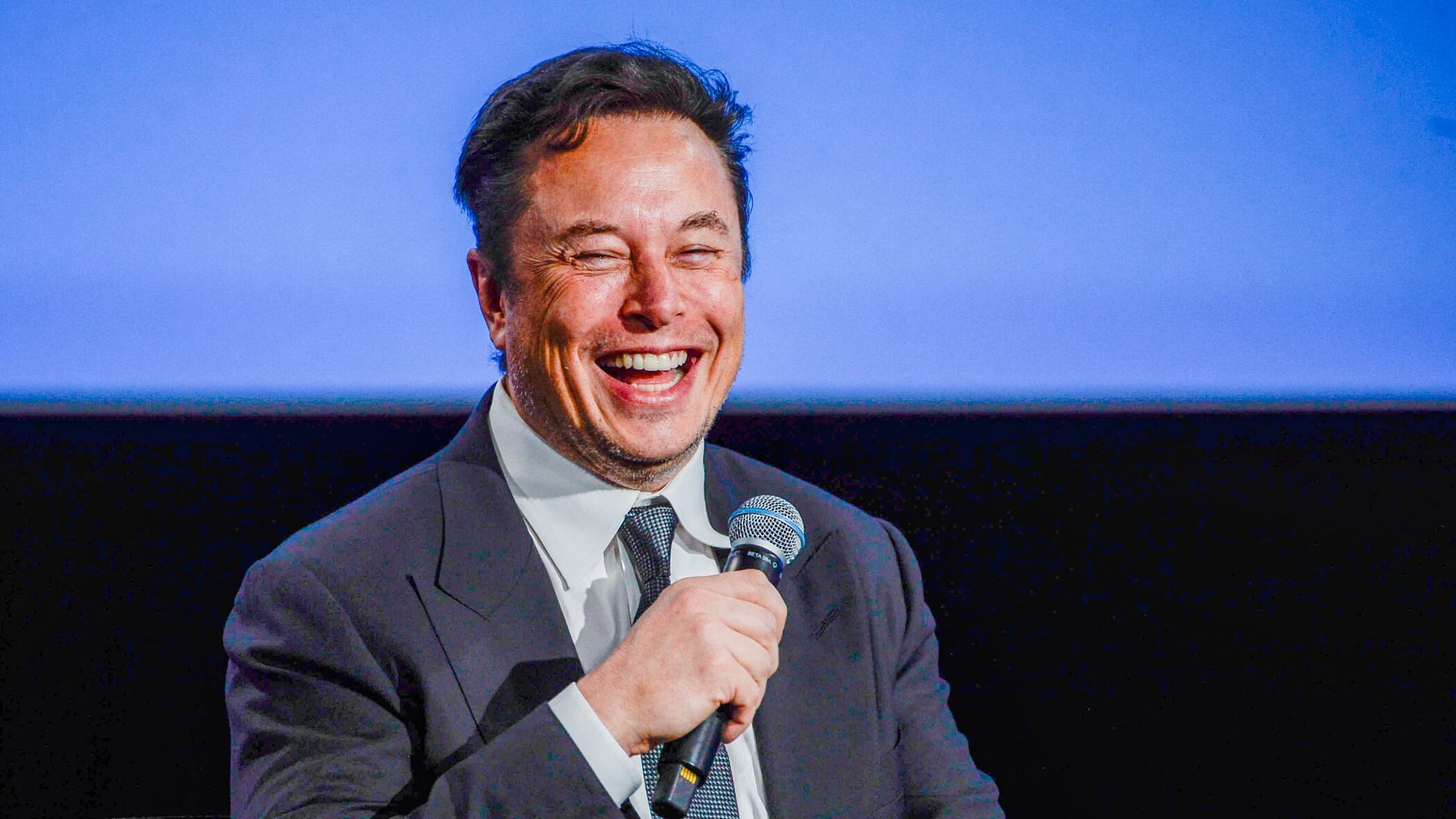
The vehicles' cheerleaders, chief among them Tesla CEO Elon Musk, maintain that self-driving vehicles, while susceptible to accidents, are still safer than human drivers.
But a RAND Corporation report in April 2016 concluded that self-driving vehicles will need to rack up hundreds of billions of miles before their performance can be accurately compared to the roughly 1.2 billion people around the world who drive.
So far the technology might be better called "hands-free:" WhetherTesla's Autopilot or GM's more recent "Super Cruise," the enhanced cruise features will essentially take the wheel on highways – keeping speed, changing lanes, and generally braking when necessary. That's a Level 2 on the six-point scale of automation, from a typical car's standard cruise control at Level 0 to Minority Report-level self-driving at Level 5.
Automakers, though, are still pouring money into the technology: While Ford CEO Jim Hackett in April reportedly told the Detroit Economic Club that automakers likely "overestimated the arrival of autonomous vehicles," the company still plans to introduce a fleet of self-driving vehicles within two years, albeit with the caveat that "applications will be narrow, what we call geo-fenced, because the problem is so complex."
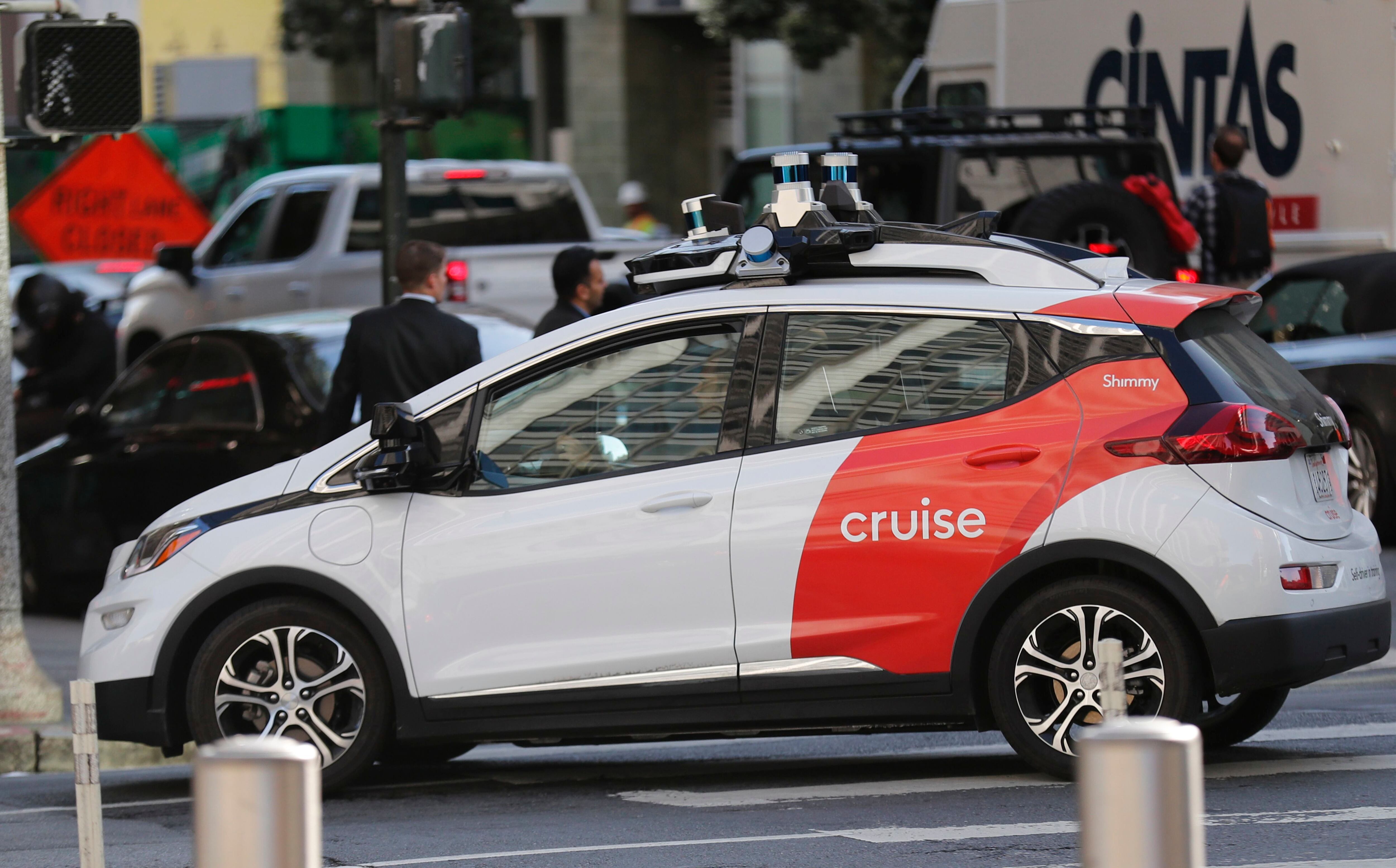
General Motors ($GM), which bought the autonomous-vehicle company Cruise Automation in 2016, is also plunging ahead with its own self-driving programs.
"Companies are going to need to continue to do that to continue to test and validate the technology, test and validate consumer trust, and monetize these services," Bailo said.
In spite of the high-profile crashes in recent years, regulators have largely taken a hands-off approach to the technology, to the consternation of some congressional lawmakers. The Department of Transportation in October, for example, announced that it will "no longer assume" that the drivers of commercial trucks are human, adding that the agency will even "adapt the definitions of 'driver' and 'operator' to recognize that such terms do not refer exclusively to a human, but may in fact include an automated system."
Self-driving trucks, in fact, are already on the road, operating at the equivalent of a Level 4 on stretches of highway in Arizona, where less-weathered, sun-drenched roads are easier for the trucks' cameras to navigate, and where the state has imposed few restrictions on autonomous vehicles. Passenger vehicles may not be far behind: Waymo, part of Google's parent company Alphabet ($GOOGL), announced in October that "completely driverless Waymo cars are on the way."
Advances in 5G cell technology, which will allow for faster transmission of data from the vehicles, is expected to help clear the way.
"It's a very exciting time," said Leo Kempel, dean of the school of engineering at Michigan State University. "The marriage of electric vehicle technology with sensors on vehicles and the emergence of connectivity between vehicles and infrastructure and 2020 – which is said to be the year of 5G, at least in dense environments like cities, and the promise of more bandwidth, lower latency – that's opened the door for control technology for vehicles that quite frankly is hard to do with current tech."