By Mark Sherman
A more conservative Supreme Court appeared unwilling Tuesday to do what Republicans have long desired: kill off the Affordable Care Act, including its key protections for pre-existing health conditions and subsidized insurance premiums that affect tens of millions of Americans.
Meeting remotely a week after the election and in the midst of a pandemic that has closed their majestic courtroom, the justices took on the latest Republican challenge to the Obama-era health care law, with three appointees of President Donald Trump, an avowed foe of the law, among them.
But at least one of those Trump appointees, Justice Brett Kavanaugh, seemed likely to vote to leave the bulk of the law intact, even if he were to find the law’s now-toothless mandate that everyone obtain health insurance to be unconstitutional.
"It does seem fairly clear that the proper remedy would be to sever the mandate provision and leave the rest of the act in place,” Kavanaugh said.
Chief Justice John Roberts, who wrote two earlier opinions preserving the law, stated similar views, and the court's three liberal justices are almost certain to vote to uphold the law in its entirety. That presumably would form a majority by joining a decision to cut away only the mandate, which now has no financial penalty attached to it. Congress zeroed out the penalty in 2017, but left the rest of the law untouched.
“I think it’s hard for you to argue that Congress intended the entire act to fall if the mandate were struck down when the same Congress that lowered the penalty to zero did not even try to repeal the rest of the act. I think, frankly, that they wanted the court to do that, but that’s not our job,” Roberts said.
In the court's third major case over the 10-year-old law, popularly known as “Obamacare,” Republican attorneys general in 18 states and the administration want the entire law to be struck down. That would threaten coverage for more than 23 million people, as well as millions of others with preexisting conditions that now would include COVID-19.
California, leading a group of Democratic-controlled states, and the Democratic-controlled U.S. House of Representatives are urging the court to leave the law in place.
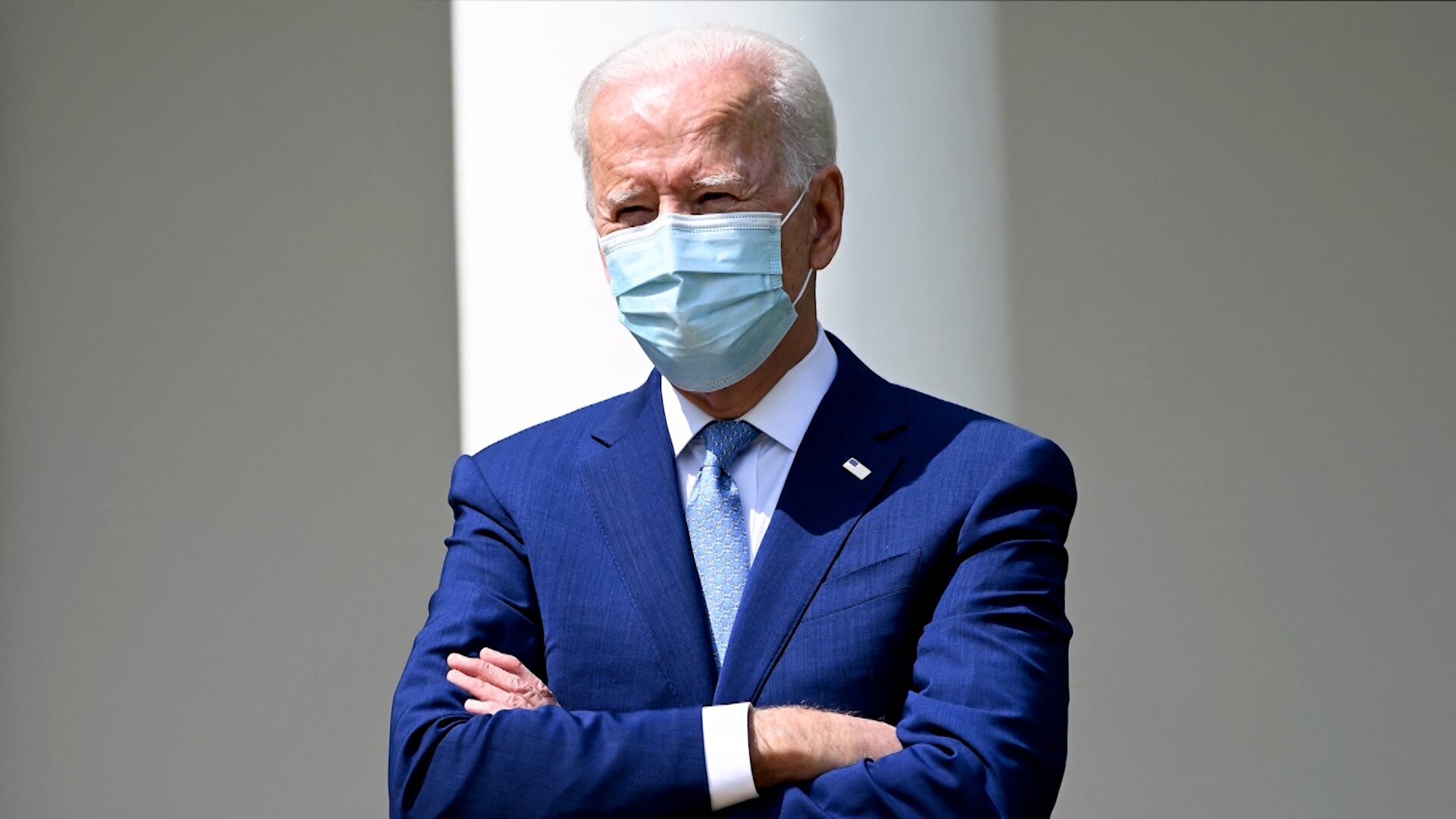
The Supreme Court could have heard the case before the election, but set arguments for a week after. The timing could add a wrinkle to the case since President-elect Joe Biden strongly supports the health care law.
In arguments conducted by telephone and lasting two hours, the justices asked about other mandates, only hypothetical, that might have no penalties attached: To fly a flag, to mow the lawn or even, in a nod to current times, to wear a mask.
“I assume that in most places there is no penalty for wearing a face mask or a mask during COVID, but there is some degree of opprobrium if one does not wear it in certain settings,” Justice Clarence Thomas said.
The court also spent a fair amount of time debating whether the GOP-led states and several individuals who initially filed lawsuits had the right to go into court.
The suits are against the federal government and U.S. agencies, “but doesn’t it really seem that Congress is the one who’s injured the individual plaintiffs here and you can’t sue Congress and say: ‘Hey, you’ve put us under this mandate that’s forcing us to buy insurance and that’s harming us,’ right?” Justice Amy Coney Barrett said to Texas Solicitor General Kyle Hawkins.
A ruling that those parties do not have that right, known as legal standing, would result in the dismissal of the case and leave the entire law in place, including the mandate.
Questions from Barrett, who joined the court late last month following her hurried nomination and confirmation to replace the late Justice Ruth Bader Ginsburg, did not point to a clear outcome. Trump's other high-court appointee is Justice Neil Gorsuch.
The three Trump appointees have never ruled on the substance of the health care law. Barrett, though, has been critical of the court’s earlier major health care decisions sustaining the law, both written by Roberts.
The current case stems from a change made by the Republican-controlled Congress in 2017 that reduced the penalty for not obtaining health insurance to zero. Without the penalty, the law's mandate to have health insurance is unconstitutional, the GOP-led states argue.
If the mandate goes, they say, the rest of the law should go with it because the mandate was central to the law's passage.
However, enrollment in the law’s insurance markets has stayed relatively stable at more than 11 million people, even after the effective date of the penalty’s elimination in 2019. According to the nonpartisan Kaiser Family Foundation, enrollment dropped by about 300,000 people from 2018 to 2019. Kaiser estimates 11.4 million people have coverage this year.
An additional 12 million people have coverage through the law’s Medicaid expansion.
If the case turns on the legal doctrine of severability, it would be in line with other rulings in recent years in which the justices have excised a problematic provision from a law and allowed the rest to remain in force.
In the first big ACA case in 2012, Justices Samuel Alito and Thomas voted to strike down the entire law. Roberts and Justices Stephen Breyer, Elena Kagan, and Sonia Sotomayor voted to uphold it.
Roberts has endured a torrent of conservative criticism, including from Trump, for his earlier opinions, including the initial case in 2012 that upheld the mandate.
Eight years ago, the law's defenders emphasized that the mandate was the linchpin of the whole law, Roberts said to Donald Verrilli, who represented the House on Tuesday, but was the Obama administration's top Supreme Court lawyer in 2012. “But now the representation is that, ‘Oh no, everything is fine without it.’ Why the bait and switch?" Roberts asked.
The law originally had subsidies and other carrots to entice people to enroll in health insurance, as well as a stick, the penalty, Verrilli said. “It's turned out that the carrots work without the stick,” he said.
A limited ruling would have little real-world consequence. The case could also be rendered irrelevant if the new Congress were to restore a modest penalty for not buying health insurance.
The arguments were not without their lighter moments, especially in an exchange between Breyer and Jeffrey Wall, Trump's top Supreme Court lawyer, over whether the mandate that Americans “shall” have insurance means anything now that the penalty is gone.
Breyer said “shall” is used in many homes as an earnest request, not a threat.
“In my family, when I tell my kids that they shall do things, that’s a command backed by a penalty,” Wall said.
Breyer replied, “Well, that’s a much more organized family than mine.”
A decision is expected by late spring.
Updated on November 10, 2020, at 3:20 p.m. ET with additional details.