Now that last month's sizzling numbers are all in, the European climate monitoring organization made it official: July 2023 was Earth's hottest month on record by a wide margin.
July's global average temperature of 16.95 degrees Celsius (62.51 degrees Fahrenheit) was a third of a degree Celsius (six tenths of a degree Fahrenheit) higher than the previous record set in 2019, Copernicus Climate Change Service announced Tuesday. Normally global temperature records are broken by hundredths or a tenth of a degree, so this margin is unusual.
“These records have dire consequences for both people and the planet exposed to ever more frequent and intense extreme events," said Copernicus deputy director Samantha Burgess. There have been deadly heat waves in the Southwestern United States and Mexico, Europe and Asia. Scientific quick studies put the blame on human-caused climate change from the burning of coal, oil and natural gas.
The previous single-day heat record was set in 2016 and tied in 2022. From July 3, each day has exceeded that record. It's been so warm that Copernicus and the World Meteorological Organization made the unusual announcement that it was likely the hottest month days before it ended. Tuesday's calculations made it official.
“We should not care about July because it’s a record, but because it won’t be a record for long,” said Imperial College of London climate scientist Friederike Otto. “It’s an indicator of how much we have changed the climate. We are living in a very different world, one that our societies are not adapted to live in very well.”
The global average temperature last month was 1.5 degrees Celsius (2.7 degrees Fahrenheit) warmer than pre-industrial times. In 2015, the nations of the world agreed to try to prevent long-term warming — not individual months or even years, but decades — that is 1.5 degrees warmer than pre-industrial times.
Last month was so hot, it was .7 degrees Celsius (1.3 degrees Fahrenheit) hotter than the average July from 1991 to 2020, Copernicus said. The world's oceans were half a degree Celsius (0.9 degrees Fahrenheit) warmer than the previous 30 years and the North Atlantic was 1.05 degrees Celsius (1.9 degrees Fahrenheit) hotter than average. Antarctica set record lows for sea ice, 15% below average for this time of year.
Copernicus, a division of the European Union’s space program, has records going back to 1940. July's temperature would be hotter than any month the U.S. National Oceanic and Atmospheric Administration has recorded and their records go back to 1850. But scientists say it’s actually the hottest in a far longer time period.
“It's a stunning record and makes it quite clearly the warmest month on Earth in 10,000 years,” said Stefan Rahmstorf, a climate scientist at the Potsdam Institute for Climate Research in Germany. He wasn't part of the Copernicus team.
Rahmstorf cited studies that use tree rings and other proxies that show present times are the warmest since the beginning of the Holocene Epoch, about 10,000 years ago. And before the Holocene started there was an ice age, so it would be logical to even say this is the warmest record for 120,000 years, he said.
Associated Press climate and environmental coverage receives support from several private foundations. See more about AP’s climate initiative here. The AP is solely responsible for all content.
After months of investigation, board members from U.S. big oil companies were slated to appear before a House oversight committee this week to discuss their respective roles in pushing for climate initiatives internally. However, all four board members from Exxon, Shell, Chevron, and BP said they couldn't attend due to scheduling conflicts. Climate experts are testifying in their place about how effective big oil's climate promises have been so far. Meanwhile, President Joe Biden's lead science adviser Eric Lander has resigned after an investigation found he violated workplace policy. What will this mean for Biden's climate agenda? Amy Harder, executive editor of Cipher, a publication by Breakthrough Energy, joins Cheddar Climate to discuss.
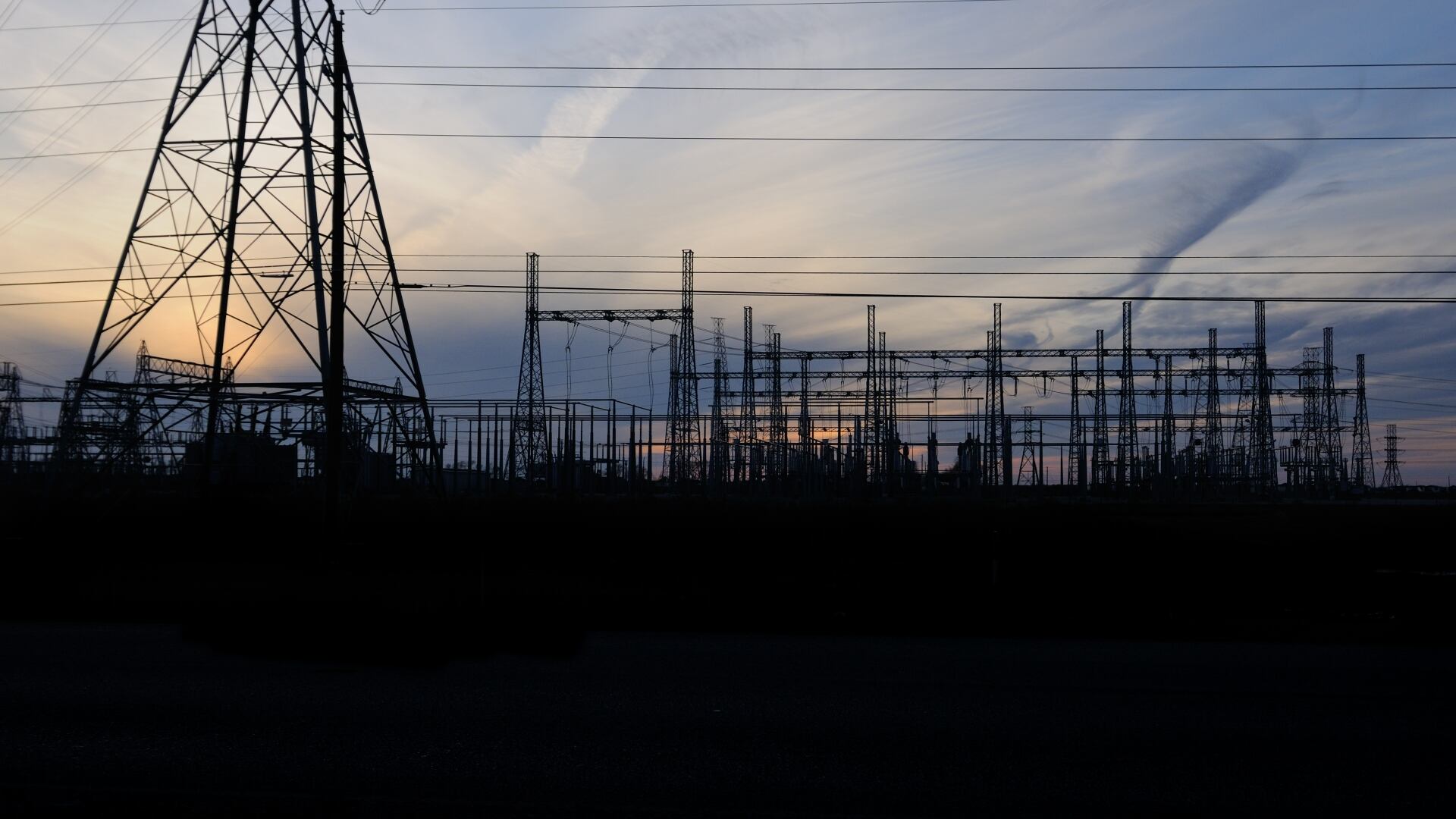
Although this week's weather is predicted to be less severe than the 2021 storm, Texans are preparing for the worst - stocking up on supplies and emptying shelves in grocery stores, once again. Some Texans still have not recovered from last year's tragedy, and are heading into the next few weeks with anxiety for what's to come. Leslie Beyer, CEO of the Houston-based energy workforce & technology council, joins Cheddar News to discuss if the Texas grid will fail again.
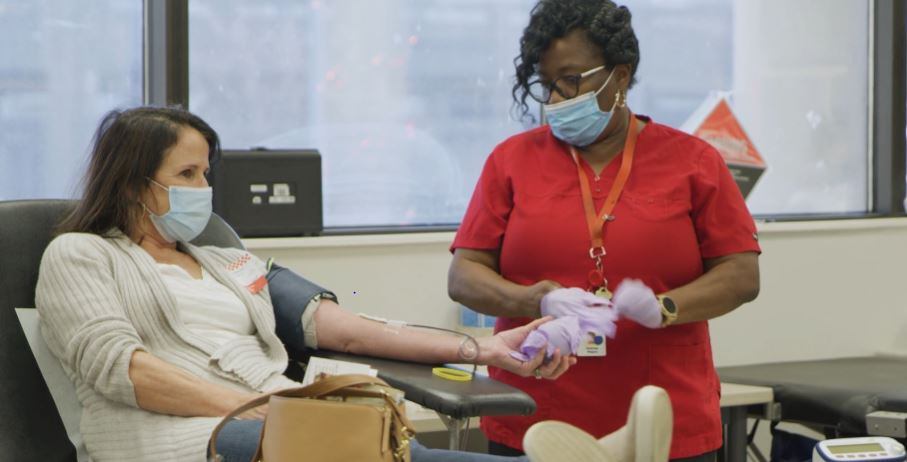
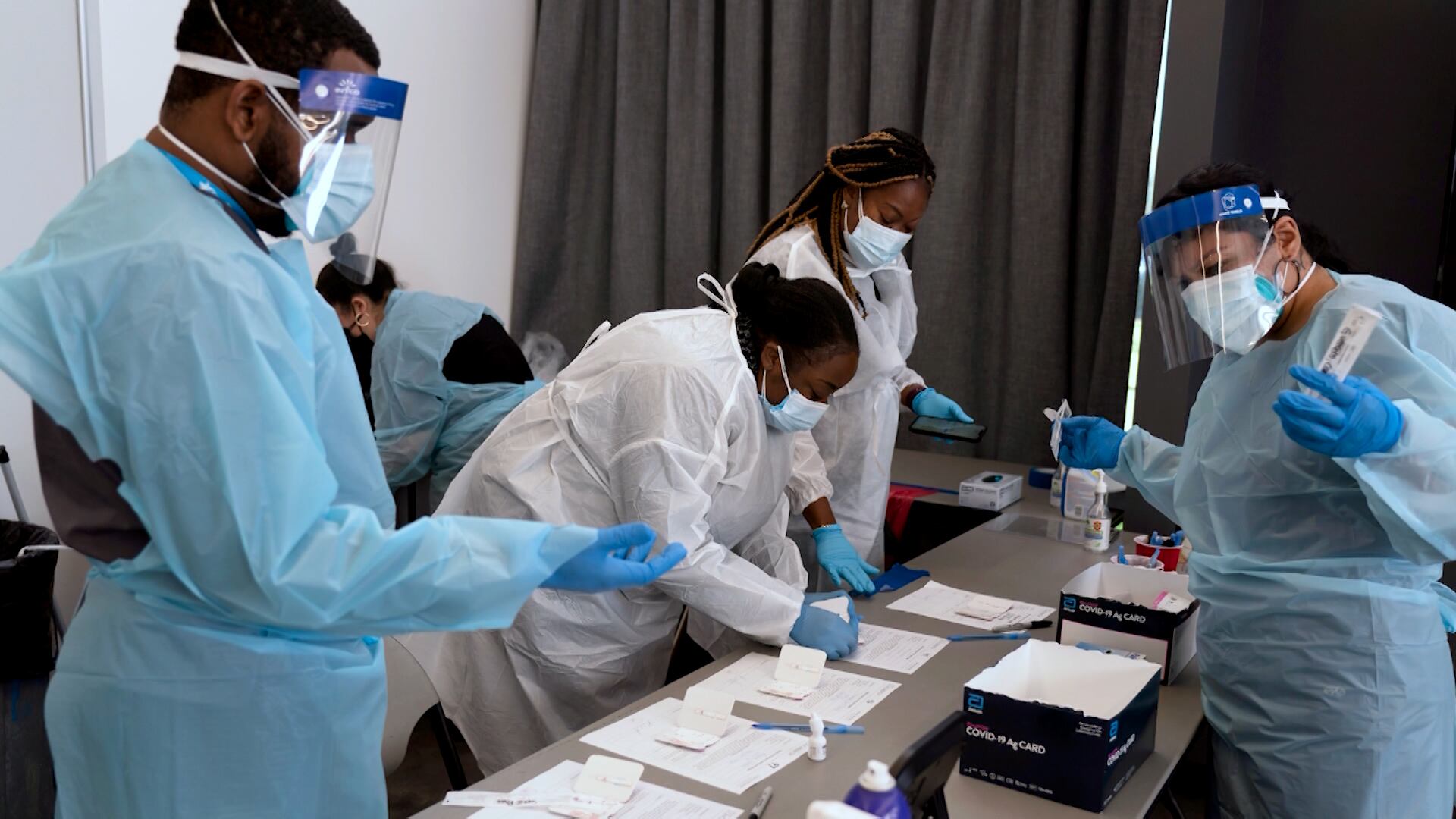
The American Red Cross has declared its first-ever "national blood crisis" in the United States. Since COVID hit the U.S. in March 2020, blood donations have declined by 10 percent. American Red Cross Medical Director, Dr. Baia Lasky joined Cheddar News to discuss the country facing the worst blood shortage in over a decade. Dr. Lasky noted that as much as 40 percent of Americans are eligible to donate blood but only about 4 percent do so. "This is going to be ongoing," she said. "This is not an acute shortage. We really do need the commitment of people to come out and donate and donate again." Appointments to donate can be made by using the Red Cross Donor App, at RedCrossBlood.org, or calling 1-800-RED CROSS (1-800-733-2767).
Eight months after the National Football League announced $1 million in research into cannabinoids, the NFL-NFLPA Joint Pain Management Committee has awarded the funding to two teams of medical researchers at the University of California San Diego and the University of Regina. The NFL says the studies will investigate the effects of cannabinoids on pain management and neuroprotection from concussion in elite football players, respectively. Cheddar correspondent Chloe Ailello spoke with Jeff Miller, the executive vice president of communications, public affairs, and policy for the NFL, about the studies, as well as the recent lawsuit filed against the NFL by former Miami Dolphins head coach Brian Flores. "Maybe we can learn things from other alternative pain approaches that are going to benefit our player population and then sports medicine as a whole," Miller said.
On this episode of Cheddar Innovates: CEO of HereAfter AI discusses how artificial intelligence can be used to preserve family history and stories, and allow you to 'talk' to loved ones that have passed; Creator of the board game 'Travel Explore Discover' explains how she came up with the idea for this informative and educational board game, and how she's using the proceeds to give back to her community; Cheddar gets a look at Curiosity Stream's 'The Humboldt Current.'
Immunologist Dr. Purvi Parikh of the Allergy & Asthma Network joined Cheddar News to break down long Covid, in which Covid symptoms remain up to two years after infection; a phenomenon that has so far mystified health experts.
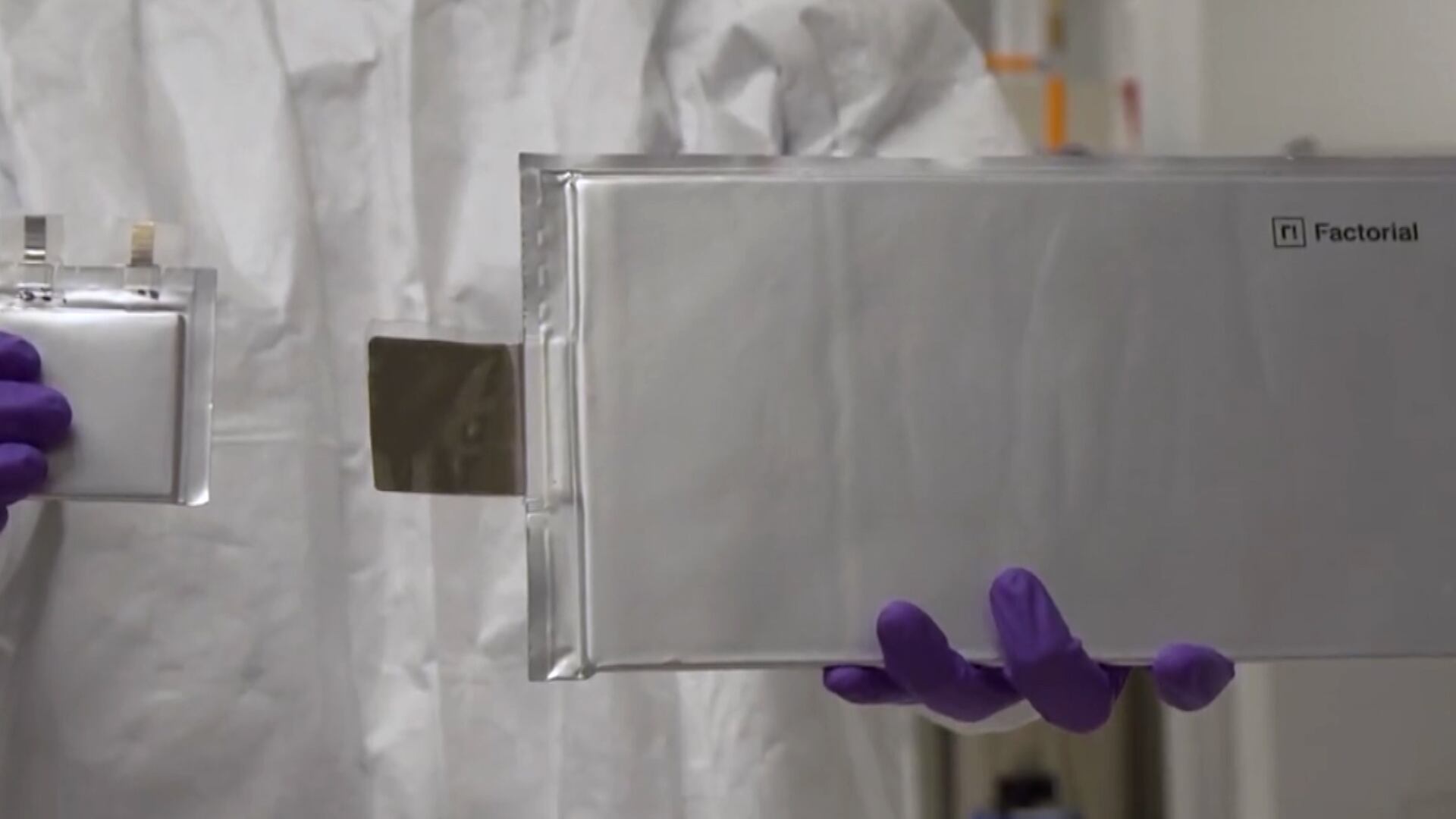
Solid-state battery maker Factorial Energy recently raised $200 million in a Series D round led by Mercedes-Benz and Stellantis. Factorial says the funding will be used to accelerate commercial production and deployment of its solid-state battery technology, which the company says is safer, and offers up to 50% more driving range than current lithium-ion technology. Factorial also has joint development agreements (announced in late 2021) with Mercedes-Benz, Stellantis, and Hyundai, three of the top 10 global automotive manufacturers, to commercialize its batteries. Factorial CEO Siyu Huang joined Cheddar News' Closing Bell to discuss.
David Malott, founder and chief architect at AI PlanetWorks joins Cheddar News to discuss the release of its augmented reality NFTs for the metaverse called 'TERA.'
A 2021 report from UK Research and Innovation found that the shipping industry makes up at least 2.5 percent of the world's total CO2 emissions. It's a problem that energy solutions company, Leclanché, is trying to solve. Founded in 1909, the company has been developing and producing batteries for more than 100 years. Today, Leclanché's lithium-ion battery is used to electrify not just ships, but also railroad locomotives, trucks, and specialty vehicles. Cheddar News spoke with Pierre Blanc, chief technology and industrial officer of Leclanché, to discuss.