By Seth Borenstein

Now that last month's sizzling numbers are all in, the European climate monitoring organization made it official: July 2023 was Earth's hottest month on record by a wide margin.

July's global average temperature of 16.95 degrees Celsius (62.51 degrees Fahrenheit) was a third of a degree Celsius (six tenths of a degree Fahrenheit) higher than the previous record set in 2019, Copernicus Climate Change Service announced Tuesday. Normally global temperature records are broken by hundredths or a tenth of a degree, so this margin is unusual.

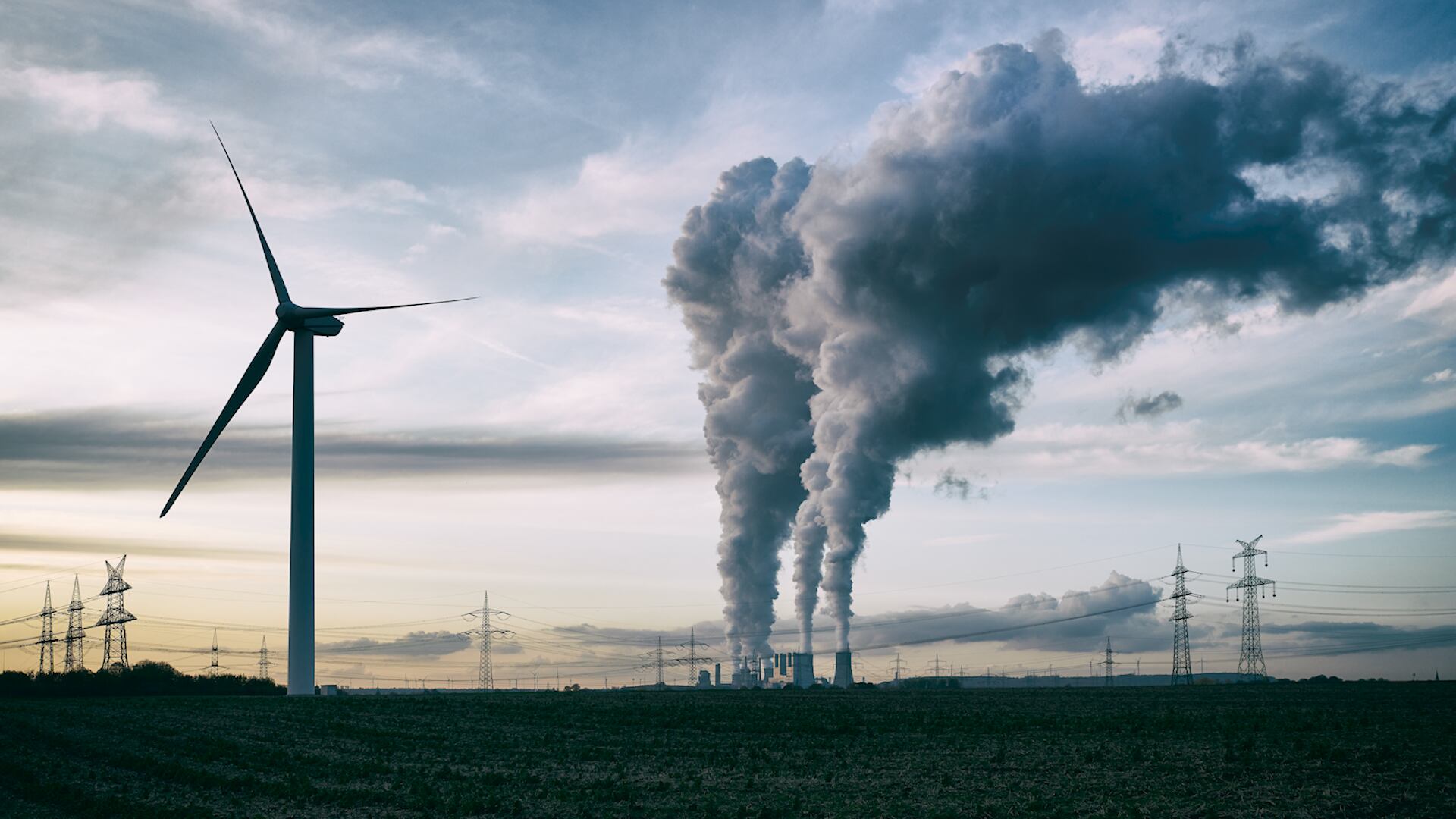
“These records have dire consequences for both people and the planet exposed to ever more frequent and intense extreme events," said Copernicus deputy director Samantha Burgess. There have been deadly heat waves in the Southwestern United States and Mexico, Europe and Asia. Scientific quick studies put the blame on human-caused climate change from the burning of coal, oil and natural gas.

The previous single-day heat record was set in 2016 and tied in 2022. From July 3, each day has exceeded that record. It's been so warm that Copernicus and the World Meteorological Organization made the unusual announcement that it was likely the hottest month days before it ended. Tuesday's calculations made it official.

“We should not care about July because it’s a record, but because it won’t be a record for long,” said Imperial College of London climate scientist Friederike Otto. “It’s an indicator of how much we have changed the climate. We are living in a very different world, one that our societies are not adapted to live in very well.”

The global average temperature last month was 1.5 degrees Celsius (2.7 degrees Fahrenheit) warmer than pre-industrial times. In 2015, the nations of the world agreed to try to prevent long-term warming — not individual months or even years, but decades — that is 1.5 degrees warmer than pre-industrial times.

Last month was so hot, it was .7 degrees Celsius (1.3 degrees Fahrenheit) hotter than the average July from 1991 to 2020, Copernicus said. The world's oceans were half a degree Celsius (0.9 degrees Fahrenheit) warmer than the previous 30 years and the North Atlantic was 1.05 degrees Celsius (1.9 degrees Fahrenheit) hotter than average. Antarctica set record lows for sea ice, 15% below average for this time of year.

Copernicus, a division of the European Union’s space program, has records going back to 1940. July's temperature would be hotter than any month the U.S. National Oceanic and Atmospheric Administration has recorded and their records go back to 1850. But scientists say it’s actually the hottest in a far longer time period.

“It's a stunning record and makes it quite clearly the warmest month on Earth in 10,000 years,” said Stefan Rahmstorf, a climate scientist at the Potsdam Institute for Climate Research in Germany. He wasn't part of the Copernicus team.

Rahmstorf cited studies that use tree rings and other proxies that show present times are the warmest since the beginning of the Holocene Epoch, about 10,000 years ago. And before the Holocene started there was an ice age, so it would be logical to even say this is the warmest record for 120,000 years, he said.

Associated Press climate and environmental coverage receives support from several private foundations. See more about AP’s climate initiative here. The AP is solely responsible for all content.

Share:
More In Science
Our Biological Connections With Plants; Mind-Controlled Bionic Hand
On this episode of Cheddar Innovates: Brightseed Co-Founder breaks down what plant bioactives are, and how they're using the latest technology to study human's biological connections with plants; Esper Bionics CEO breaks down how they re creating a mind-controlled bionic hand that guest smarter the more you use it; Cheddar gets a look at Curiosity Stream's 'Capturing A Black Hole In Our Milky Way.'
NOAA Predicts Busier-Than-Usual Hurricane Season
Hurricane climatologist Jill Trepanier joined Cheddar News to discuss NOAA's announced prediction for an above-normal hurricane season and what it might mean for people in the United States. "I think it's important that people who maybe haven't been used to having extreme weather events related to say tropical cycles and tropical systems, like thinking New Jersey, Northeastern seaboard, that area may get more action than they're used to in the past," she said.
Miga Health Raises $12 Million to Combat Heart Disease
Dr. Jarrad Aguirre, Co-Founder and CEO of Miga Health, joins Cheddar News' Closing Bell, where he says his company is looking to establish the future of heart health and points to how 80% of premature heart attacks and strokes are preventable.
Cooling the Earth; How Global Warming will Impact Real Estate
On this episode of Cheddar Reveals, David Keith, Professor of Applied Physics at the Harvard School of Engineering and Applied Sciences and Professor of Public Policy at the Harvard Kennedy School, and founder of Carbon Engineering outlines the viability of solar geoengineering as a solution to help reverse the effects of global warming; Lena Geraghty, Sustainability & Urban Innovation Director at National League of Cities, discusses which U.S. cities are safest from global warming and how the real estate market will be impacted from the effects of climate change; Cheddar gets a look at Curiosity Stream's 'Changing Ocean Asia.'
Artificially Cooling the Planet
David Keith, Professor of Applied Physics at the Harvard School of Engineering and Applied Sciences and Professor of Public Policy at the Harvard Kennedy School, and founder of Carbon Engineering joins Cheddar Reveals to outline the viability of solar geoengineering as a solution to help reverse the effects of global warming.
Global Warming's Effect on the Real Estate Market
Lena Geraghty, Sustainability & Urban Innovation Director at National League of Cities, joins Cheddar News to discuss which U.S. cities are safest from global warming and how the real estate market will be impacted from the effects of climate change.
What Spending 665 Days in Space Feels Like
Peggy Whitson, Director of Human Space Flight, Axiom Space, joins Cheddar Innovates to discuss Axiom's involvement in the first fully-private mission to the ISS, and her experience spending 665 days in space.
Living in Outer Space; A New-Age Twist on Millenia-Old Remedies
On this episode of Cheddar Innovates, Peggy Whitson, Director of Human Space Flight, Axiom Space, breaks down Axiom's involvement in the first fully-private mission to the ISS, and her experience spending 665 days in space; William Li and Danielle Chang, co-founders of The Hao Life, discuss how they're shaking up the $71 billion supplement industry by putting a modern spin on traditional natural Chinese remedies; Cheddar gets a look at Curiosity Stream's 'Sagrada Familia: Gaudi's Challenge.'
Load More