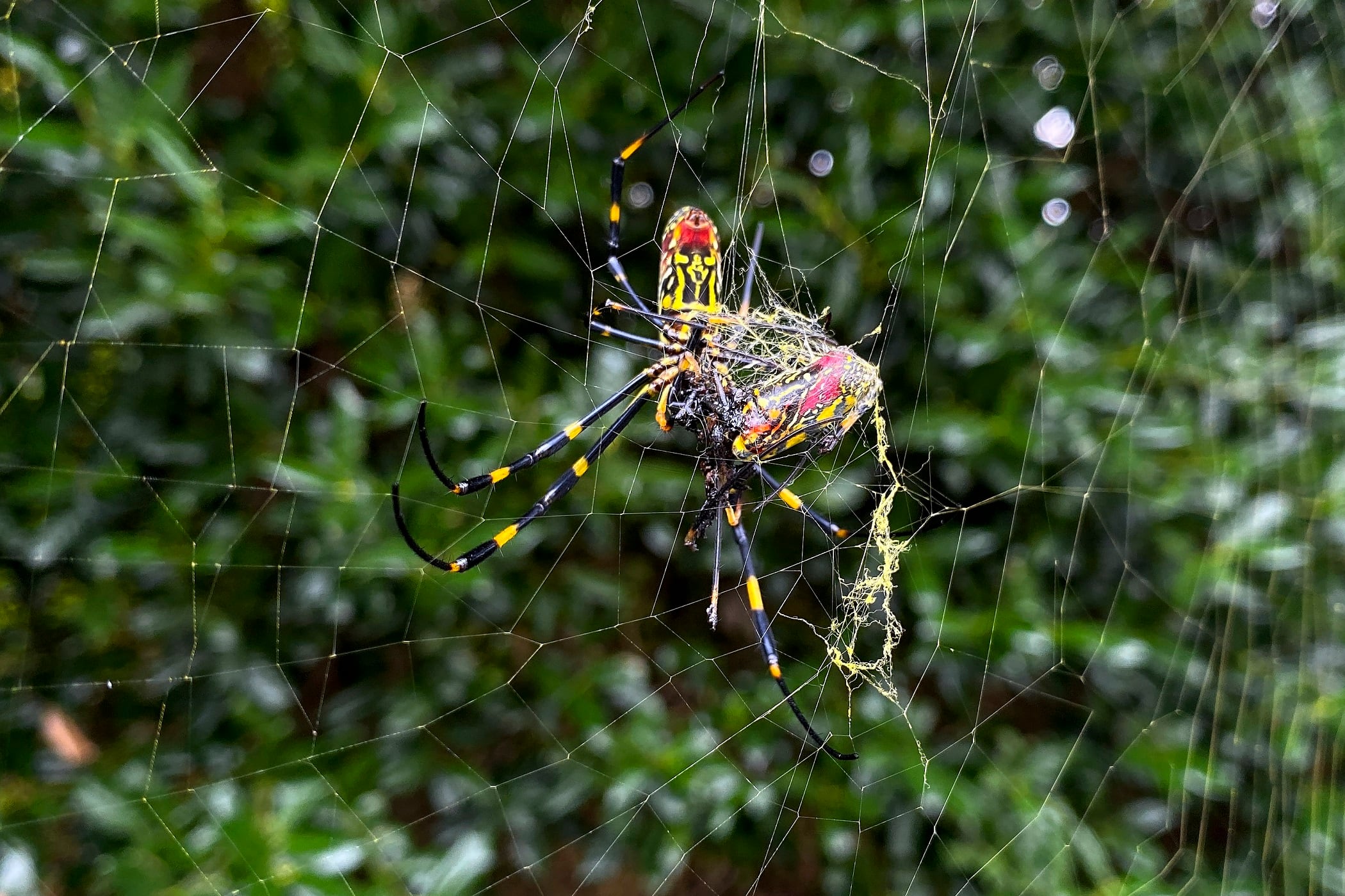
The Joro spider, a large spider native to East Asia, is seen in Johns Creek, Ga., on Sunday, Oct. 24, 2021. Researchers say the large spider that proliferated in Georgia in 2021 could spread to much of the East Coast. (AP Photo/Alex Sanz, File)
Researchers say a large spider native to East Asia that proliferated in Georgia last year could spread to much of the East Coast.
The Joro spider's golden web took over yards all over north Georgia in 2021, unnerving some residents. The spider was also spotted in South Carolina, and entomologists expected it to spread throughout the Southeast.
A new study suggests it could spread even farther than that. The Joro appears better suited to colder temperatures than a related species, researchers at the University of Georgia said in a paper published last month.
It has about double the metabolism, a 77% higher heart rate and can survive a brief freeze that kills off its relatives, the study found.
The researchers also noted that Joros are found in much of Japan, which has a similar climate to the U.S.
“Just by looking at that, it looks like the Joros could probably survive throughout most of the Eastern seaboard here, which is pretty sobering,” study co-author Andy Davis said in a statement.
The Joro — Trichonephila clavata — is part of a group of spiders known as orb weavers for their highly organized, wheel-shaped webs. Joro females have colorful yellow, blue and red markings on their bodies and can measure three inches (8 cm) across when their legs are fully extended.
It’s not clear exactly how and when the first Joro spider arrived in the U.S. or why they were so abundant in Georgia last year.
Their impact on native species and the environment is also not clear, though some researchers believe they are benign.
U.S. officials have approved the first over-the-counter birth control pill, which will let American women and girls buy contraceptive medication from the same aisle as aspirin and eyedrops.
The Webb Space Telescope is marking one year of cosmic photographs with one of its best yet: the dramatic close-up of dozens of stars at the moment of birth.
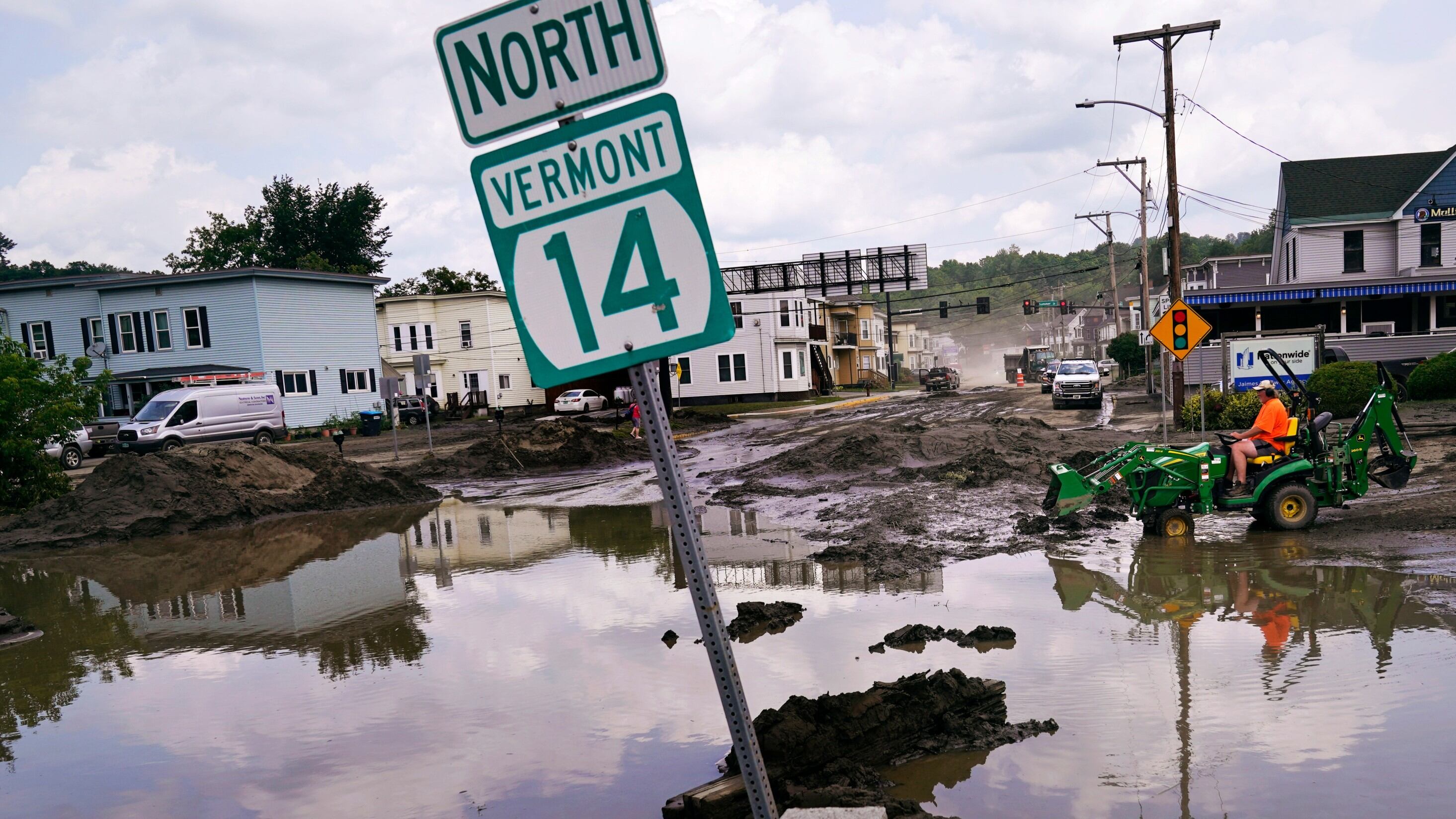
Floodwaters receded in Vermont cities and towns pummeled by a storm that delivered two months of rain in two days, enabling people to focus Wednesday on recovering from a disaster that trapped residents in homes, closed roadways and choked streets and businesses with mud and debris.
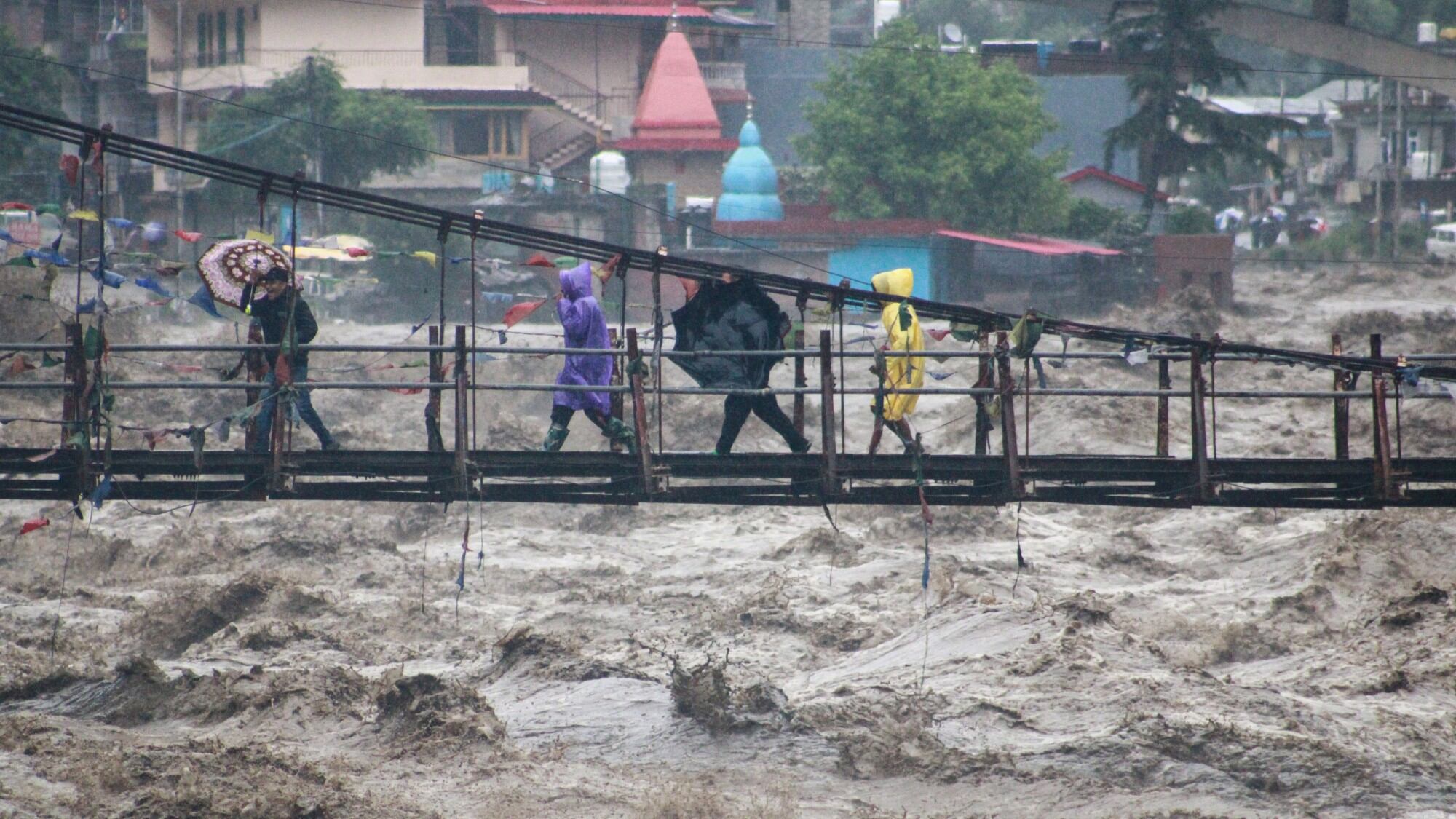
Schools in New Delhi were forced to close Monday after heavy monsoon rains battered the Indian capital, with landslides and flash floods killing at least 15 people over the last three days. Farther north, the overflowing Beas River swept vehicles downstream as it flooded neighborhoods.
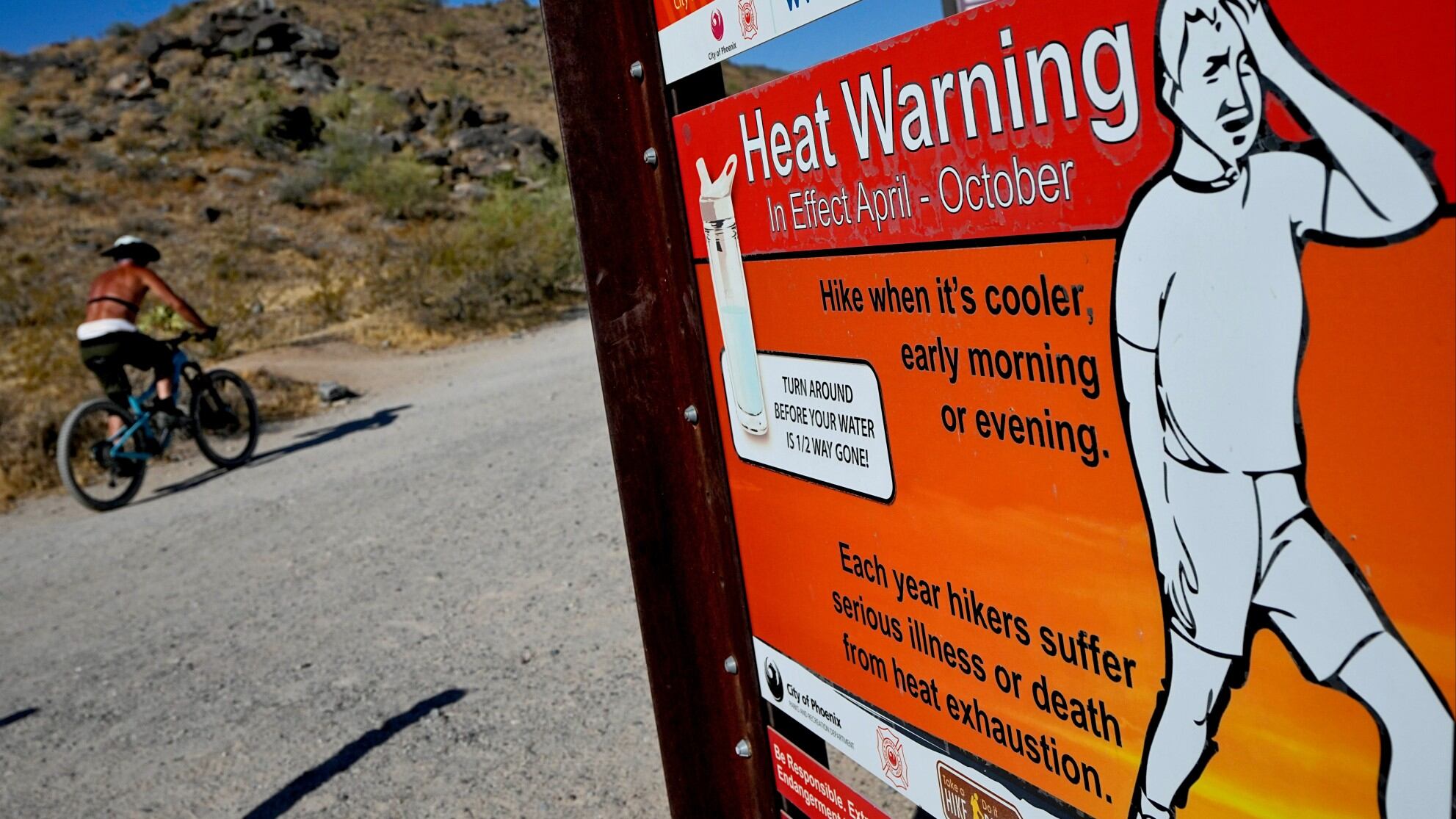
Even Southwestern desert residents accustomed to scorching summers are feeling the grip of an extreme heat wave smacking Arizona, Nevada, New Mexico and Southern California this week with 100-degree-plus temps and excessive heat warnings.