By Dave Collins
The families of nine victims of the Sandy Hook Elementary School shooting have agreed to a $73 million settlement of a lawsuit against the maker of the rifle used to kill 20 first graders and six educators in 2012, their attorney said Tuesday.
The case was watched closely by gun control advocates, gun rights supporters and manufacturers because of its potential to provide a roadmap for victims of other shootings to sue the makers of firearms.
The families and a survivor of the shooting sued Remington in 2015, saying the company should have never sold such a dangerous weapon to the public. They said their focus was on preventing future mass shootings.
“Today is a day of accountability for an industry that has thus far enjoyed operating with immunity and impunity,” Veronique De La Rosa, whose 6-year-old son Noah was killed in the shooting, said at a news conference.
Messages seeking comment were left for Remington and its lawyers Tuesday.
The civil court case in Connecticut focused on how the firearm used by the Newtown shooter — a Bushmaster XM15-E2S rifle — was marketed, alleging it targeted younger, at-risk males in marketing and product placement in violent video games. In one of Remington’s ads, it features the rifle against a plain backdrop and the phrase: “Consider Your Man Card Reissued.”
As part of the settlement, Remington, which made the Bushmaster AR-15-style rifle used in the massacre, also agreed to allow the families to release numerous documents they obtained during the lawsuit including ones showing how it marketed the weapon, the families said.
Remington had argued there was no evidence to establish that its marketing had anything to do with the shooting.
The company also had said the lawsuit should have been dismissed because of a federal law that gives broad immunity to the gun industry. But the Connecticut Supreme Court ruled Remington could be sued under state law over how it marketed the rifle. The gun maker appealed to the U.S. Supreme Court, which declined to hear the case.
Remington, one of the nation's oldest gun makers founded in 1816, filed for bankruptcy for a second time in 2020 and its assets were later sold off to several companies. The manufacturer was weighed down by lawsuits and retail sales restrictions following the school shooting.
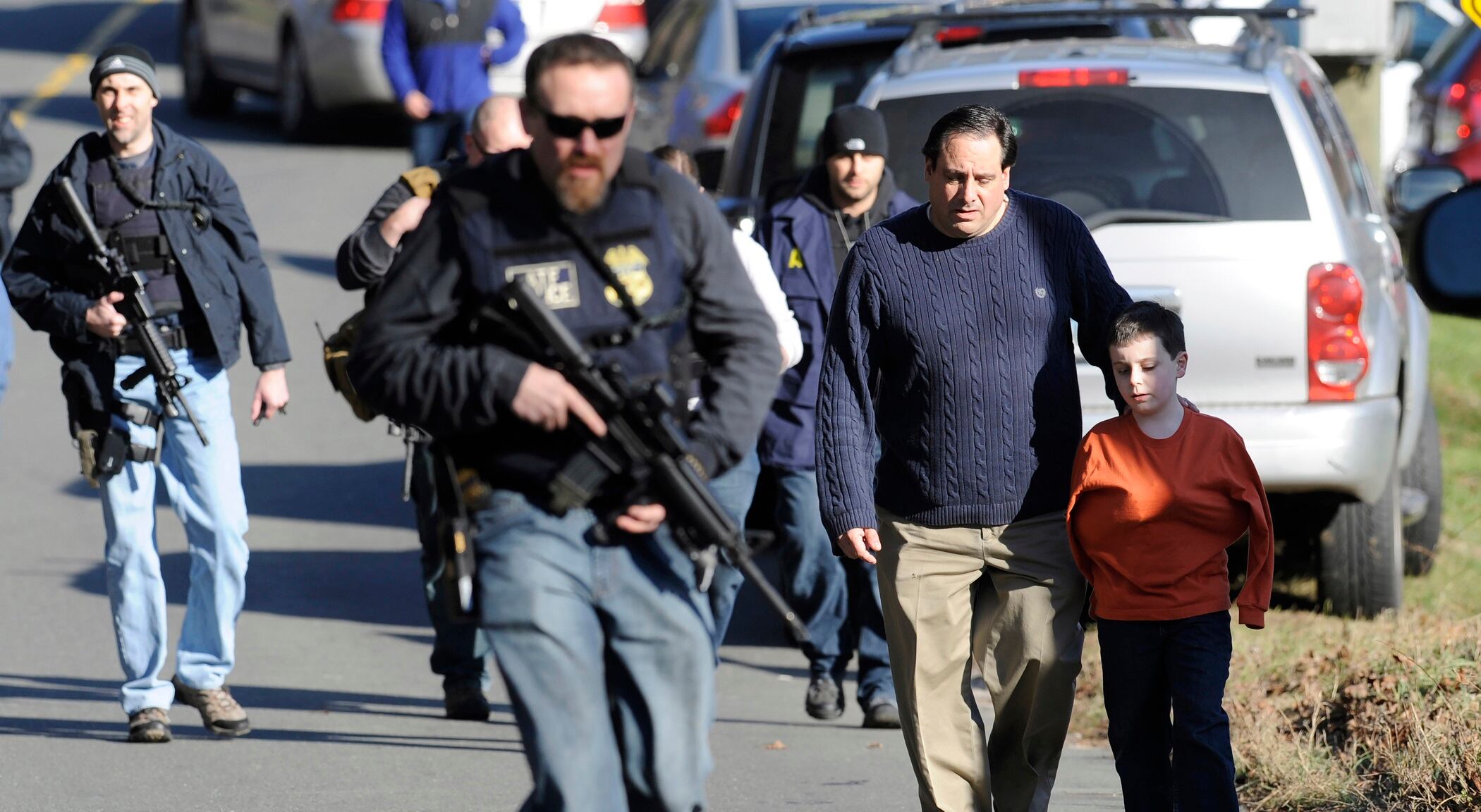
Adam Lanza, the 20-year-old gunman in the Sandy Hook shooting, used the rifle made by Remington and legally owned by his mother to kill the children and educators on Dec. 14, 2012, after having killed his mother at their Newtown home. He then used a handgun to kill himself as police arrived.
Lanza’s severe and deteriorating mental health problems, his preoccupation with violence and access to his mother’s weapons “proved a recipe for mass murder,” according to Connecticut’s child advocate.
The National Shooting Sports Foundation, a Newtown-based group that represents gunmakers, said courts should not have allowed the case to proceed and it believes the plaintiffs would have lost at trial.
“The plaintiffs never produced any evidence that Bushmaster advertising had any bearing or influence over Nancy Lanza’s decision to legally purchase a Bushmaster rifle, nor on the decision of murderer Adam Lanza to steal that rifle, kill his mother in her sleep, and go on to commit the rest of his horrendous crimes,” the group said in a statement.
A lawyer for the plaintiffs, Josh Koskoff, said the settlement should serve as a “wake up call” to the gun industry and its financial backers.
“For the gun industry, it’s time to stop recklessly marketing all guns to all people for all uses and instead ask how marketing can lower risk rather than court it,” Koskoff said.
Damages from the settlement will be paid only to the families who signed onto the lawsuit, and not other victims' families. None of the relatives who spoke at the news conferences described plans for the money.
Four insurers for the now-bankrupt company agreed to pay the full amount of coverage available, totaling $73 million, the plaintiffs said.
“Today is not about honoring Ben. Today is about how and why Ben died,” said Francine Wheeler, whose 6-year-old son was killed in the shooting. “Today is about what is right and what is wrong. Today is about the last five minutes of his life which were tragic, traumatic, the worst thing that could happen to a child, and how they unfolded as they did.”
___
Associated Press writer Susan Haigh contributed to this report.
Updated on February 15, 2022, at 1:45 p.m. ET with the latest details.