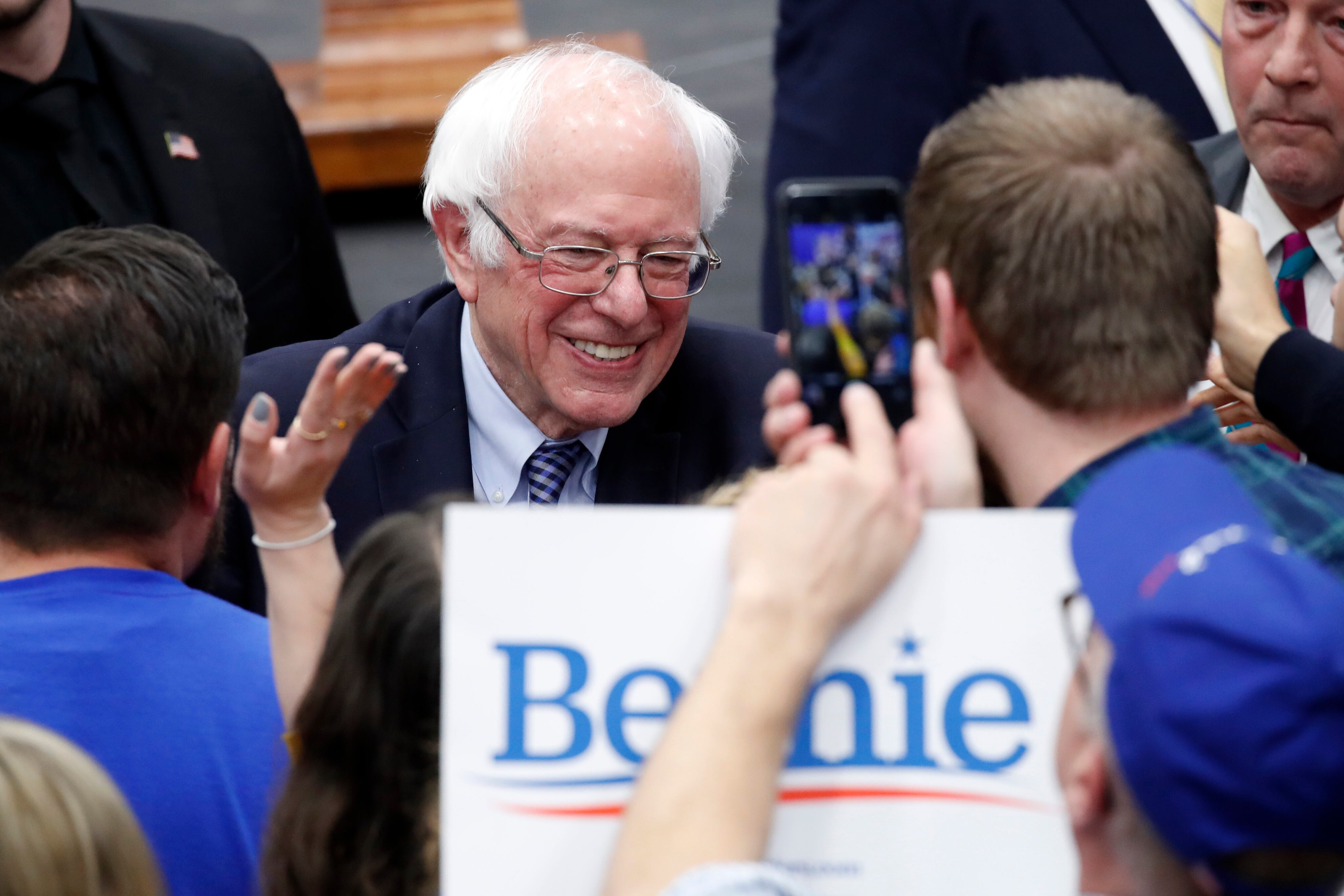
Vermont Senator Bernie Sanders declared victory in New Hampshire’s first-in-the-nation primary late Tuesday, maintaining a slim lead over former South Bend Mayor Pete Buttigieg. Minnesota Senator Amy Klobuchar ended the night with a comfortable third-place finish.
Tuesday’s results cement Sanders and Buttigieg as candidates-to-beat moving forward and gave the Minnesota senator a boost ahead of a primary battle that is just heating up.
Sanders was expected to claim New Hampshire, but moderate Klobuchar’s finish — ahead of Elizabeth Warren and Joe Biden — may boost her campaign before heading into two more early primaries: Nevada on February 22 and South Carolina on February 29.
Some years the first two states to vote — Iowa in a caucus and New Hampshire in a primary — clarify the primary field. But this season, between a calculation debacle in Iowa and a steady decline in former frontrunner Joe Biden’s status, it’s unclear whether Tuesday’s results will clarify or confuse.
The eight Democrats who mounted major campaigns in New Hampshire are hoping tonight’s results clarify their own standing. For those keeping track, Sanders won New Hampshire in 2016.
Two of those contenders, entrepreneur Andrew Yang who gained popularity while promoting a universal basic income and moderate Colorado Senator Michael Bennet, dropped out of the race. Both moves were reported as results came in, though Yang claimed three percent of the vote. Not a single candidate exited the field after the Iowa Caucus.
Buttigieg, the former mayor of South Bend, Ind., surged in polling ahead of Tuesday’s primary and, coupled with a self-proclaimed victory in Iowa even before results poured in, seems to remain near the front of the pack.
But some critics say the New Hampshire results don’t mean much. The state was Sanders’ to lose. New Hampshire is only home to 1.35 million residents and offers a relatively small 24 delegates. A candidate needs 1,991 delegates to claim the nomination.
Candidates React: ‘Klomentum’ vs. A South Carolina Exit
Speaking to supporters chanting her name around 8:30 p.m. ET, Sen. Elizabeth Warren, the first to speak in New Hampshire Tuesday night, cast herself as a unifier for the Democratic party. She said she respects both Sanders and Buttigieg “but the fight between factions in our party has taken a sharp turn in recent weeks, with ads mocking some candidates and supporters of some candidates shouting curses at other candidates. These tactics might work...if you don't worry about leaving our party and our politics worse off than you found it.”
“We win when we come together,” Warren said, plugging another woman who made a strong showing tonight, congratulating Klobuchar on “showing just how wrong the pundits can be when they count a woman out.”
When Sanders took the state in Manchester nearly three hours later, he also called for unity. “We are going to unite together and defeat the most dangerous president in the modern history of this country. And the reason I believe we are going to win is we have an unprecedented grassroots movement from coast to coast,” he said.
Klobuchar spoke to her supporters around 9:30 p.m. ET, with just about 50 percent of votes reported. “Because of you, we are taking this campaign to Nevada,” she said to cheers. “We are going to South Carolina, and we are taking this message of unity to the country.”
“In a democracy, we know it is not about the loudest vote and the biggest bank account. It is about the best ideas and the person who can turn those ideas into action.” Klobuchar tipped her hat back to “my friend Elizabeth” in her speech as well.
“We cannot win big by trying to out-divide the Divider-in-Chief,” she said, noting she thought her campaign had “re-defined grit.”
As the primary entered the 11 p.m. hour, Buttigieg took to the stage in Nashua, N.H., congratulating his competitors and supporters for Tuesday night’s showing while also taking a shot at Sanders.
“So many of you turned out, die-hard Democrats, Independents unwilling to stand on the sidelines, and even some newly-former Republicans, ready to vote for something new,” he said, to chants of “Boot-edge-edge,” the phonetic pronunciation of his last name that has become a symbol of his campaign. He called voters ready “to vote for a politics defined by how many we call in, instead of who we push out.”
“So many of you chose to meet a new era of challenge with a new generation of leadership,” the millennial mayor said.
Sanders took the stage soon after Buttigieg finished up, but had to wait for the thunderous applause to die down before he could begin his speech about “a great victory tonight.” He called Tuesday “the beginning of the end for Donald Trump,” prompting a round of “Bernie beats Trump” cheers.
Warren, who came in fourth, and Biden, who claimed fifth, both missed the 15 percent threshold, meaning they cannot claim delegates from tonight’s results. Earlier in the day, Warren’s campaign said her path to victory is in claiming district wins instead of carrying entire states.
Biden, who left New Hampshire before polls even closed, addressed voters from Columbia, South Carolina and focused on his support among black voters. “You can’t win a general election as a Democrat unless you have overwhelming support from black and brown voters. It’s really just simple.”
On the other side of the primary, President Donald Trump claimed the GOP victory in New Hampshire. As the incumbent, it is unlikely his challenger, former Massachusetts governor Bill Weld, who was campaigning across New Hampshire, will make many waves, though he claimed a delegate in Iowa.